Uncategorized
Advanced Rust Converter: Applications, Chemistry & Field Tested Pro Tips (2026 Guide)
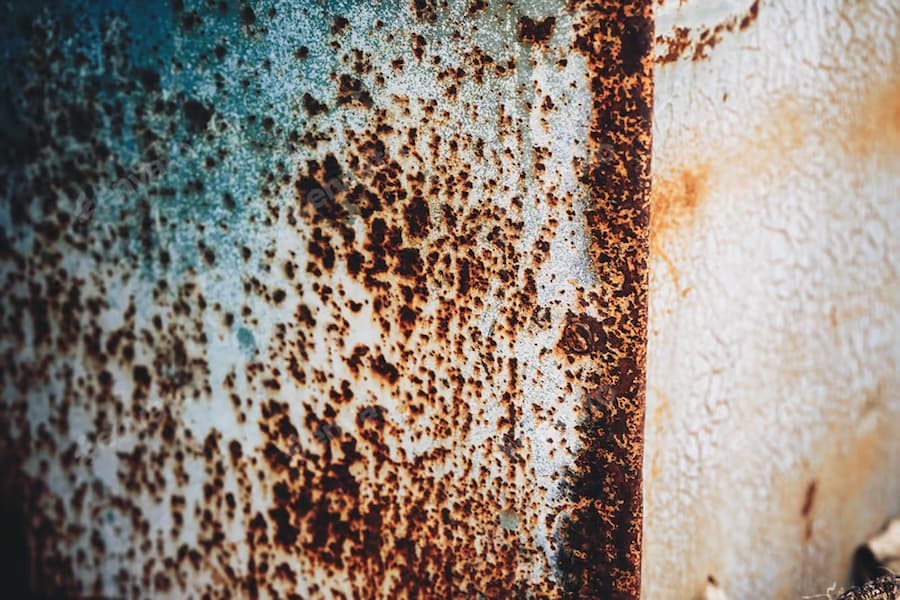
Quick Answer: An advanced rust converter chemically transforms loose iron oxide into a stable, paint-ready film using tannic acid, phosphoric acid, and a polymer binder. Modern 2-in-1 formulas skip sandblasting on stable rust and leave a primed surface in roughly 24 hours. The best fit depends on the substrate — automotive frames, marine trailers, farm equipment, and industrial steel each demand different cure times and topcoats.
What Makes an Advanced Rust Converter Different
Older rust paints just sealed the oxide and hoped for the best. An advanced rust converter goes further. It reacts with the rust itself, pulling Fe³⁺ ions out of the lattice and locking them into a stable mineral film. The reaction matters — without it, every drop of moisture trapped under the topcoat keeps eating steel.
Two acids do most of the work. Tannic acid (from oak bark and chestnut hulls) chelates iron ions and builds a blue-black ferric tannate film. Phosphoric acid attacks loose oxide and deposits iron phosphate crystals on the underlying steel. So one acid grabs the iron; the other passivates the surface. Together they leave a thin, paintable layer with dramatically lower ionic conductivity than the rust it replaced, a finding documented in a peer-reviewed corrosion study on rust converters based in phosphoric and tannic acids.
The polymer binder is the third pillar. It locks the converted film against humidity, salt, and abrasion until topcoat goes on. Modern XionLab formulas pair these three components into a single coat. One pass. Done.
Why “2-in-1” Matters More Than It Sounds
Old-school workflow meant converter, dry, prime, dry, topcoat. Two products. Double cure windows. Extra chances for contamination between coats. Advanced 2-in-1 chemistry collapses converter and primer into a single brush-on layer — and the surface is ready for any oil-based, acrylic, latex, or epoxy topcoat once it cures. For a deeper chemistry breakdown, see our science of rust converters and primers guide.
Where an Advanced Rust Converter Actually Earns Its Keep
Rust looks the same everywhere. But the demands placed on the coating vary wildly between a tractor bucket and a yacht trailer. Below is how the same chemistry shows up across four very different worlds.
Automotive Restoration
Classic-car floor pans. Truck frame rails. Wheel wells with surface rust creeping out from seam sealer. These are the textbook converter jobs. Most rotisserie restorations use a converter on the underbody, control arms, and any panel underside before priming. Why? Because chasing every pit with a wire wheel destroys the metal beneath. Advanced converters let the rust stay where it is, chemically neutralized, and skip the structural damage. Read more in our rust converter for automotive protection article.
Marine and Coastal Use
Saltwater is the cruelest test. Chloride ions break through standard zinc and accelerate galvanic corrosion on dissimilar metals. Marine-grade converters need higher chloride tolerance — tannic-acid-heavy formulas perform better here than pure phosphoric ones. Boat trailers, davits, dock hardware, and aluminum-steel transitions all benefit. Our breakdown on marine corrosion protection and treatment covers the topcoat layering that locks the conversion film against tide cycles.
Industrial and Structural Steel
Storage tanks. Conveyor frames. Bridge railings. Pipe racks. These surfaces face thermal cycling, UV, and chemical splash. Industrial-grade converters often add a co-binder for higher film thickness in one coat. The result: 500 to 1,000 hours in ASTM B117 salt-spray testing before red-bleed appears, depending on topcoat. The ASTM B117 salt spray standard is the industry yardstick for accelerated corrosion testing, even though field correlation is system-specific.
Agricultural and Fleet Equipment
Tractors live outside. So do harrows, plows, augers, and grain bins. Farmers rarely have time for full media blasting. An advanced converter brushed onto stable rust between harvests buys two to three more seasons before structural repair becomes unavoidable. Same goes for service trucks and food-grade trailers — quick turnaround, no shop time lost.
Step-by-Step: How to Apply an Advanced Rust Converter
Surface prep is everything. Skip it, and even the best chemistry fails within a year. Here is the workflow the pros use.
- Scrape off loose flakes with a wire brush, putty knife, or 80-grit pad. The goal is stable, tightly bonded rust — not bare metal.
- Degrease with mineral spirits or acetone. Oil and silicone wax block the acid reaction faster than dirt does.
- Dry the surface fully. Trapped moisture dilutes the converter and stalls the film build.
- Apply a thin, even first coat with a brush, foam pad, or low-pressure sprayer. About a quarter-inch coverage by brush is plenty.
- Watch for the color shift from rusty orange to deep blue-black. That signals the ferric tannate forming.
- Apply a second coat after 4 to 6 hours on heavily pitted areas. The second pass fills micro-voids the first one missed.
- Wait 24 hours before topcoating. The polymer binder is still cross-linking past hour 12, and rushing it weakens adhesion.
Sequence is everything. The number of restoration jobs that fail because someone topcoated at hour 6 — well, it would surprise you. Patience pays.
Advanced Converters vs. Older Single-Acid Formulas
Not all rust converters are equal. Older formulas built around a single acid (usually phosphoric) work fine on light, dry surface rust. But they bog down on chloride-contaminated metal and humid garages. Here is how a modern 2-in-1 stacks against the older generation and bare phosphoric primers.
| Feature | Single-Acid Converter | Advanced 2-in-1 (XionLab Class) | Phosphoric Etch Primer |
|---|---|---|---|
| Active Chemistry | Phosphoric acid only | Tannic + phosphoric + polymer | Phosphoric + zinc additives |
| Chloride Tolerance | Low | High | Medium |
| Built-In Primer | No | Yes | Partial |
| Coats Required | 2 to 3 | 1 to 2 | 2 |
| Topcoat Wait | 48 hours | 24 hours | 24 to 48 hours |
| Salt-Spray Hours (ASTM B117) | 200 to 400 | 500 to 1,000 | 300 to 600 |
| VOC Content | Variable | Under 50 g/L | Often above 250 g/L |
| Indoor Use | Caution | Yes | Ventilation required |
Corroseal works well for lighter surface rust and is a fair budget pick. Where XionLab pulls ahead is in chloride-heavy environments — marine, salt-belt highways, coastal job sites — and in indoor applications where low-VOC labels matter to building managers and homeowners alike.
The Cost Behind Skipping Conversion
Corrosion is a quiet tax. It hits the global economy every year and never shows up on a single budget line. The numbers below come from the AMPP/NACE International IMPACT study and remain the most widely cited industry baseline through 2026.
Annual global cost of corrosion, equal to roughly 3.4% of world GDP, per the Association for Materials Protection and Performance (AMPP) IMPACT study.
Cost reduction available through proven corrosion-control practices — between $375 billion and $875 billion in global savings per year.
Salt-spray endurance of a quality 2-in-1 converter under ASTM B117 lab conditions before red bleed-through.
One sobering takeaway: most of the loss is preventable. And most fleet owners learn this after a frame rail snaps or a trailer floor drops a wheel. Bigger lesson? Conversion at year three saves replacement at year seven.
What I Learned After 14 Years on Gulf Coast Steel
My first real test of XionLab was on a 1976 Ford F-250 frame down in Mobile, Alabama. The truck had been sitting under a live-oak canopy for six years. Heavy salt drift from the bay. Pinhole rust along every box section, with some areas about a quarter-inch deep into the flange. I scraped the loose flakes, hit it with a wire wheel on a die grinder for maybe ten minutes — just the worst pockets — and brushed two thin coats of XionLab 2-in-1 over the rest.
Color shift hit in under twenty minutes. By next morning the whole frame was that telltale dark blue-black, no powder, no chalking. I sprayed a 2K urethane chassis black 26 hours later. Five years on, the truck still passes Alabama inspection with no perforation. And the frame has not been touched since.
Three Tips Nobody Mentions
- Use a foam brush, not bristle, on intricate seams. Bristles flick converter into your face, and foam loads better in tight corners.
- Tape off polished or zinc surfaces. Phosphoric acid etches both, and you cannot undo it.
- Work shaded or evening hours in summer. Direct Gulf sun flashes the converter too fast and starves the chelation reaction.
Quick truth: most failed applications are not the product’s fault. They are application errors compressed into the early failure curve. Slow down. Two thin coats beat one heavy one every single time.
Regional Reality Check
Salt-belt states like Michigan, Ohio, and Pennsylvania get a winter dose of road brine and calcium chloride from December through March. Chloride ions burrow into seam sealer and creep across welded joints. So timing matters. Spring application — once temperatures hold above 55°F for a stretch — gives chemistry the best chance to cure cleanly. Coastal residents in Florida and the Carolinas face a different problem: humidity above 80% slows the second-coat flash and can leave a slightly tacky feel for the first 12 hours. Pacific Northwest applicators run into mist-cycle dew that re-wets fresh film overnight, so a tarp or temporary garage stay is a smart play during cure.
Desert Southwest installers have it easier in one sense: low ambient humidity means a fast initial cure. But UV is brutal, and direct sun before the binder cross-links can chalk the film prematurely. Shade is your friend in Arizona or southern Nevada.
Common Mistakes I Have Watched Cost People Weeks
Painting over wet converter is the number-one failure mode I see. Surface might look ready, but the polymer is still cross-linking past hour eight on a humid day. Hour 24 exists for a reason. A second mistake: skipping the degrease step on a “clean-looking” frame. Oil traces from the previous owner’s leaky transmission undo the chemistry before it even starts. Third: applying converter over Bondo or fiberglass patches. The acid does not react with non-iron substrates, so you get a halo of bare filler with no protection. Mask those patches and treat them with a compatible epoxy primer instead.
When NOT to Use an Advanced Rust Converter
No product fits every job. Where does an advanced rust converter fall short? Several specific scenarios deserve a different approach.
- Perforated metal. If you can see through a hole, the converter cannot bridge it. You need patch panels, fiberglass cloth, or welded repair first.
- Active wet rust on continuous immersion surfaces. Permanent water contact (interior of a steel tank holding water) needs an immersion-grade epoxy, not a converter.
- Stainless steel pitting. Stainless corrosion is chloride pitting, not iron oxide formation. A converter does nothing useful here.
- Galvanized surfaces still showing zinc. Phosphoric acid attacks the zinc layer and weakens the very protection you wanted to preserve.
- Powder-coated panels with isolated rust spots. Spot conversion works, but the boundary between converter and existing coating often shows a halo. Color match becomes tricky.
Salt wins every time on perforations. Knowing the limit of the chemistry is honestly more valuable than knowing every strength.
How XionLab Helps You Stop Rust at the Source
Our 2-in-1 Rust Converter & Metal Primer is built for the people doing the work — the restorers, the fleet techs, the boat owners, the property managers. Six pillars set our chemistry apart.
Dual-Acid Chemistry
Tannic and phosphoric acids together for chloride resistance and fast surface etch in one coat.
Built-In Primer
Polymer binder leaves a paint-ready film. Skip the second product entirely.
Low-VOC Formula
Under 50 g/L means safer indoor application in shops, basements, and garages.
Water-Clean Tools
Soap and water clean brushes and rollers before cure. No solvents needed.
24-Hour Topcoat Window
Fully ready for paint, urethane, or epoxy in a single day, not three.
Made in the USA
Formulated and manufactured stateside with consistent batch QC since 2015.
XionLab supports automotive shops in salt-belt states, marina operators on the Pacific Northwest coast, and farm fleets across the Midwest — all with the same single-product approach. Want the deeper application playbook? Read our industrial rust converter guide next.
Customers often ask how the product behaves on a real budget timeline. A typical pickup-truck frame project from a small body shop runs about $40 in materials and roughly four hours of labor end-to-end. Compare that against a media-blasted frame followed by epoxy primer plus topcoat: north of $400 just in shop time. So conversion buys time, money, and shop-bay availability all at once. The technical depth on chelation-versus-passivation is also covered well in the Corrosion Doctors reference on rust converters, an open educational resource maintained by metallurgy professors.
Advanced Rust Converter FAQ
Not quite, though modern 2-in-1 formulas combine both functions. The converter reacts chemically with iron oxide, while the polymer portion acts as a topcoat-ready primer. Older single-acid converters required a separate primer step.
Yes — once the film has fully cured, usually after 24 hours at moderate humidity. Compatible topcoats include oil-based enamels, acrylic latex, 2K urethane, and most epoxy systems. Do a small adhesion patch test if you are unsure of your topcoat.
No. Perforations require physical repair — patch panels, welding, or fiberglass cloth — before any chemical treatment can hold. The converter only locks down stable, attached rust, not missing material.
Without a topcoat, the film handles indoor humidity for several months. With a quality topcoat applied within 24 hours, you can expect five to ten years of protection in temperate climates, less in coastal and salt-belt zones.
Aluminum, no — it has no iron oxide. Galvanized steel with visible zinc, also no. Galvanized steel with rust breaking through the zinc layer, yes, but apply only over the rusted spots, never the intact zinc.
Yes. The low-VOC formula (under 50 g/L) is rated for indoor application without forced ventilation. Standard hand and eye protection still applies, since the acid components can irritate skin and mucous membranes.
Quality 2-in-1 converters reach 500 to 1,000 hours of ASTM B117 neutral salt-spray exposure before red rust bleed-through, depending on topcoat. This roughly correlates to several years of coastal-zone field performance, though field correlation varies by environment.
Corroseal performs well on lighter surface rust at a lower price point. Rust-Oleum Rust Reformer is convenient for spot jobs. XionLab pulls ahead in chloride-heavy and indoor applications because of the dual-acid chemistry and low-VOC profile.
Yes, with an HVLP or low-pressure conventional gun thinned per manufacturer ratio. Avoid airless — the high shear pressure breaks the polymer binder and reduces film integrity. Foam brush remains best for tight seams and DIY work.
Ready to Stop Rust the Smarter Way?
XionLab 2-in-1 Rust Converter & Metal Primer — one bottle, one coat, paint-ready in 24 hours.