No products in the cart.
Advanced Rust Converter: Applications, Chemistry & Pro Tips (2026 Guide)
March 21, 2026
By Xion Lab
Free Shipping
easy returns
secure paymentS
FAQ | MY ACCOUNT | SUPPORT
March 21, 2026
By Xion Lab
Everything you need to know about advanced rust converter chemistry, real-world applications from automotive to marine, and how to stop corrosion before it costs you.
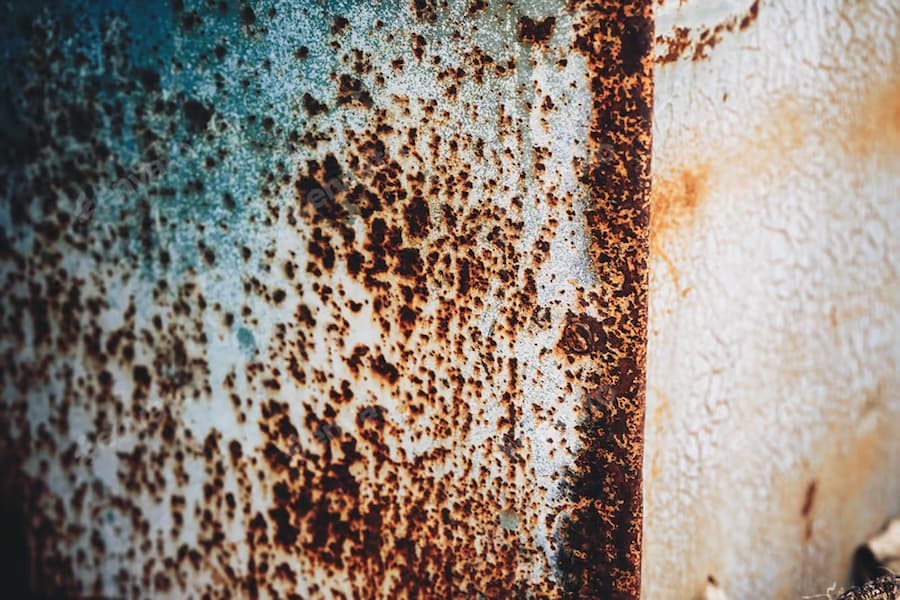
Quick Answer: An advanced rust converter chemically transforms iron oxide (rust) into a stable compound — ferric tannate or iron phosphate — stopping corrosion at the source rather than grinding it away. Applied by brush or roller, it turns the surface dark and bonds directly to the metal, eliminating the need for full sandblasting in most situations. XionLab’s 2-in-1 formula goes a step further by also acting as a primer, sealing the metal and preparing it for topcoat in a single application.
The Problem
Rust isn’t just ugly. Left unchecked, it quietly eats through structural steel, car frames, marine hardware, and industrial equipment — adding up to staggering replacement costs. According to AMPP (formerly NACE International), corrosion costs the global economy over $2.5 trillion every year. Salt wins every time. And if you live near the Gulf Coast, the salt belt states of the Midwest, or the Pacific Northwest where moisture never really leaves, you know this firsthand.
The good news: most of it is preventable. AMPP research shows adopting proper corrosion control practices could save between 15% and 35% of those losses — hundreds of billions of dollars worldwide. An advanced rust converter is one of the most practical, cost-effective tools in that prevention toolkit.
Annual global cost of corrosion — equal to 3.4% of world GDP (AMPP / NACE IMPACT Study)
For the average homeowner, that macro number translates to a rotted gate hinge, a truck frame eaten through, or a dock cleat pulled right out of its mounting because the screws disintegrated. Treating rust early — rather than replacing the part — is almost always the smarter call.
The Science
A rust converter is a water-based chemical treatment with two active ingredients: tannic acid and an organic polymer resin. Applied to a corroded iron or steel surface, the tannic acid reacts directly with iron oxide molecules and converts them into ferric tannate — a hard, stable, bluish-black compound. No more reactive rust. No flaking. Just a solid barrier.
Some formulas use phosphoric acid instead of tannic acid. Phosphoric acid converts rust into iron phosphate, another stable surface layer. Both approaches stop the oxidation reaction. The key difference is that tannic acid formulas tend to leave a darker film better suited for priming, while phosphoric acid creates a lighter, more paintable surface.
Standard converters handle the chemistry but still leave you with a bare surface needing a separate primer coat. XionLab’s advanced rust converter takes a different approach — the formula combines the rust-converting chemistry with a bonding primer in one product. Convert and prime. One coat. Done. This matters most on large structural jobs, trailer frames, and marine hardware where applying two separate products means doubling your labor time and drying wait.
One reliable visual cue: the surface turns dark purple or black as the conversion happens — usually within 15 to 20 minutes. Full chemical conversion takes 24 to 48 hours. Don’t rush it. Topcoating before full cure traps uncompleted chemistry underneath and can lead to adhesion failure later.
Know Your Enemy
Not all rust is equal. Knowing the type you’re dealing with tells you if a converter alone can handle it — or if additional prep work is required first.
| Rust Type | Appearance | Converter Effective? | Notes |
|---|---|---|---|
| Surface Rust (Stage 1) | Light reddish-brown discoloration | ✅ Excellent | Best-case scenario — convert and prime immediately |
| Scale Rust (Stage 2) | Thick, flaky buildup, pitting begins | ✅ Good | Knock off loose flakes first; converter handles the rest |
| Penetrating Rust (Stage 3) | Deep pitting, metal weakened | ⚠️ Partial | Converts surface rust but structural damage remains — assess load-bearing use |
| White Rust (Zinc/Galvanized) | White powdery buildup | ⚠️ Limited | Zinc corrosion; standard tannic acid converters have less effect — use zinc-specific products |
| Perforated / Through-Rust | Holes in metal, full penetration | ❌ Not recommended | No solid substrate to bond to — replacement is the only real fix |
The honest answer about limitations: rust converters can’t rebuild metal. If a car sill or trailer frame has rusted clean through, no chemistry is going to fix that. What a converter does beautifully is stop active corrosion on compromised-but-solid metal and buy you years of additional service life.
Where It’s Used
The range of advanced rust converter applications is broader than most people realize. Any iron or steel surface with active oxidation is a candidate — and the water-based chemistry makes it safe for enclosed spaces without the ventilation headaches of solvent-based alternatives.
Frame rails, floor pans, wheel arches — these are where rust lives on older vehicles. Full sandblasting to bare metal on an entire undercarriage is expensive and time-consuming. A quality rust converter lets you treat the affected areas thoroughly while spending your money and energy on the rust you can actually see. I ran a coat of XionLab across about a 14-inch section of frame rail on a 2003 F-250 last summer — the kind of bubbly, quarter-inch-thick scale rust common on trucks driven through Michigan winters. The surface turned black within half an hour. After 48 hours of cure time and a topcoat, the treated sections held perfectly through the following season.
Salt water accelerates corrosion at a rate dry-climate users never experience. Boat trailers, anchor chains, dock hardware, and hull fittings are perpetually wet and exposed. Advanced rust converters designed for marine environments — like XionLab’s formula — are built to penetrate pitting rust on hardware where mechanical removal is nearly impossible. Sequence is everything. Flush with fresh water first to displace salts, let the surface dry, then apply. Skipping the rinse step leaves salt crystals under the converter film, and they’ll wick moisture and re-corrode.
Bridges, storage tanks, pipelines, industrial racking — these structures have surface areas too large for abrasive methods to be cost-effective. The industrial corrosion control industry has widely adopted converter technology for maintenance coatings because it can be applied over light-to-moderate rust without full blast preparation, dramatically cutting downtime. Not all are equal in formulation quality, but a 2-in-1 converter-primer cuts application steps on structural jobs where every hour of labor counts.
Fencing, gates, railings, farm equipment, outdoor furniture — converters handle these too. The application is simpler than structural work, but the chemistry is identical. A rusty iron garden gate in the Pacific Northwest sees rainfall most of the year; a rust converter followed by a quality topcoat can protect it for three to five years without a full strip-and-repaint job.
Step-by-Step
Application is straightforward. But a few common mistakes — skipping prep, rushing the cure, or applying too thick — turn a great product into a disappointing one.
Potential savings on corrosion costs achievable through available prevention technologies — equivalent to $375–$875 billion globally (AMPP IMPACT Study)
Honest Comparison
Corroseal is a well-regarded converter — it handles light-to-moderate surface rust reliably and has a long track record in marine environments. Where XionLab pulls ahead is the built-in primer system. Corroseal leaves you needing a separate primer before topcoating, adding time and cost. Rust-Oleum’s Stops Rust converter is widely available and fine for light household use, but it isn’t formulated as a primer and requires more prep on scaled rust.
| Product | Chemistry | 2-in-1 Primer | Best For | Limitations |
|---|---|---|---|---|
| XionLab 2-in-1 | Tannic acid + polymer primer | ✅ Yes | Heavy rust, marine, automotive, industrial | Not for perforated metal |
| Corroseal | Phosphoric acid + latex binder | ❌ No | Marine hardware, moderate rust | Separate primer required before topcoat |
| Rust-Oleum Converter | Tannic acid | ❌ No | Light household rust, fences, furniture | Less effective on heavy scale rust |
| FDC Rust Converter | Phosphoric acid | ❌ No | Budget automotive use | Thin formula, multiple coats often needed |
The bottom line: if you’re doing a single light-rust fence post, any of the above will work. But for anything load-bearing, salt-exposed, or where you’re paying labor costs on a large surface, the 2-in-1 chemistry matters. And if you’re in a coastal area like the Gulf Coast or Pacific Northwest, where humidity stays elevated year-round, a formula with built-in primer is the better investment — fewer steps, less time between coats, and one less point of failure in the coating stack.
Why XionLab
XionLab’s formula was built for the applications where rust does the most damage. Six reasons it performs across every environment:
Penetrates pitted scale rust on frame rails and floor pans. Works with or without full blast prep — just knock off loose flakes and apply.
Designed to withstand salt exposure. Converts rust on anchors, dock hardware, and trailers before the next season’s launching.
Cuts prep time on bridges, tanks, and racking by eliminating the separate priming step — critical when labor hours drive total job cost.
Low VOC, cleans up with water, safe for enclosed spaces — no special ventilation required compared to solvent-based alternatives.
Converts rust and lays down a bonding primer in one coat. Go straight to your finish paint without waiting on a separate primer to dry.
XionLab’s founding principle since 2015: safer for the user and safer for the environment. Learn the science behind the formula.
Go Deeper
Ready to go further? These guides cover the specific applications and chemistry in detail:
Common Questions
What does an advanced rust converter actually do to rust?
It chemically transforms iron oxide (rust) into ferric tannate or iron phosphate — stable compounds that no longer react with oxygen and moisture. The result is a hardened black surface layer bonded to the underlying metal. You’re not removing the rust; you’re converting it into something inert and protective.
Does a rust converter work on heavy scale rust?
Yes, for scale rust with a solid metal substrate underneath. Knock off loose flakes with a wire brush first — you don’t need bare metal, but the converter needs contact with the actual rust, not just floating debris. On very deep scale rust, a second coat after the first one cures often improves coverage.
How long does it take for a rust converter to work?
The surface turns dark within 15 to 20 minutes of application. But full chemical conversion takes 24 to 48 hours. Cold temperatures and high humidity slow the reaction — add extra cure time in winter. Don’t topcoat until conversion is complete.
Can you paint over a rust converter?
Yes — after full cure. Most rust converters, including XionLab’s formula, are designed to be topcoated with oil-based paint, enamel, or other protective coatings. XionLab’s 2-in-1 product already acts as a primer, so you skip the extra priming step entirely and go straight to finish coat.
Is rust converter safe for marine use?
Yes, water-based converters like XionLab work well on boat trailers, dock hardware, anchor chains, and other marine metal. The critical preparation step: rinse the surface with fresh water to remove salt deposits before applying. Salt crystals left under the converter will attract moisture and cause re-corrosion.
What is the difference between a rust converter and rust remover?
A rust converter chemically transforms rust into a stable compound in place. A rust remover dissolves or lifts the rust off entirely, leaving bare metal. Converters are preferred when you want to keep the residual rust chemistry working for you as a stable layer; removers are better when you need truly bare metal before specialized coatings. See our full rust converter vs. rust remover guide for when to use each.
Can rust converter be used on perforated or completely rusted-through metal?
No. This is the honest limitation: rust converters need a solid metal substrate to bond to. If the metal has rusted clean through — holes, crumbling edges, structural loss — the only real fix is replacement. The converter will have nothing stable to convert on a perforated surface.
How many coats of rust converter do I need?
One coat handles most situations — surface rust and moderate scaling. On heavily pitted metal, a second coat after the first has fully cured (48 hours) ensures more complete conversion in deep pockets. Thick single coats are worse than two thin ones — thin coats cure more evenly and bond better.
Is XionLab’s rust converter water-based?
Yes. XionLab’s formula is water-based, low-VOC, and cleans up with water — no harsh solvents required. It’s suitable for enclosed spaces like garages and workshops without special ventilation, and its environmental profile is a core part of what XionLab has been building since 2015: safer for you, safer for the environment.
XionLab’s 2-in-1 Rust Converter & Metal Primer converts active rust and primes the surface in one step — water-based, low-VOC, and built for automotive, marine, and industrial applications.