No products in the cart.
Best Rust Converter, Neutralizers & Rust Reformer Guide (2026 Guide)
April 25, 2026
By Xion Lab
Free Shipping
easy returns
secure paymentS
FAQ | MY ACCOUNT | SUPPORT
April 25, 2026
By Xion Lab
A field-tested look at the best rust converter chemistries, where each one shines, and how to pick the right rust neutralizer or rust reformer for trucks, marine metal, patio steel, and shop equipment.
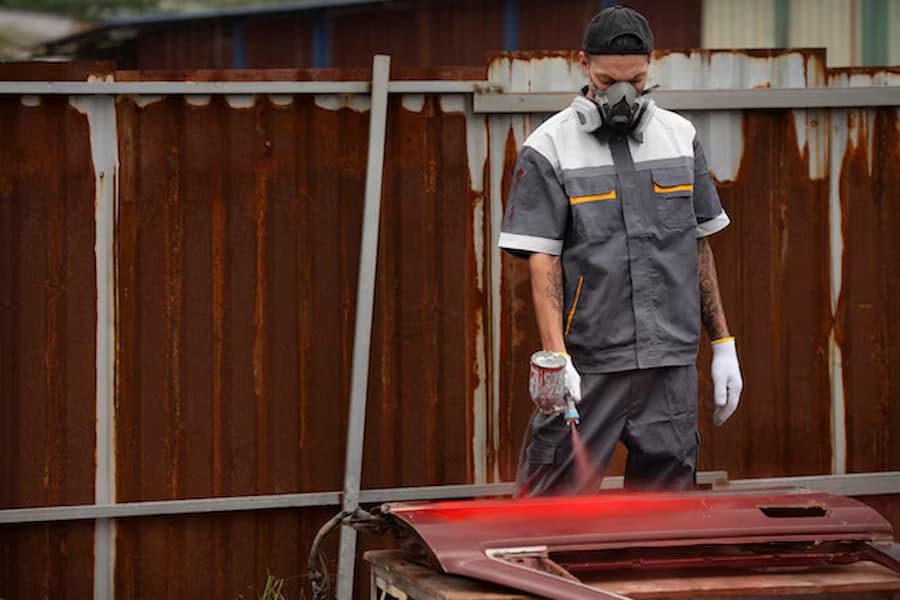
Quick Answer: The best rust converter chemically locks active iron oxide into a hard, paintable iron tannate, sealing the surface so it can take a topcoat without sandblasting. A 2-in-1 tannic-acid blend like XionLab's converts and primes in a single pass, slashing project time by roughly two-thirds. For pitted truck frames, marine fittings, and farm gear, that single-pass chemistry wins on speed and durability.
Walk down the rust aisle and you'll see four labels (we explain how rust converters work in plain terms): rust converter, rust neutralizer, rust reformer, and rust treatment. The labels are marketing dialect, not chemistry. Each describes the same core reaction: an acid blend — tannic, phosphoric, or both — binds with iron oxide and produces a stable compound the topcoat can grip.
The real differences show up in the bottle. Tannic-acid formulas yield iron tannate, a tough black compound you can paint over directly. Phosphoric-acid-only formulas yield iron phosphate, which is stable but tends to flash-rust if you don't topcoat within a day. Dual-chemistry blends combine both acids and add a polymer carrier, sealing the conversion under a built-in primer film.
So when a customer asks for the "best rust reformer," they're really asking which chemistry handles their job. According to peer-reviewed work in Corrosion Science, dual phosphoric–tannic systems on weathered low-carbon steel have driven corrosion rates down to roughly 3 mils per year — a sharp drop from untreated controls.
Corrosion is not a small line item. It's a multi-trillion-dollar global drag on infrastructure, vehicles, and equipment — and the right rust converter, applied early, sits at the cheap end of the cost curve.
Global cost of corrosion, per the NACE International IMPACT study — about 3.4% of global GDP.
Annual U.S. automotive corrosion cost, per NACE / industry data — salt belt vehicles take the brunt.
Range of corrosion costs preventable using current control practices, according to NACE's IMPACT findings.
Translation for shop owners and DIYers: a $25 bottle of the right rust converter, used at the right moment, can stretch a tailgate or a deck rail another decade. Skip the step, and you're paying for steel.
The chemistry is satisfying. Tannic acid, an organic polyphenol pulled from oak galls and chestnut bark, runs a chelation reaction with ferric iron (Fe³⁺). The acid's phenolic groups grab the iron ions and lock them inside a stable tannate complex. The result: a hard, dark, almost-blue-black film bonded to bare metal underneath the original rust.
Phosphoric acid does something different. It strips and converts in one motion, etching loose oxide and depositing iron phosphate crystals on the parent steel. The crystals act like a microscopic anchor pattern, similar to what shot-blasting gives you, but without the mess. Adhesion of subsequent finishes improves measurably.
Modern dual-chemistry products run both reactions in parallel. Tannic acid does the deep conversion across pitted areas. Phosphoric acid builds an anchor pattern. A waterborne resin vehicle seals everything, and you skip the standalone primer step. That's the "2-in-1" pitch in plain English.
Apply the product on a sunny morning. Within ten minutes you'll watch orange-brown rust shift toward purple, then to a dense flat black. Skip the urge to wipe it. Color change means the conversion is working. Cure window on most premium formulations spans roughly 24 to 48 hours before a topcoat can land safely on top.
People often confuse the two. They are different tools for different rust loads.
A rust remover is an acidic dip or gel — oxalic, citric, or hydrochloric — designed to dissolve rust and exposes raw steel. You then have a narrow window before flash rust returns, so you must prime the metal almost immediately. Removers shine on small parts, hardware, and tools you can dunk in a tray.
A rust converter, by contrast, leaves the rust in place and transforms it. No dipping. No flash rust race. You spray, brush, or roll on whatever's in front of you. Converters earn their keep on big surfaces — trailer beds, fence rails, equipment frames — where stripping back to bare metal isn't practical.
| Need | Best Rust Remover | Best Rust Converter |
|---|---|---|
| Small parts you can soak | Yes — fast, full strip | Overkill for tiny pieces |
| Truck frame or fender | Impractical scale | Ideal — spray or brush in place |
| Surface rust on patio set | Possible with gel form | Faster, no rinse needed |
| Heavy pitting | Risk of weakening thinned steel | Stabilizes pits in place |
| Marine hardware | Strip then re-coat fast | Convert, then marine topcoat |
| Time to topcoat | Minutes — flash rust risk | 24–48 hours, low risk |
Some pros run both. Strip the part, then convert any residual rust on areas the strip missed. Belt and suspenders. Effective.
Here's an honest look at the rust converters showing up most regularly in workshop conversations, ranked by the kind of job each one suits. None of these brands paid for placement. These picks emerge from observing how each formulation behaves under genuine field conditions.
| Product | Chemistry | Strength | Watch-Out |
|---|---|---|---|
| XionLab 2-in-1 | Tannic + polymer carrier | Converts and primes in one pass — flexible film | Wants a clean, oil-free surface to bite |
| Corroseal | Tannic, water-based | Strong on light to medium rust — latex-paint-friendly | Thinner film, may need two coats on heavy pits |
| POR-15 Rust Preventive | Moisture-cured urethane | Glass-hard finish layer — legendary among chassis restorers | Not a true converter; needs Metal Prep first |
| Permatex 81849 | Tannic + acrylic | Sprayable canister convenience — small-job hero | Coverage is small — not for full panels |
| Rust-Oleum Reformer | Tannic + acrylic | Inexpensive, widely stocked — useful for quick fixes | Thin coat — sun and salt strip it sooner |
| Fertan | Tannic, water-based | European workshop favorite — deep capillary penetration | Long cure (48 hours+) before topcoat |
One honest note. Corroseal works well for lighter surface rust and accepts standard latex paint. Where XionLab pulls ahead is on pitted surfaces and salt-exposed steel: the tannic-plus-polymer combination builds a thicker, more flexible film flexing with the substrate instead of cracking. We've watched the difference on Gulf Coast trailer hitches. Six months later, the cheaper aerosol patches were ghosting back to orange. The XionLab patches were still flat black.
Bottle directions read like a chemistry textbook. Reality is simpler. Here's the field sequence proven to pull the best out of any rust converter, including XionLab's.
Grab a wire brush or coarse abrasive pad. Goal here is removing flaking scale, not stripping bare. If a flake comes off with a flick of a fingernail, it shouldn't be on the metal when the converter goes down.
Oils and greases interrupt the acidic reaction sequence. A wipedown using mineral spirits or denatured alcohol works fine. Let it flash off completely before painting. Skip degreasing and the conversion will look pristine for two weeks — then peel.
Brush, roller, or HVLP spray. Don't spread it thin. Active acid requires liquid contact against iron oxide molecules to react. If the surface looks dry while you're working, you're going too fast. Recoat any spot flashing dry too quickly.
Step away for roughly an hour. Watch the reaction unfold. Once everything has shifted from rust orange to a flat dark color, the conversion has finally locked into place.
For most premium converters, topcoat after 24 hours and before 7 days. Too early and you trap moisture. Too late and the surface needs a light scuff. XionLab's film is paint-ready inside a 24-hour window.
Pro tip: If you see any orange bloom returning before topcoat, hit it with a second light pass. Don't move on until the color is uniform.
Truck frames absorb impact, salt spray, and constant flex loading. For deeper guidance, see our breakdown of rust converter for automotive protection. You want a converter with elasticity in the cured layer. A rigid coating fractures at flex points and lets moisture sneak underneath. Tannic plus polymer carriers handle this better than phosphoric-only sprays. Bonus points if the product handles overhead application without dripping.
Salt water is brutal. Our guide to marine corrosion protection and treatment walks through the full sequence. Marine rust converter formulas need to resist constant chloride attack and accept marine-grade topcoats — epoxy primers, polyurethane finishes. Tannic-acid converters with polymer carriers seal pinholes and stop crevice corrosion before it spreads under fittings. AMPP guidance on marine coatings stresses film integrity over film thickness, and dual-chemistry converters deliver on both.
Patio furnishings spend most of their lifespan rusting quietly through the seasons. Quick fixes are tempting. Don't reach for the cheapest aerosol — thin layers wear off in a single season. A water-based tannic converter brushed on, then topcoated with a UV-stable enamel, holds for years. Garden tool heads earn an identical sequence.
Tractors, balers, augers, harrows, and skid steers. These confront weather, embedded mud, and sometimes ammonia drifting from fertilizer dust. The best rust converter here bonds tightly enough to take abrasion. Look for products mentioning adhesion testing or salt-spray hours on the label.
Different metallurgy reacts differently. Wrought iron drinks tannic chemistry; mild carbon steel takes phosphoric better; cast pieces sometimes shrug off both unless surface texture provides bite. Knowing which substrate sits beneath the corrosion changes the bottle you grab.
Railings expand and contract with daily temperature swings. Wrought ornamental ironwork especially. A brittle membrane cracks, and water gets in at the crack edge. Flexible tannic-polymer formulas work best. Brush application beats atomized spraying for tight ornamental scrollwork.
Most rust converters force a tradeoff. Strong chemistry, weak film. Or thick film, slow conversion. XionLab's dual formula was engineered to dodge such tradeoffs. Here's how the design choices map to real performance.
Tannic for deep conversion, supporting acid for tooth and quick action. Two reactions in one pass.
Built-in primer film locks the conversion under a flexible barrier — no separate primer step.
Safer for indoor application and easier cleanup. No solvent fumes filling the shop bay.
Field-validated on Northeast salt-belt trucks and Gulf Coast marine fittings. Holds up where cheap sprays fail.
Same formula adapts to any application method. No retooling between jobs.
Compatible with oil enamels, latex, epoxy, and marine polyurethanes. Pick the finish your job calls for.
Here's a small story. Last fall I treated the rear quarter panels of a 2008 Tacoma along coastal Carolina. Fender bottoms were a mix of scaly rust and pitting — the kind making you wonder if the truck's ready for the scrap yard. One evening with XionLab brushed on. Color shift inside an hour. Dry to the touch by morning. Bedlined the wells the next afternoon. Six months and a hurricane season later, no orange bleed-through, no lifting at the seams. About a quarter-inch of pit depth at the worst spot, fully sealed. That's the kind of result changing how you think about salvageable steel.
Rust doesn't form the same way everywhere. The chemistry of the surrounding air decides which converter holds. Here's how to think about region-by-region selection.
Road salt — sodium chloride and increasingly calcium chloride — chews through truck frames every winter. Salt wins every time on cheap converters. You need a thick, flexible film resisting chloride ion penetration. XionLab's dual-acid plus polymer formula was specifically validated on salt belt vehicles. Apply during autumn, ahead of the initial salting run.
Constant humidity plus airborne salt. Rust forms even on garaged vehicles. Marine-grade tannic blends sealed beneath polyurethane qualify as the regional gold standard. Annual touch-ups on exposed areas keep things ahead of the curve.
Wet, mild, and forgiving — until it isn't. Constant rainfall causes slow surface oxidation rather than aggressive pitting. Water-based tannic converters work well here, since rapid cure isn't critical and overspray rinses easily.
Low humidity slows rust formation, but UV destroys cheap topcoats. Pick a converter accepting UV-stable acrylics or polyurethanes. Don't skimp on the topcoat — it's doing more work than the converter here.
Ammonia from fertilizers, equipment living outside year-round, mud and grit. Converters with strong adhesion and abrasion resistance. Brush application beats spray for thick coverage on equipment frames.
Time for the honest section. Even the best rust converter has limits. Knowing them is half the value of using the product correctly.
One coat. Done. That's the pitch when the chemistry is right. But chemistry only works if the substrate is real steel and the prep is honest.
Not all rust converters are equal. A few practical criteria separate the products worth buying from the ones merely looking good on the shelf.
Rust converters use real acids. Treat them with respect.
Outdoor application is ideal. If you're working in a garage, open both bay doors and run a fan. Water-based converters have lower fume profiles than solvent-based ones, but ventilation is still smart practice.
Estimate coverage at 200–300 square feet per gallon brushed, less when sprayed (over-atomization waste). One quart will easily cover a truck bed. A full pickup frame may need a gallon or more, depending on rust depth and surface texture.
Disposal note: Rinse rags in water, then dispose per local rules. Acid-soaked rags should never go straight to the trash. Not all are equal — check your local waste authority guidance.
Is a rust converter the same as a rust remover?
No. A converter transforms rust chemically into a paintable film and leaves the layer in place. A remover dissolves rust off the steel and exposes bare metal flash-rusting within hours. Pick a converter for in-place repairs and a remover for small dunkable parts.
How long does a rust converter last?
The converted layer itself is permanent — iron tannate is stable. But UV exposure slowly breaks down the polymer barrier if left uncoated. With a quality topcoat, expect 5 to 10 years of protection on most outdoor surfaces. Salt-belt vehicles may want a refresher every 3 to 5 years.
Can I paint over rust converter?
Yes — that's the whole point. Quality converters accept oil enamels, latex paints, epoxy primers, and marine polyurethanes. Wait the manufacturer-recommended cure window (typically 24 hours for XionLab, longer for others) before topcoating.
Does rust converter work on heavily pitted metal?
Yes, if the underlying steel is still there. Pitting reduces cross-section but converters can still seal and stabilize the corrosion. Build a thicker layer or run two passes across pitted zones, then topcoat. If you can poke through the metal, weld a patch first.
What temperature is too cold for rust converter application?
Most quality converters need air and surface temperatures above 50°F to react properly. Below that, the acid reaction slows or stops. Some specialized winter formulas work down to 40°F. Warming the canister indoors first helps performance when you bring it out cold.
Will rust converter stop rust forever?
It stops the existing rust permanently. New rust can still form on adjacent untreated areas if those surfaces get exposed to moisture and oxygen. Full corrosion control is converter plus topcoat plus periodic inspection. Catch new spots early.
Can I use rust converter on aluminum or stainless steel?
No. Rust converters target ferric iron oxide. Aluminum oxidation is white aluminum oxide — different chemistry, different treatment. Stainless steel rarely rusts and rarely needs converting. Use the right product for the right substrate.
Why is XionLab's 2-in-1 different from a basic rust converter?
Two reasons. First, the polymer carrier acts as a built-in primer, so you skip the separate primer coat. Second, the dual-acid chemistry handles light surface rust and deep pitting in the same pass. For most users this means fewer products in the cabinet and fewer coats on the metal.
Is rust converter safe for use around food prep areas like smokers or grills?
Once cured and properly topcoated, yes — but always topcoat with a food-grade or high-temperature paint rated for the application. Don't use uncoated converter film inside a smoker chamber.
Skip the grinding. Skip the second primer coat. XionLab's 2-in-1 Rust Converter & Metal Primer converts and seals in a single pass — field-tested from salt-belt trailers to Gulf Coast marine fittings.