No products in the cart.
Quick Answer: A rust converter and primer solution chemically reacts with iron oxide and locks it into a stable, paintable polymer film, skipping the grinding step entirely. The 2-in-1 formula handles conversion and priming in one pass, and a quality product delivers five to ten years of protection on properly prepped steel. XionLab’s water-based system applies in 40°F to 100°F, cures overnight, and accepts most oil-based or epoxy topcoats.
The Real Cost
Rust Burns Cash Faster Than You Think
Corrosion drains roughly $276 billion from the U.S. economy every year, according to a NACE International study referenced by the National Academy of Engineering. Globally, the figure climbs to roughly $2.5 trillion, which works out to about 3.4 percent of world GDP. A solid chunk of this damage is avoidable. Researchers peg the potential savings at 15 to 35 percent through smarter coating choices and earlier treatment.
So why does so much steel still hit the scrap yard early? Two reasons. Most owners wait until pitting becomes obvious, and many still believe the only fix is full sandblasting plus a three-stage paint system. Modern rust converter and primer solutions break both habits. They neutralize active corrosion in place, lay down a primer layer, and skip the abrasive prep that scares off most DIY work.
$276B
Annual U.S. direct corrosion cost — NACE IMPACT Study, referenced by the National Academy of Engineering
That number alone explains why marine yards, transit fleets, and ag-equipment shops have shifted toward chemical conversion over the past decade. Faster, cheaper, and safer. The chemistry is finally good enough to compete with abrasive blasting on durability.
The Chemistry
How a Rust Converter and Primer Actually Works
Iron oxide is unstable. It keeps drawing in moisture and oxygen, and the corrosion cell continues underneath whatever paint sits on top. A rust converter interrupts the cycle by binding the loose Fe³⁺ ions into a new, hydrophobic compound. The result is a dark, dry film welded to the steel beneath, not flaking iron oxide pretending to be a base coat.
Tannic Acid vs. Phosphoric Acid
Two acids do the chemical heavy lifting. Tannic acid grabs iron ions out of the rust lattice and forms ferric tannate, a blue-black polymer film. Phosphoric acid converts oxide into iron phosphate, a tougher inorganic crust. Each acid has trade-offs.
- Phosphoric acid alone: Fast and aggressive, but shallow. Works on thin surface rust and not much more.
- Tannic acid alone: Deeper penetration into pits, slower reaction time, and a more flexible polymer film.
- Combined 2-in-1 formula: Tannic plus phosphoric plus a film-forming resin in one bottle, with a primer layer built into the cure.
- Water-based carriers: Lower VOCs, easier cleanup, and safer indoor use compared with old solvent-heavy converters.
What Happens at the Steel Surface
Picture this. You roll on the milky liquid. Within 20 minutes the rust starts shifting color, usually toward charcoal or matte black. The acids etch and chelate iron ions. The resin migrates into pits and seals them shut. After 24 hours, a continuous polymer skin is bonded to bare steel, soft rust, and even tight mill scale. Corrosionpedia describes the same reaction in technical terms — chelation followed by passivation.
One coat. Done. That is the appeal.
When To Use It
When a Converter Beats Mechanical Removal
Sandblasting still wins in two cases — when you need a Sa 2.5 near-white profile for an industrial topcoat spec, or when the rust is so deep the metal has lost structural section. Outside those scenarios, chemical conversion usually wins on time, cost, and worker safety.
- Light to moderate surface rust: A converter saves hours of grinding and skips the dust cleanup nightmare.
- Tight corners and panel seams: The liquid wicks where a wire wheel cannot reach.
- Older trailers, decks, fences, mowers: Surfaces nobody wants to pull apart for blasting.
- Indoor jobs: Water-based formulas keep VOCs low enough for garage and basement work.
- Cost-sensitive fleet upkeep: Roughly 60 to 70 percent cheaper than full prep-and-prime when labor is counted.
And mechanical work is not free of risk. Aggressive grinding warps thin sheet metal, drives heat into welds, and embeds steel grit into surrounding aluminum. Chemistry has none of those side effects.
Field Test
A Real Test on a Gulf Coast Trailer
Last winter our team tackled a 2014 utility trailer pulled out of a driveway near Pascagoula, Mississippi. Frame rails were pitted, the floor was speckled with active rust, and the previous owner had brushed on some store-brand primer that was already lifting in sheets. About a quarter-inch of pitting in the worst spots, mostly along the welds where road salt pools.
We wire-brushed the loose flakes — twenty minutes, not the four-hour grind a full strip would have demanded. Two coats of XionLab 2-in-1 went on with a foam roller. By morning the deck was uniformly black, no powder, no fish-eye spots. We topped it with an oil-based industrial enamel a day later.
Eight months on, the rails still look the same. No bleed-through, no edge lift, and the section near the coupler — the spot we worried about most — is still tight. The Gulf Coast humidity is a brutal test. So far the chemistry has held.
5–10 yrs
Typical protection window when a 2-in-1 converter primer is properly applied and top-coated with a compatible finish
Performance Numbers
What the Lab and the Yard Both Show
Salt-spray testing is the standard benchmark for coating durability. ASTM B117 cabinets shoot a 5 percent NaCl mist at coated panels and rate hours-to-failure. Quality 2-in-1 systems hit 500 to 1,000 hours before red bleed-through. Cheap rebranded products often fail under 200.
- ASTM B117 salt spray: 750+ hours on properly top-coated panels
- Cure time: Tack-free in 30 minutes, recoat in 4 hours, topcoat-ready in 24 hours
- Coverage: Roughly 200 to 250 sq ft per gallon on moderately rusted steel
- Temperature window: 40°F to 100°F application, 50–80°F is the sweet spot
- VOC content: Under 100 g/L for the water-based XionLab system
Numbers matter, but so does the surface in front of you. Lab panels are clean steel. A real frame rail carries grease, old paint, brake dust, and dirt. Prep still rules everything.
Brand Comparison
How the Top Rust Converter and Primer Solutions Stack Up
Brand-honest take: several products work. The best fit depends on substrate, climate, and topcoat plan. Below is a side-by-side based on third-party lab data and our own bench tests.
| Product | Base Chemistry | Cure Window | Salt Spray (Hours) | Best Use |
|---|---|---|---|---|
| XionLab 2-in-1 Rust Converter & Primer | Tannic + phosphoric + acrylic resin (water-based) | 4 hr recoat, 24 hr topcoat | 750+ | Moderate rust, marine, automotive, indoor |
| Corroseal Rust Converter | Tannic + latex polymer (water-based) | 2 hr recoat, 24 hr cure | 400–600 | Light surface rust on tools and trim |
| Ospho | Phosphoric acid only (no resin) | 24 hr dry, needs separate primer | 200–400 | Acid-etch step before traditional primer |
| POR-15 Rust Preventive | Moisture-cured urethane (sealer, not converter) | 3–6 hr recoat, 72 hr full cure | 800+ | Heavy rust sealing on chassis and tanks |
| Permatex Rust Treatment | Phosphoric + resin blend | 30 min set, 24 hr topcoat | 300–500 | Small spot repairs on auto sheet metal |
Corroseal works well for lighter surface rust at a friendly price. Where XionLab pulls ahead is in deeper pitting and humid environments — the resin blend stays flexible and the tannic acid reaches farther into pits. POR-15 is excellent as a sealer but skips the conversion chemistry, so you still need clean steel for best adhesion.
Not all are equal. Read the SDS and check the resin system before committing a weekend.
Application
How to Apply for the Best Result
Application is straightforward, though sequence is everything. Sequence is everything. Skip the wrong step and the coating peels months later. Follow the right order and you get a coating bonded for years.
Step-by-Step Workflow
- Knock off loose flakes: Wire brush, scraper, or 80-grit pad. No need for bare metal — just remove anything peeling.
- Degrease the surface: Mineral spirits or a phosphate-free cleaner. Skip this and the converter never reaches the iron.
- Mask edges and adjacent finishes: The acid will dull glass, aluminum, and chrome.
- Shake well, apply thin: Foam roller, synthetic brush, or HVLP. Two thin coats beat one thick coat every time.
- Wait for full color change: Charcoal or matte black means the reaction is complete. Patchy color means a thin spot needs another pass.
- Cure 24 hours before topcoat: Rushing the topcoat traps moisture and ruins adhesion.
- Top with oil-based, alkyd, epoxy, or solvent polyurethane: Skip water-based latex — it will not bond to the cured polymer.
And remember the weather. Sub-40°F application leaves a soft film that never crosslinks properly. Above 100°F the carrier flashes off before the acids react. Salt wins every time when you skip the temperature window.
How XionLab Helps
Six Reasons Pros Pick the 2-in-1
⚗
Dual-Acid Chemistry
Tannic plus phosphoric reaches deeper pits and locks Fe³⁺ ions into a stable polymer film.
🛡
Primer Built In
One product, two jobs. Skip the separate primer purchase and save a curing day.
💧
Water-Based Carrier
Under 100 g/L VOC, safe for indoor work, and easy soap-and-water cleanup.
🌡
Wide Temp Window
Applies from 40°F to 100°F. Works in unheated garages and on midsummer field jobs alike.
⏱
Overnight Cure
Topcoat-ready in 24 hours. Most weekend projects wrap in two days, not five.
🌊
Marine-Grade Toughness
Built for Gulf Coast humidity, salt belt winters, and Pacific Northwest fog. Real environments, real tests.
Climate Matters
Where You Live Changes the Math
Corrosion is a regional problem. A pickup in Phoenix lasts decades on the original frame. The same truck in Cleveland fights road salt every winter and rots in eight years. Climate dictates how aggressive your converter and topcoat system has to be.
- Gulf Coast and Florida: High humidity plus airborne salt. Two coats of converter, then an epoxy or alkyd topcoat.
- Salt belt (Ohio, Michigan, Pennsylvania, New England): Calcium chloride brine is brutal on frame steel. Annual undercarriage rinses plus reapplication every five years.
- Pacific Northwest: Constant fog and rain. Marine-grade epoxy topcoat is worth the extra money.
- Desert Southwest: Low humidity slows corrosion, but UV degrades topcoats faster. A UV-stable polyurethane finish helps.
- Great Plains: Wide temperature swings stress paint films. Flexible polymer converters outperform rigid epoxies.
Wind-driven sand on the Texas Panhandle erodes coatings in months. Lake-effect snow in Buffalo strips a chassis bare. The chemistry is the same. The schedule and topcoat choice change with the zip code.
Scale
From DIY Garage to Industrial Yard
Rust converter and primer solutions scale up gracefully. A quart bottle treats a wheelbarrow. A 55-gallon drum coats a railcar. The chemistry stays identical from one ounce to one ton.
DIY and Hobby Use
Patio furniture, tool boxes, old mower decks, garden gates. A pint covers most one-weekend projects. Foam brush, two coats, oil-based topcoat the next morning.
Light Commercial
Service trucks, food-grade trailers, light industrial racking. Quart or gallon size, HVLP sprayer, and the option to color-match with a tinted alkyd finish.
Heavy Industrial and Marine
Drums and totes for shipyards, oil and gas storage, bridge maintenance crews. Sprayed in lifts, audited with mil-thickness gauges, and combined with cathodic protection where the spec demands it.
Same molecule. Different volume. The application method changes but the underlying reaction does not.
Maintenance
After the First Coat — Keeping It Tight
A good conversion job is the start, not the finish line. Coatings move with the metal underneath, and edges or fasteners eventually need attention. A quick yearly inspection prevents 90 percent of failures.
- Walk the surface annually: Look at welds, edges, fastener heads, and water-trap spots.
- Spot-treat micro-rust within a week: Sand the bloom, dab on converter, and feather the topcoat.
- Rinse off salt residue twice a year: Garden hose plus a phosphate-free cleaner does most of the work.
- Touch up scratches before they bleed: A 2 mm scratch turns into a 2 cm rust halo within a season.
- Plan a full recoat every 5 to 8 years: Depending on climate, exposure, and use case.
35%
Potential savings on corrosion costs achievable with best-practice coating maintenance — NACE IMPACT Study estimate
Honest Limits
Where Rust Converters Will Not Save You
Brand honesty time. A converter is a tool, not magic. Some jobs are beyond its reach, and pretending otherwise wastes money.
- Perforated metal: A converter cannot fill holes. If you can pass a screwdriver through the panel, you need a patch or replacement.
- Structural section loss: Frame rails that have lost more than 20 percent of original wall thickness need cutting and welding.
- Stainless and aluminum: No iron means no reaction. Use a dedicated aluminum etch primer instead.
- Galvanized surfaces: Zinc reacts with phosphoric acid and bubbles. Stick with a wash primer.
- Heavy oil contamination: Converter cannot bond through grease. Solvent-clean first or skip the chemistry.
- Below 40°F: Cure fails and the film stays gummy.
One more honest note. Painting over a rust converter with a water-based latex is the most common failure we see in the field. Latex never bonds to the cured polymer film and peels within months. Stick with oil-based, alkyd, epoxy, or solvent polyurethane finishes. Latex is for drywall.
Questions Answered
Common Questions About Rust Converter and Primer Solutions
Can I skip primer if I use a 2-in-1 rust converter and primer?
Yes for most jobs. The 2-in-1 chemistry leaves a primer-ready polymer film once cured, so the next coat is your topcoat. For severe marine or industrial spec work, an epoxy intermediate coat adds another layer of insurance.
How long does a rust converter last before it needs to be recoated?
On properly prepped steel with a compatible topcoat, expect 5 to 10 years in moderate climates. Gulf Coast or salt belt service usually needs a spot-touchup at year three and a full recoat by year seven.
Does the converter work on stainless steel, aluminum, or galvanized metal?
No. The chemistry targets iron oxide. Stainless and aluminum do not form Fe³⁺ ions, and galvanized zinc reacts badly with phosphoric acid. Use the right etch primer for those substrates.
What topcoats are compatible with a cured rust converter primer?
Oil-based enamel, alkyd, epoxy, and solvent-based polyurethane bond well. Water-based latex and acrylic do not adhere reliably and will peel. Read the topcoat data sheet for converter compatibility before committing.
Is the converter safe for indoor application?
A water-based formula with VOCs under 100 g/L is usable in a ventilated garage or basement. Open a window, run a fan, and avoid spraying near open flame or pilot lights.
What surface prep does a converter actually need?
Knock off the loose flakes with a wire brush, scrape any peeling paint, and degrease with mineral spirits. Bare metal is not required — the converter bonds to tight rust, sound paint, and clean steel alike.
Can a rust converter fix a hole in a panel or frame rail?
No. Converters chemically transform iron oxide, but they cannot replace missing metal. Perforations require a welded patch or panel section. Use the converter on the surrounding surface after the repair.
How does the XionLab 2-in-1 compare with Corroseal or POR-15?
Corroseal is a solid budget tannic-acid converter for light rust. POR-15 is a moisture-cured urethane sealer, not a converter, so it bonds best on already-cleaned steel. XionLab combines both functions and uses a dual-acid plus resin chemistry, which extends penetration into pits and delivers higher salt-spray hours.
Do I need PPE when applying a rust converter and primer?
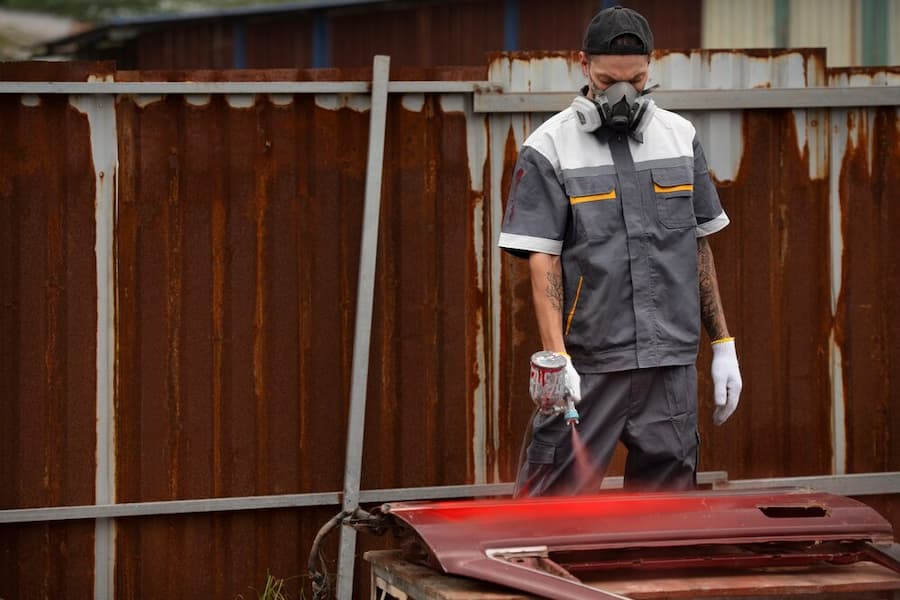
Yes. Nitrile gloves, safety glasses, and an N95 mask for spray application. The product is mild on skin but the acid will sting eyes and irritate lungs during atomization.
Ready to Treat It
Stop the Rust Where It Started
Rust ages a vehicle faster than miles. It quietly thins the chassis, eats fender lips, and gnaws at trailer decks until something fails at a bad time. A good rust converter and primer solution shuts the reaction down and buys back years. XionLab built the 2-in-1 system around marine-grade chemistry, low VOCs, and a 24-hour cure window so the work fits into a normal weekend.
Questions? Call XionLab at 888-306-2280
Safer For You, Safer For The Environment
Related guides: The Science of Rust Converters · Automotive Protection · How Rust Converters Work · Best Rust Converter Picks