Rust converter
Rust Converter Spray Paint: How One Aerosol Stops Corrosion in a Single Pass (2026 Guide)
Rust Converter Spray Paint: How One Aerosol Stops Corrosion in a Single Pass (2026 Guide)
Aerosol-format rust converters reach pits, pinholes, and panel seams a brush will skip. Here is what the chemistry does, where it shines, and where it falls short.
Quick Answer: Rust converter spray paint pairs tannic or phosphoric acid with a polymer binder in one aerosol. The acid locks loose iron oxide into a stable dark ferric tannate film, and the polymer leaves a primer surface ready for topcoat. One pass replaces three steps — but only on tight surface rust.
What Aerosol Conversion Actually Does to Rust
Rust is iron oxide. Loose, flaky, hungry for more oxygen. A brush of phosphoric acid will neutralize the top layer. Tannic acid chelates Fe³⁺ ions and pulls them into a dark blue-black ferric tannate complex. The flake becomes a film. The film grips primer. Sequence is everything.
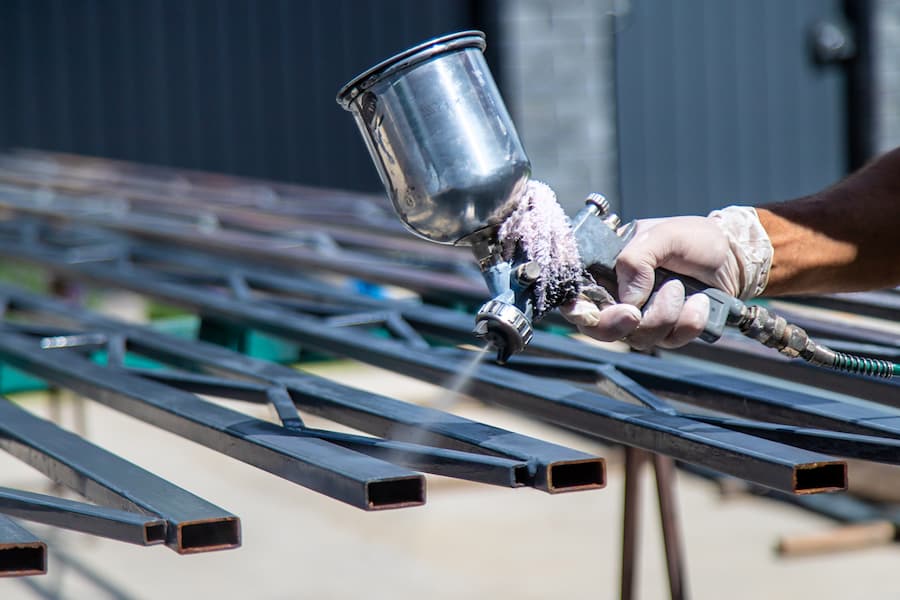
An aerosol delivers that chemistry as a fine, even mist. Propellant atomizes the converter and drives it into pits and pinholes the bristles of a brush will skip right over. Meanwhile, polymer carrier dries alongside the conversion reaction, so a single pass leaves you with a sealed, paint-ready surface. Read our deeper science explainer for the molecular detail on what separates a real converter from a glorified rust paint.
Why does this matter on a rusted panel? Pits hold moisture. Moisture restarts the corrosion cycle inside any paint you spray over them. So you need a product capable of reaching the bottom of those pits and converting the oxide where it lives.
Annual global cost of corrosion, equivalent to roughly 3.4% of world GDP, according to NACE International’s IMPACT study.
Why a Can Beats a Brush on the Right Job
Brush application makes sense on flat sheet metal. Smooth, accessible, you control thickness. Spray makes sense everywhere else. Salt wins every time on truck frames if you cannot reach the seams.
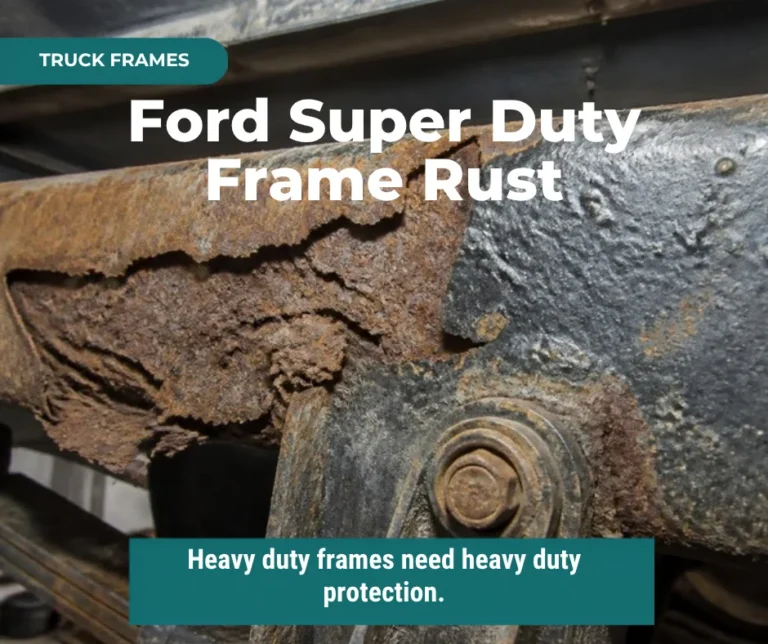
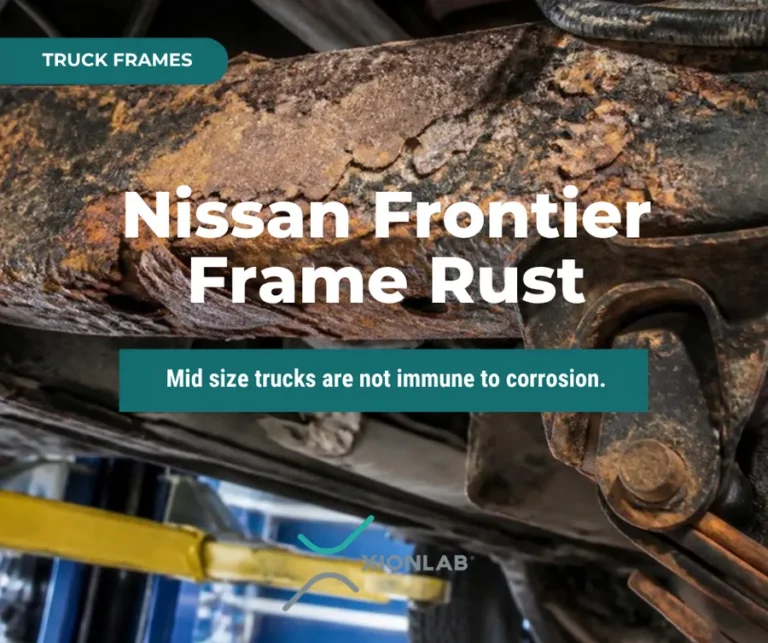
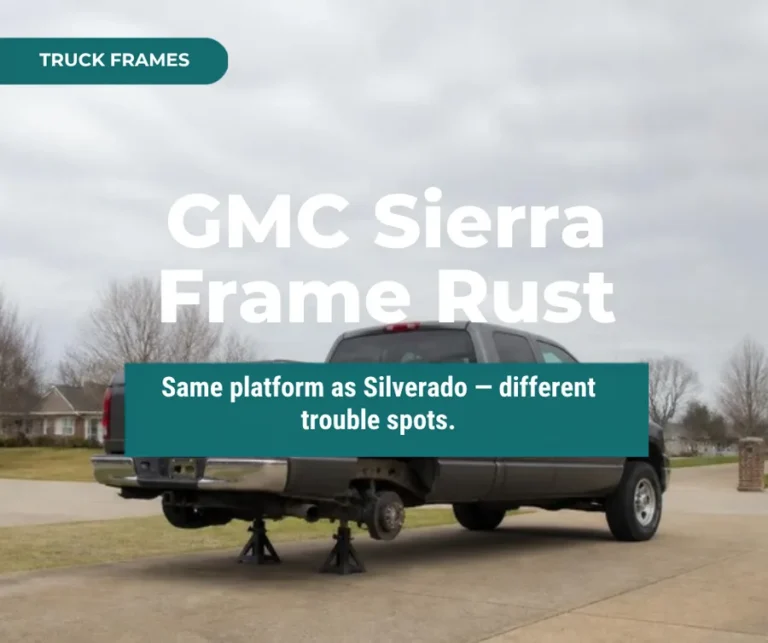
The strongest case for aerosol shows up on irregular geometry. Wrought-iron fence finials. Truck frame rails. The underside of a lawn mower deck. Anywhere a brush would miss 30% of the rusted area, an aerosol catches it. And the application speed is honestly hard to beat — what takes 40 minutes with a brush takes 8 minutes with a can.
Where Aerosol Pulls Ahead
- Irregular geometry wins big. Pits, seams, and pinholes get reached. Bristles cannot follow that contour.
- Speed beats other formats. A 4-square-foot panel takes under 5 minutes start to finish, dry to recoat.
- Overhead and undercarriage work become easy. No drip lines. No tray balanced on a creeper.
- Touch-up jobs are simple. Small rust spots on a tailgate, a bike frame, a gate hinge — open and close the same can across months.
- Even film build means no brush marks, no holidays, no ridges where two strokes met.
Where a Brush Still Wins
Honest answer? Big flat surfaces. Barn doors. A storage tank exterior. Long sections of fencing — say 100 square feet at a stretch. Roll or brush coverage runs about 50–75 square feet per quart of converter, while an aerosol typically covers around 25 square feet per can. Math says brush.
And confined spaces with no ventilation — basements, closed garages, inside storage tanks — call for a brush or roller. Aerosols release more solvent vapor into the air.
How to Apply Rust Converter Spray Paint Correctly
The product is forgiving, but surface prep still matters. Skip the prep and the conversion happens on loose scale that flakes off three months later, taking your topcoat with it. Not all rust is equal.
1. Strip the Loose Stuff
Wire brush or grind off anything flaking. The acid needs to bond with tight oxide, not powder. A pass with 80-grit on a flap disc takes the worst off without removing sound metal. Wear a respirator — old rust dust is not friendly.
2. Degrease and Dry
Oils block the reaction. Acetone or a citrus-based degreaser, then a clean rag. Let it flash off completely. Surface temperature should be above 50°F and below 90°F. And humidity below 70%.
3. Shake Until Your Wrist Hurts
Two minutes minimum. Most failures trace back to skipped agitation. The polymer settles, the acid stays liquid, and you spray uneven chemistry across the panel. Two minutes. Then 30 seconds more.
4. Spray in Even, Overlapping Passes
Six to ten inches from the surface. Sweep, do not pause. Overlap each pass by 50%. One coat is enough on light surface rust. Heavy pitting may want a second coat after the first has flashed off — typically 20 to 30 minutes.
5. Let It Cure Before Topcoat
Touch-dry in 10 to 15 minutes. Topcoat-ready in 24 hours. Full chemical cure takes 72 hours. Rushing the topcoat traps unreacted moisture. Patience here pays back in years of bond strength.
One coat. Done. On tight surface rust, a single even pass with a quality aerosol converter replaces three traditional steps: chemical strip, mechanical sand, separate primer. The pit chemistry happens under the polymer while it dries.
Aerosol vs. Liquid Converter vs. Gel: Picking the Right Format
Three formats. Three jobs. Choosing wrong burns money and time. Here is how they line up.
| Format | Best For | Coverage | Application Time | Weakness |
|---|---|---|---|---|
| Aerosol Spray | Irregular geometry, touch-ups, undercarriages | ~25 sq ft/can | Fast (8 min per panel) | Higher VOC, weaker on heavy pitting |
| Liquid Brush/Roll | Flat panels, large surfaces, controlled film build | 50–75 sq ft/qt | Moderate | Misses pits, slower setup |
| Gel | Vertical surfaces, heavy rust, overhead work | 40–60 sq ft/qt | Slow but no drip | Heavier film, harder to feather edges |
| 2-in-1 Aerosol | One-pass conversion + primer in field jobs | ~25 sq ft/can | Fastest overall | Premium price per square foot |
A useful comparison: Corrosionpedia notes that conversion chemistry depends entirely on direct acid-to-oxide contact, which is the variable each format trades off differently.
A Real Job: My Trailer Frame on the Texas Gulf Coast
My utility trailer sits outside year-round about a quarter-mile from the bay. Three years of Gulf Coast salt air, and the frame rails had developed surface rust about a quarter-inch deep on the inside corners, with thin scale across the cross-members. Classic. Not perforated. Not deep pitting. Just the kind of mid-stage rust most rigs get if you ignore them long enough.
I masked the bed bolts, hit the worst flake with a wire wheel on an angle grinder, degreased with acetone, and shot the whole frame with XionLab 2-in-1 aerosol on a Saturday morning. Two cans for the full perimeter. The conversion was visible within about 90 seconds — that classic darkening from rust-orange to charcoal-black. Topcoated with a chassis paint the next day after 24 hours of cure.
Result eight months later: still tight, still black, no creep at the welds. Did I think the can would survive Gulf Coast humidity that long? Not really. But it has.
What I would do differently? I rushed one corner where the original rust was heavier. The polymer film there is thinner than it should be, and you can see a faint surface texture forming. Lesson learned. On heavy spots, two coats. Automotive rust protection is forgiving but not bulletproof.
What Makes the XionLab 2-in-1 Aerosol Different
Plenty of converters exist. Most do one job: convert. The XionLab 2-in-1 builds the polymer primer at the same time as the conversion reaction, which collapses prep work into a single can. Here is how the formula is positioned.
Single-Pass Conversion + Primer
Tannic acid converts oxide while the polymer carrier lays a primer film. No second product, no second day.
Water-Based Chemistry
Lower VOC than solvent-only aerosols. Easier on the lungs and the shop air.
Topcoat Compatible
Accepts oil-based, latex, and most automotive enamels after a 24-hour cure window.
Pit Penetration
Aerosol propellant drives the converter into pinholes and weld seams a brush misses.
Salt-Belt Tested
Formulated for coastal and road-salt environments. Tested across the Gulf Coast and Northern salt belt.
Made in the USA
Founded in 2015 and produced domestically. Tagline says it best: Safer For You, Safer For The Environment.
Cost reduction available through best-practice corrosion management, per the AMPP IMPACT study — meaning $375–$875 billion in global annual savings.
What Rust Converter Spray Paint Cannot Do
Selling a product means being clear about where it stops working. So here it is. No marketing fog.
- Will not fix perforated metal. A hole is a hole. The converter cannot rebuild metal that has already rusted through. Patch, weld, or replace first.
- Will not bond well to oily, painted, or galvanized surfaces. The acid needs raw iron oxide to react with. Anything in between blocks the chemistry.
- Will not stop active leaks or wet rust. Apply to a dry surface. Standing water or active condensation kills the polymer film.
- Will not replace heavy-duty epoxy primers for structural applications. Marine hulls, bridge steel, and high-flex parts still need engineered coatings.
- Will not match factory paint perfectly. The conversion film is dark and slightly textured. Sand and topcoat if appearance matters.
Corroseal works well for lighter surface rust on flat panels. Where XionLab pulls ahead is on irregular geometry and field conditions where you need both conversion and primer in one shot. Different jobs, different tools.
Climate Matters: Where You Live Changes the Job
Rust is local. The Gulf Coast rusts differently than the salt belt. Pacific Northwest rust is its own animal. Aerosols give you options the brush format does not, and regional climate is the deciding factor on which option fits.
Gulf Coast and Florida
Salt-laden humidity drives rust into every seam. Aerosols matter here because the application speed lets you finish before fresh oxidation starts on the bare metal. From wire-brush to topcoat in a single morning, before afternoon humidity reactivates surface oxide.
Salt-Belt States (OH, MI, PA, NY)
Road salt is the enemy. Frame rails and undercarriages take the worst of it. Aerosol gets up into wheel wells and rocker panels a brush cannot reach. Marine and salt-exposure protection follows similar principles.
Pacific Northwest
Constant moisture, low salt. Surface rust spreads fast on tools left outdoors but rarely deep-pits. A single light coat usually handles it, which makes aerosol the cost-effective pick.
Desert Southwest
Bone-dry air. Rust happens slowly but UV destroys topcoats. The aerosol primer here matters less for conversion than for the bond it creates with UV-resistant topcoats.
How Many Cans Will You Actually Need?
Coverage estimates run between 7 and 25 square feet per can depending on the formulation. Dark colors and rust converters fall toward the higher end because pigment hides better. Light colors and decorative finishes need more passes for opacity.
Working numbers most people land on for typical home and shop jobs are listed below.
- Small touch-up wants 1 can. Tailgate hinges, gate latches, and bike frames all fit in that envelope.
- Lawn equipment deck wants 1–2 cans for a typical 21-inch mower deck.
- Trailer frame wants 2–3 cans for a 5’×10′ utility trailer perimeter.
- Truck frame rails want 3–4 cans per side for a full pickup chassis.
- Wrought-iron fence wants 1 can per 20 linear feet of railing with normal pickets.
Buy one extra. Aerosols sputter at the bottom, atomizing erratically, and the final ten percent of the contents disperses unevenly. Smarter to over-purchase than gallop across town mid-job hunting a replacement.
Reading the Label: What Actually Matters on a Can
Aerosol cans pile marketing language across every square inch. Cutting through that noise saves money. Hardware store shelves are crowded with products labeled “rust paint,” “rust stop,” “rust reformer,” and “rust converter.” Only one of those words describes genuine chemical conversion.
Look past the front label. Flip the can around and read the SDS panel. Tannic acid or phosphoric acid in the ingredient list means you have actual conversion chemistry. Without either, you have decorative paint formulated to look black on rust — pretty for a season, gone in two winters.
Coverage claims deserve skepticism too. Manufacturers cite ideal-condition numbers. Pitted surfaces, vertical walls, cold metal, and breezy work areas all reduce real-world yield. Buying 20% over your math estimate is cheap insurance against running short mid-job.
Red Flags Worth Avoiding
Generic “rust paint” without conversion chemistry. No SDS available online. Vague claims like “stops rust forever” without supporting evidence. Pricing that undercuts the category by 70% — usually signals heavily diluted formula or watered-down polymer. Trust matters in coatings. Honest brands publish data sheets, salt-spray hour ratings, and full ingredient panels.
Price Per Square Foot Beats Sticker Price
Cheap cans run roughly four bucks. Premium dual-action cans run closer to twenty. Compare apples-to-apples by dividing dollars spent by actual coverage achieved. The cheap can stretches across maybe nine square feet before sputtering empty. Quality alternatives reliably hit twenty-five. Doing the arithmetic flips the apparent winner upside down — paying more upfront frequently delivers lower cost per finished panel.
Working Smart With Aerosol Converters
Aerosols are pressurized. Treat them right and they last for years. Treat them wrong and you have a problem.
- Ventilate the space. Open garage, breeze, fan if needed. The propellant and acid mist are not friendly in still air.
- Wear a respirator and gloves. A P95 cartridge respirator handles the mist. Nitrile gloves handle skin contact with the converter.
- Eye protection is non-negotiable. The acid is mild but still an acid. Splashback into eyes is a bad day.
- Store below 120°F. Garages in Phoenix in August? Bring the cans inside.
- Do not puncture or burn empty cans. Recycle through your local hazardous waste program when possible.
Frequently Asked Questions
Properly applied over tight surface rust and topcoated within 72 hours, expect 5–10 years of protection. Outdoor exposure without topcoat shortens that to 2–3 years.
No. Wire-brush the loose scale first. The acid bonds to tight oxide. Spraying over flake just locks in a failure waiting to happen.
A converter chemically transforms rust into a stable coating. A remover dissolves rust off the metal. Use a converter when the rust is shallow and stable. Use a remover when you need bare steel back.
Yes, on cast iron with surface rust. Skip it on cookware — the chemistry is not food-safe. For railings, manhole covers, brake rotors, and similar parts it works fine.
Most oil-based, latex, and automotive enamels stick well after the 24-hour cure. Powder coating needs sandblasting first. Marine-grade epoxies generally do too.
No. Most aerosol converters need surface temperatures of 50°F or higher. Cold metal slows the reaction and prevents proper film formation.
Rust-Oleum Reformer converts and seals but is solvent-based with higher VOCs. XionLab uses water-based chemistry, builds a thicker primer film in one pass, and is formulated for both interior and exterior salt-belt jobs.
Strip the conversion film at the weld zone first. Acid residue in the weld puddle causes porosity and weak joints. Grind back to bare metal in a 2-inch band around the seam.
During spraying, no — pets and plants should be out of the immediate area. Once cured (24 hours), the film is inert and safe to be near.
Ready to Stop Rust in One Pass?
XionLab 2-in-1 Rust Converter and Metal Primer turns surface rust into a sealed, paint-ready film. One can. One pass. No second-day primer step.