No products in the cart.
Marine Corrosion Protection: Best Rust Converter for Boats & Marine Equipment (2026 Guide)
April 8, 2026
By Xion Lab
Free Shipping
easy returns
secure paymentS
FAQ | MY ACCOUNT | SUPPORT
April 8, 2026
By Xion Lab
Saltwater eats through metal faster than almost any other environment on earth. Here’s how to stop it — and which rust converter actually holds up in real marine conditions.
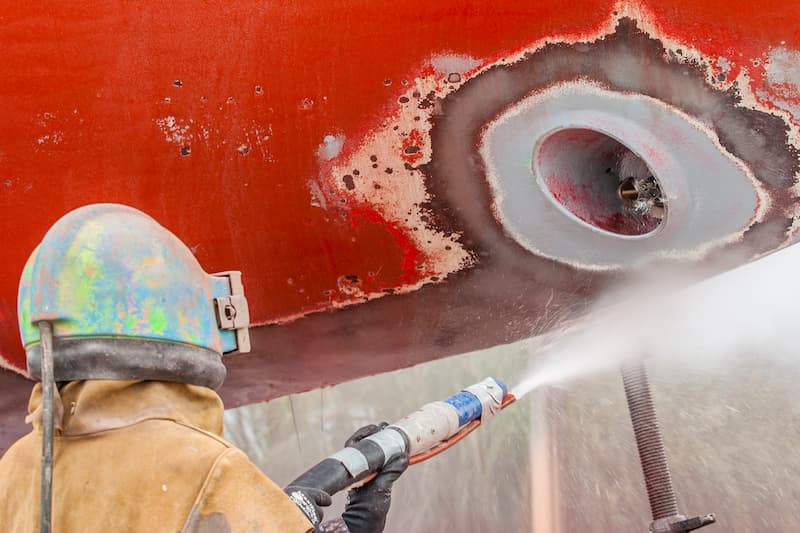
Quick Answer: Marine corrosion protection requires a rust converter formulated to withstand constant saltwater exposure, high humidity, and wide temperature swings. Apply it after removing loose, flaky rust — then seal with a marine-grade topcoat. XionLab’s 2-in-1 Rust Converter & Metal Primer bonds to the remaining rust at the molecular level, converting iron oxide into a stable ferric tannate compound before acting as a primer — one product, two steps done.
Anyone who keeps a boat on the Gulf Coast knows the feeling. You check the trailer hitch after a weekend on the water and find rust creeping outward from the weld seams — not after years of neglect, but after a single season. Salt wins every time.
Saltwater is roughly 50 times more corrosive than freshwater. The dissolved sodium chloride acts as an electrolyte, dramatically speeding up the electrochemical reaction between iron, oxygen, and moisture. Add in the spray from waves, the heat and UV of open water, and the biological growth on submerged hulls, and you have conditions no standard hardware-store primer was built to handle.
Pacific Northwest boaters deal with a different version of the same problem. Cold, damp air saturated with mist creates a persistent moisture film on every exposed metal surface. Salt concentration in the water is lower than the Gulf, but the relentless humidity means corrosion never really stops. Same damage. Different mechanism.
According to NACE International, the global maritime sector loses between $50 billion and $80 billion annually to corrosion — and roughly 90% of ship structural failures trace back to rust. Those numbers apply to commercial vessels, but the physics are identical on a 22-foot bay boat or a vintage sailboat restoration.
Annual corrosion-related costs in the U.S. marine shipping industry alone — spanning new construction, repairs, and lost operational time (NACE International)
The good news? A quality marine rust converter, applied correctly, can halt active oxidation and lay down a bondable surface — no sandblasting required.
Most people treat rust like dirt. They scrape what they can reach, slap on some paint, and hope the rest stops spreading. It doesn’t. Rust is porous — it holds moisture and oxygen against the underlying metal, feeding the reaction even under fresh paint.
A rust converter works differently. It uses tannic acid — or a synthetic phosphoric acid analog — to react chemically with iron oxide (Fe₂O₃), transforming it into ferric tannate or iron phosphate. Both are stable, non-porous compounds. Dark in color. Hard to the touch. And unlike raw rust, they don’t keep oxidizing.
XionLab’s formula takes this further by incorporating a polymer binder into the same application. The result: a surface actively converted from rust and simultaneously primed for topcoat adhesion. You can read the detailed chemistry breakdown in our science of rust converters and primers post.
One thing worth understanding: a rust converter is not a rust remover. It doesn’t dissolve rust — it chemically locks it in place. That’s actually an advantage in marine settings, where grinding every last speck of rust off a boat hull is impractical. The converter works with the rust rather than against it. For a full breakdown of the differences, see our how rust converters work guide.
But here’s the catch: converters can’t bridge a gap. If the rust has eaten all the way through the metal — perforation, not just surface pitting — no converter will fix that. You’re dealing with a weld or a replacement panel, not chemistry. Honest answer, but an important one.
Not all rust converters are rated for saltwater immersion or continuous marine spray. Some products work fine on a lake boat stored in a dry garage all winter — and then fail badly on a vessel moored at a coastal dock year-round. The difference comes down to how the cured film handles chloride ion penetration.
Water-based converters have largely replaced solvent-based ones for general use, and rightfully so — lower VOC content, easier cleanup, and performance has caught up. But in severe marine environments, the polymer binder’s resistance to chloride-induced delamination becomes critical. Thin binders blister. Thick, cross-linked ones hold.
XionLab’s 2-in-1 formula uses a high-build polymer system specifically tested for coastal exposure. Corroseal works well for lighter surface rust on inland freshwater boats. Where XionLab pulls ahead is on saltwater hulls, trailer frames dragged through tidal flats, and equipment stored in coastal boathouses — conditions where chloride penetration would degrade a thinner film within one season.
| Product | Saltwater Rating | 2-in-1 (Converter + Primer) | VOC Level | Topcoat Ready | Best For |
|---|---|---|---|---|---|
| XionLab 2-in-1 | ✅ High | ✅ Yes | Low (water-based) | 24–48 hours | Marine, coastal, industrial |
| Corroseal | ⚠️ Moderate | ✅ Yes | Low (water-based) | 24 hours | Freshwater, light marine |
| Rust Bullet Marine | ✅ High | ❌ No (primer sold separately) | High (solvent-based) | 4–6 hours | Offshore, heavy industrial |
| Neutrarust 661 | ✅ High | ❌ No | Low (water-based) | 12–24 hours | Commercial maritime, MOD-rated |
| POR-15 Rust Preventive | ✅ High | ❌ No (separate system) | High (solvent-based) | 4 hours | Restoration, classic vehicles/boats |
I was helping a friend prep his 1987 lobster boat last fall — hull was pitted from years of Chesapeake Bay exposure, with rust patches about a quarter-inch thick in some spots around the stern bracket welds. We started with a wire wheel on an angle grinder. Took about three hours. But what actually made the job work was the rinse sequence. Fresh water first. Then a commercial degreaser. Then a second fresh-water rinse and a full dry before any converter touched the metal. That order matters more than most people realize.
Salt residue left on the surface before applying converter is the number-one reason marine rust treatments fail early. The chloride ions sit under the cured film, continue attracting moisture, and cause blistering from underneath — sometimes within weeks. Remove the salt first. Everything else is secondary.
These prep steps apply whether you’re treating a boat trailer in a salt-belt state like Louisiana or a commercial fishing vessel in the Pacific Northwest. The environment changes — the preparation fundamentals don’t.
Application is simpler than prep. But sequence is everything. Rush through the earlier steps and no amount of careful brushwork will save the job.
Brush, roller, or spray — XionLab works with all three. For a boat hull with heavy rust pitting, a stiff-bristle brush forces the product into low spots and crevices better than a roller alone. Work in sections of about 3 to 4 square feet at a time. You’re looking for complete, even wet coverage, not thick puddling.
A quality converter will turn from tan or off-white to dark brown or charcoal gray as it reacts with the iron oxide. That color shift is visual confirmation the chemistry is working. No color change? Either the rust wasn’t genuinely active iron oxide, or the surface was contaminated. Both warrant a re-clean before proceeding.
Don’t rush this. Give the first coat 24 hours at minimum — 48 in coastal humidity or cold temperatures. The cured surface should feel hard and slightly textured, not tacky or soft.
On severely pitted surfaces — the kind common on older Gulf Coast trailer frames — a second coat significantly improves coverage and long-term performance. Let the first coat cure fully, then apply the second. Same rules apply.
XionLab’s 2-in-1 product acts as both converter and primer, so it’s ready for topcoat after full cure. Use a marine-grade paint — epoxy or alkyd — formulated for the specific substrate (hull, deck, trailer frame). For ongoing protection in harsh environments, two topcoat layers are worth the extra hour. See our rust converter and primer solutions guide for compatible topcoat options.
Of ship structural failures are attributed to corrosion — underscoring why a chemically bonded converter matters far more than a surface-level paint patch (NACE International / Marine Insight)
Even experienced boaters make these. Salt belt veterans tend to get the prep right but rush the cure. Pacific Northwest sailors tend to apply in damp conditions and wonder why the film blisters by spring.
XionLab was built with a specific belief: harsh environments deserve a product engineered for them, not adapted from one built for something easier. Founded in 2015, XionLab has focused the formula around the conditions where most rust converters fall short — saltwater exposure, high humidity, and wide thermal cycling.
The high-build, cross-linked polymer resists chloride ion penetration — the failure mechanism behind most film blistering on coastal hulls and trailer frames.
XionLab converts active rust and primes for topcoat in the same product. No separate primer purchase, no compatibility guesswork between products from different manufacturers.
Water-based formula means low VOCs — critical when working in confined spaces like bilges, enclosed engine bays, or poorly ventilated boathouses. Safer For You, Safer For The Environment.
Steel hulls, cast iron fittings, galvanized trailer frames, marine-grade hardware — the formula bonds to ferrous metal wherever iron oxide is present.
The cured film creates a slightly textured, high-adhesion surface ready for marine epoxy, alkyd, or antifouling topcoats — without a separate adhesion promoter.
Formulated and tested in some of the most aggressive corrosion environments in the U.S. — the high-salt, high-humidity coastal zones where lesser products fail within a season.
For automotive applications where the same corrosion chemistry plays out on frames and wheel wells, see our rust converter for automotive protection guide — many of the same principles apply.
A rust converter handles what’s already there. But marine environments keep producing new corrosion opportunities every time the boat touches salt water. Long-term protection is a maintenance program, not a one-time event.
Walk the boat at the start and end of each season — hull, trailer, hardware, through-hull fittings, transom brackets. Salt belt boaters should do a mid-season check too, especially after extended trips through tidal waters or Gulf passes. Catching a rust spot at the surface-blush stage takes twenty minutes to treat. Catching it after it’s eaten through takes twenty hours.
Fresh water immediately after saltwater. Not the next morning. Not after the gear is unloaded. As soon as the boat is clear of the water. Chloride ions bond to metal surfaces within minutes of contact — rinsing fast removes them before adhesion sets. This single habit extends the life of every coating on the boat.
Trailer roller contact points, keel pad friction areas, bow stop wear zones — these areas lose topcoat through abrasion faster than corrosion can be chemically addressed. Annual spot treatment with XionLab, followed by a fresh topcoat, keeps them ahead of the problem rather than behind it. See our broader industrial rust converter guide for treating high-wear commercial and marine equipment.
Rust converters address iron oxidation. But boats also face galvanic corrosion — the electrochemical reaction between dissimilar metals in an electrolyte (saltwater). Sacrificial zinc anodes on the hull, shaft, and transom are the primary defense there. Replace them before they’re completely consumed. Galvanic damage can be severe in marinas with stray electrical current, particularly in Florida and Texas coastal waters where older dock wiring is common. According to marine corrosion specialists at Chemikal States, combining rust converter treatment with an active anode maintenance schedule dramatically extends the service interval for hull coatings.
XionLab’s 2-in-1 Rust Converter & Metal Primer is built for the marine environments where standard converters fall short — Gulf Coast hulls, coastal trailer frames, high-humidity boathouses, and everything in between. Safer For You, Safer For The Environment.