No products in the cart.
Surface Preparation for Rust Treatment (2026 Guide) — How to Prep Metal Before Rust Converter or Topcoat
May 3, 2026
By Xion Lab
Free Shipping
easy returns
secure paymentS
FAQ | MY ACCOUNT | SUPPORT
May 3, 2026
By Xion Lab
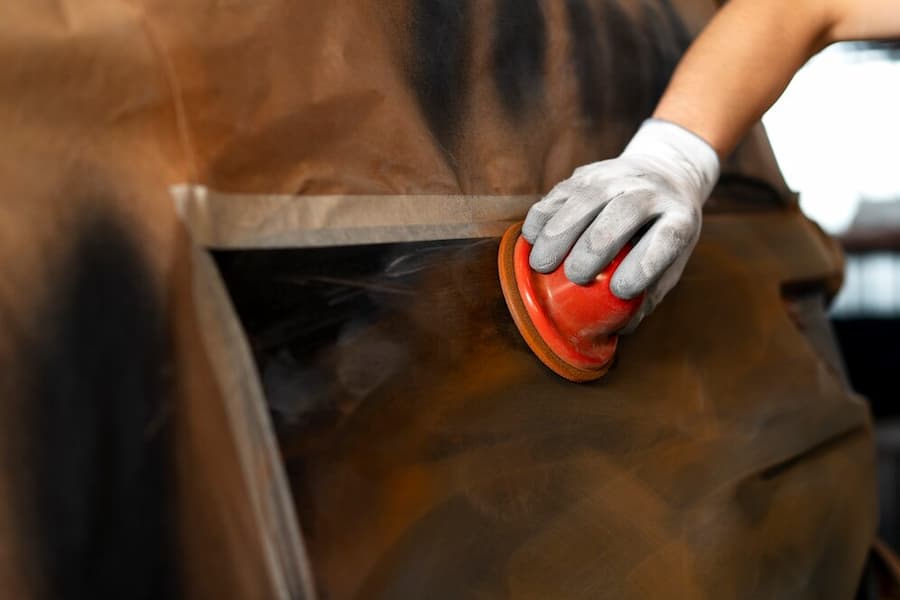
Quick Answer — Proper surface preparation for rust treatment means removing loose rust, mill scale, oil, and contaminants down to a tightly adherent surface — usually targeting AMPP/SSPC SP 2 (hand tool) or SP 3 (power tool) cleanliness — then degreasing and drying before applying a rust converter or primer. Skip this prep, and even a premium product like XionLab’s 2-in-1 Rust Converter and Metal Primer can fail prematurely. Get prep right, and a single coat lasts years.
The Foundation
Skip a coat of converter? You lose a step. Skip the prep? You lose the whole job. Industry surveys put roughly 90% of coating failures on inadequate surface preparation — not the product, not the application technique, but the metal underneath. So the chemistry can’t do its work if loose rust, oil, or chloride salts sit between the converter and the steel.
According to NACE International’s IMPACT study, corrosion costs the global economy roughly $2.5 trillion annually — about 3.4% of world GDP. Better corrosion control practices, including proper surface prep, could recover 15–35% of that loss. And that’s not a marketing number. But it’s engineering economics.
Salt wins every time against bare untreated steel. But it loses against properly prepped, properly converted, properly topcoated metal. The sequence matters. Prep first.
of coating failures trace back to inadequate surface preparation, not product quality (industry consensus, AMPP)
Industry Standards
The merger of NACE International and SSPC into AMPP in 2021 unified the surface prep alphabet soup. The numbers stayed familiar. The naming got cleaner. Here’s the practical breakdown a homeowner, fabricator, or marine technician actually needs.
| Standard | Method | What It Removes | Best For |
|---|---|---|---|
| SP 1 | Solvent Cleaning | Oil, grease, soluble contaminants | Always step one — pre-clean before any mechanical prep |
| SP 2 | Hand Tool Cleaning | Loose rust, loose mill scale, loose paint | Small DIY repairs, patio furniture, fencing |
| SP 3 | Power Tool Cleaning | Same as SP 2, but more thoroughly | Automotive frames, structural steel, larger jobs |
| SP 6 | Commercial Blast Cleaning | Two-thirds of mill scale, rust, prior coatings | Industrial work, marine vessels, bridge sections |
| SP 10 | Near-White Blast | 95% of all surface contaminants | High-performance coatings, immersion service |
| SP 11 | Power Tool Cleaning to Bare Metal | All visible rust and contaminants | When blasting isn’t practical but bare metal is needed |
Most home and shop projects target SP 2 or SP 3. Marine and industrial applications often demand SP 6 or higher. The chemistry of a rust converter — including dual-acid formulas like XionLab’s — is engineered around adherent rust, so SP 2 or SP 3 works perfectly. Going further wastes effort and money for converter applications.
Pro tip — SP 1 isn’t optional. Even on freshly purchased steel, mill oils and protective coatings linger. A quick wipe with mineral spirits, denatured alcohol, or a degreasing detergent before mechanical prep prevents trapped contamination.
Step-by-Step
Sequence is everything. Skipping degrease and going straight to wire-brushing drives oil deeper into the surface profile. Done in order, prep takes about 30 minutes per square foot of moderate rust.
Look at what you’ve got. Light surface rust? Heavy flaking? Pitting deeper than about a sixteenth of an inch? Each condition calls for a different approach. Pitted metal needs power tool work. Light surface oxidation responds to a stiff hand brush.
Mineral spirits or a citrus-based degreaser on a clean lint-free cloth. Wipe in one direction. Flip the cloth often. Stop when the cloth comes back clean. This step alone separates pros from amateurs.
Hand-tool work uses wire brushes, scrapers, and abrasive pads. Power-tool work brings in angle grinders with knotted cup wheels, needle scalers, or rotary wire wheels. Work until every surface flake comes off and remaining rust feels tightly bonded.
Dust kills adhesion. Compressed air, a clean dry brush, or a microfiber wipe — your choice. The surface should look matte and uniform, not powdery.
Bare metal flash-rusts within hours in humid air. Apply rust converter or primer the same day. In Gulf Coast humidity? Same hour, ideally.
annual U.S. corrosion cost — roughly 3.1% of GDP — much of it preventable through proper prep and protective coating (NACE)
Equipment
Tools matter as much as technique. Wrong abrasive, wrong job. Here’s what works for each rust condition.
Mechanical prep leaves microscopic peaks and valleys in the metal surface — the anchor profile. A rust converter or primer mechanically grips this profile. Smooth metal? Coatings can’t hold on. Rough but uniform? Adhesion holds for years. Industrial coatings target a 1–3 mil profile depth measured with a comparator gauge. Home projects don’t need that precision, but the principle holds: a slightly rough surface beats a polished one for coating adhesion.
Pitfalls
I’ve seen these patterns repeat across hundreds of projects. Avoid them, and your converter does its job for years.
Real-world note — Last fall I prepped an old wrought iron railing on a Gulf Coast porch — about an eight-foot section, decent surface rust, no through-corrosion. Wire-cup-brushed with the angle grinder, dust-blew with shop air, mineral-spirits-wiped, applied a wet coat of XionLab. The conversion shifted from rust orange to that signature blue-black inside about 20 minutes. Topcoat went on the next day. Two seasons of salt spray later? Still locked tight.
Why It Matters
Not all rust converters reward prep equally. A dual-chemistry product like XionLab’s 2-in-1 formula compounds the benefits of proper surface preparation — phosphoric acid penetrates into the converted profile, tannic acid hardens the visible layer, and the polymer matrix seals the result. Skip the prep, and even the best chemistry gets choked off.
Tannic and phosphoric acids reach deeper into a properly prepped surface profile. Smooth, contaminated metal blocks both. Rough, clean metal lets the chemistry work in three dimensions.
The converted layer doubles as a primer. Skip a step. One coat. Done. Topcoat goes straight on after the 24-hour cure window.
Designed for high-humidity, chloride-heavy environments — Gulf Coast, Pacific Northwest, salt-belt states. Performs where other formulas blister.
Safer in enclosed spaces. Cleanup with water. No harsh solvents lingering in your shop or garage. Safer For You, Safer For The Environment.
Wrought iron, automotive frames, structural steel, marine hardware, fencing, patio furniture — anywhere ferrous metal meets oxygen and moisture.
The polymer barrier locks moisture out after the conversion completes — extending topcoat life by years compared to converters without sealing chemistry.
Competitor Reality Check
Brand-honest moment. Different products fit different situations. Here’s a balanced look at what XionLab handles best — and where another approach might win.
| Approach | Strength | Limitation | Best Fit |
|---|---|---|---|
| Corroseal (water-based) | Effective on light surface rust, easy cleanup | Single-chemistry; weaker on heavy or salt-contaminated rust | Patio furniture, light cosmetic restoration |
| POR-15 (solvent-based) | Excellent moisture seal, glossy finish | Solvent-heavy, harsh fumes, sensitive to UV without topcoat | Garage floors, hidden chassis areas |
| Ospho (phosphoric acid only) | Cheap, simple, widely available | Doesn’t prime — requires separate primer step | Pre-treatment before traditional primer |
| XionLab 2-in-1 | Dual-acid plus primer, salt-belt tested, water-based | Cure window is 24 hours; impatient applicators get burned | Automotive frames, marine hardware, salt-exposure work |
| Mechanical strip + epoxy primer | Cleanest substrate, longest possible life | Labor-intensive; requires SP 6 or SP 10 prep | Industrial coatings, restoration work |
For most automotive and structural projects with adherent rust, XionLab’s 2-in-1 saves a step over a converter-plus-primer stack. Where Corroseal works well for lighter surface rust on backyard projects, XionLab pulls ahead on chloride-heavy environments and pitted surfaces because the dual-acid chemistry penetrates further into a converted profile.
Honest Limits
Honesty matters more than salesmanship. Some conditions are beyond chemistry.
So knowing these limits keeps expectations honest and outcomes solid. A converter is a powerful tool. It’s not magic.
Environmental Factors
Where you live changes how you prep. A Pacific Northwest job differs from a Phoenix job differs from a Gulf Coast job. The chemistry doesn’t change. The schedule does.
Road salt drives chloride into every weld, seam, and crevice. After mechanical prep, a freshwater rinse helps lift surface chlorides — let it dry completely before converter goes on. Chloride-impregnated rust still converts, but the timeline shrinks if you skip the rinse.
Humidity does the damage here. Flash rust appears within 30 minutes of bare metal exposure on humid days. Plan to prep and apply converter the same hour. Use a dehumidifier in shop work if available. Tent open-air projects to limit airborne salt aerosol.
Constant wet weather demands shop work or temporary shelter. Damp metal blocks conversion. A propane heater or moving fan can dry surfaces between rain windows. Apply during a forecast dry stretch — not just a dry hour.
Easier conditions, but UV cooks unprotected primer fast. Topcoat aggressively after the 24-hour cure window. Don’t leave converted metal exposed to direct sun for weeks before painting.
Next Step
Prep is done. Metal is clean, dry, and dust-free. Now what? Application sequence matters as much as prep.
Want a deeper dive on the application side? Read our companion guides: The Science of Rust Converters and Primers, Rust Converter for Automotive Protection, and Marine Corrosion Protection for region-specific workflows.
Common Questions
What is the best surface preparation for applying a rust converter?
For most projects, AMPP/SSPC SP 2 (hand tool) or SP 3 (power tool) cleanliness is the target. Solvent-wipe first to remove oils, then mechanically clean to remove loose rust and mill scale. Adherent rust should remain — that’s what the converter reacts with. Finish with a dust wipe and apply the converter the same day to avoid flash rusting.
How clean does the metal need to be before rust converter?
Clean enough that loose rust, mill scale, oil, and grease are gone. Adherent rust can stay. The metal should look matte and uniform — not shiny, not powdery. A fingerprint test works: rub the surface lightly with a clean finger. Rust dust on the finger means more dust removal needed before applying converter.
Do I need to sand to bare metal before applying XionLab?
No, and you shouldn’t. XionLab is engineered to react with adherent rust, not bare metal. Sanding to bare steel everywhere wastes time and gives the converter less to work with chemically. Remove only loose rust, scale, and contaminants. Leave firmly bonded rust in place.
Can I apply rust converter over existing paint?
Only over rusted areas where the paint has failed and metal is exposed. Where paint is sound and adherent, leave it alone. Feather-edge the boundary between failed paint and sound paint with sandpaper before applying converter to the bare metal section. The converter won’t bond to intact paint.
How soon after prep should I apply the converter?
Same day, ideally within a few hours. Bare and freshly prepped metal flash-rusts quickly — within 30 minutes in humid conditions, within a few hours in dry climates. If a delay happens, light surface flash rust is acceptable for converters because it’s adherent. Heavy re-rusting requires re-prepping.
Is sandblasting better than wire-brushing for prep?
For most converter applications, no. Sandblasting (SP 6 or SP 10) creates a near-bare surface with deep anchor profile — overkill for chemistry that needs adherent rust to react with. Sandblasting is the right choice when you’re going straight to epoxy or zinc primer without a converter step. Wire-brushing or power-tool work matches converter chemistry better.
What grit sandpaper for rust treatment prep?
For light surface rust, 120–180 grit emery cloth removes oxidation without polishing the metal. For moderate rust, 80 grit cuts faster. Heavy rust calls for power tools instead of sandpaper — wire cup brushes or flap discs on an angle grinder. Stay coarser than 220 grit so the surface keeps a usable anchor profile for the converter.
Can rust converter be applied over wet metal?
No. Water blocks the conversion chemistry. The metal must be dry to the touch and ideally to the underlying pores. In humid climates, allow extra drying time after rinsing — or skip the rinse and dry-prep only. Solvent wipe doesn’t leave residual moisture and is preferred for damp climates.
Do I need to prime after rust converter or before?
After. The converter neutralizes rust and creates a primer-grade surface in one step — XionLab’s 2-in-1 formula functions as both. After the 24-hour cure, you can topcoat directly with most paints. A separate primer step is only needed if your topcoat manufacturer specifically requires a different intermediate primer. For most home and automotive projects, converter alone is enough before topcoat.
XionLab’s 2-in-1 Rust Converter and Metal Primer turns adherent rust into a stable, paintable surface in one step — built for the prep work you just did.