Rust converter
What Is a Rust Converter and How Does It Work?
Quick answer — A rust converter is a water based liquid you brush or spray onto rusted metal. It reacts with the iron oxide and turns crumbly red rust into a stable black film you can paint over. No sandblasting, no bare steel required — just knock off the loose flakes first.
The Basics
What Is a Rust Converter?
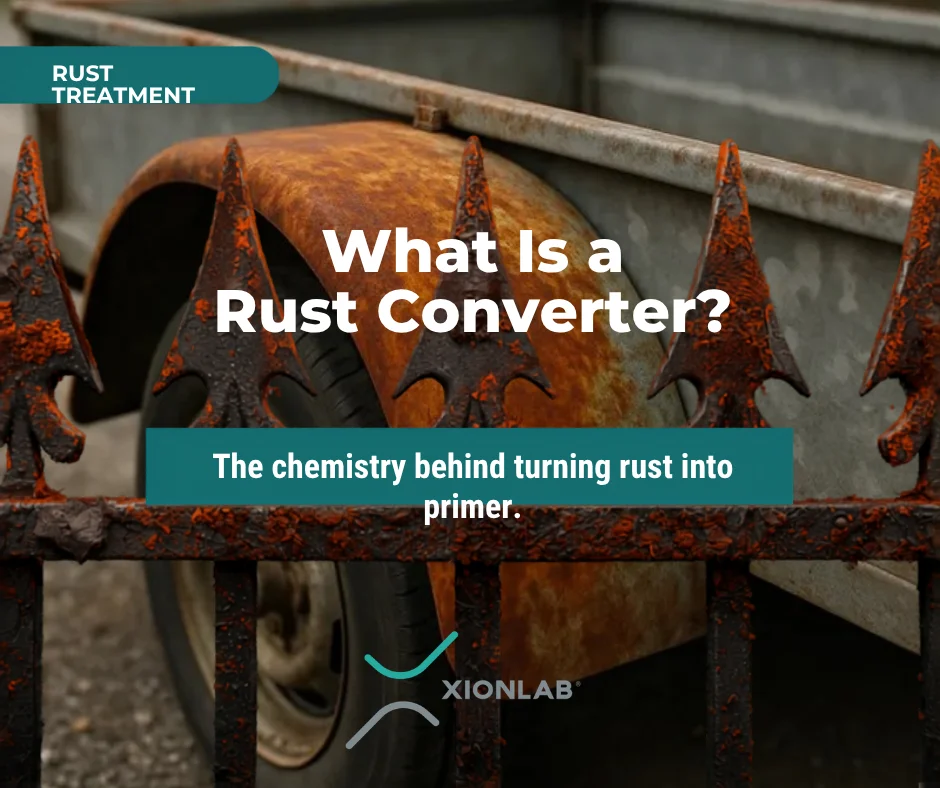
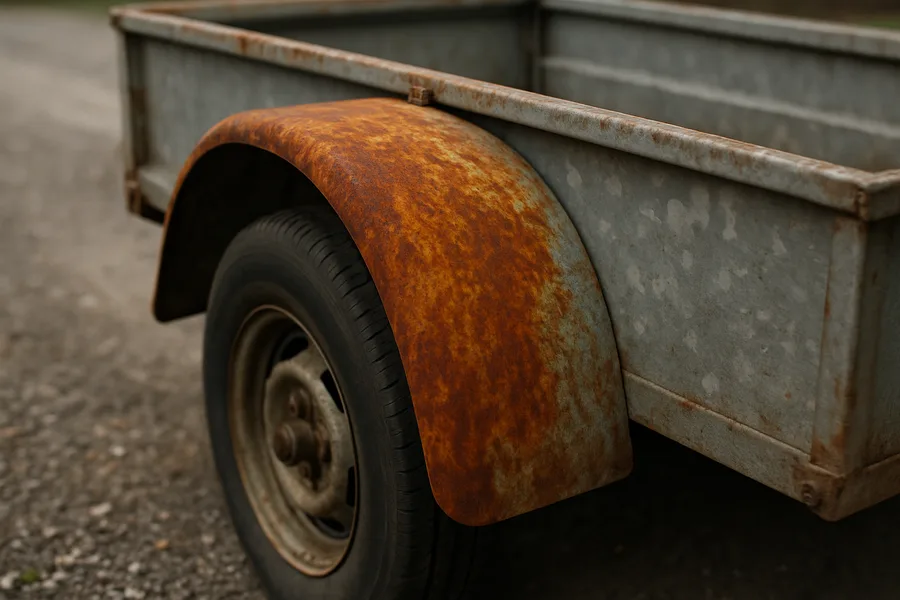
Picture an old trailer fender. The paint bubbled years ago, and now there’s a patch of orange creeping outward like a stain. You could grind it down to shiny steel. Or you could reach for a bottle of rust converter and let chemistry do the heavy lifting. A rust converter is a thin, water based coating you apply straight onto the rust. Once it dries, the rust isn’t gone — it’s transformed into a hard black layer that stops eating the metal underneath.
So it doesn’t remove anything. It converts. Big difference.
The product traces back to a simple idea conservators have leaned on for decades. React the rust with tannic acid and you lock it down. The Corrosionpedia definition of a rust converter puts it plainly — a coating chemically combines with iron oxide to build a black, inert, paintable barrier. People call it rust killer, rust reformer, or rust sealer. Same general idea, different labels on the can.
And the appeal is mostly practical. A converter lets you treat rust right where it sits, on a vertical frame rail or the back of a fender nobody could ever drop in a bucket. You brush it on, walk away, and come back to a surface that’s ready for paint. For a homeowner staring down a rusty gate or a farmer with a fleet of trailers, the math is hard to argue with.
Why does any of this matter? Because rust never sleeps, and replacing rotted parts costs real money.
Estimated global cost of corrosion every year — roughly 3.4% of world GDP, per the NACE International IMPACT study summarized by AMPP.
The Science
The Chemistry Behind the Color Change
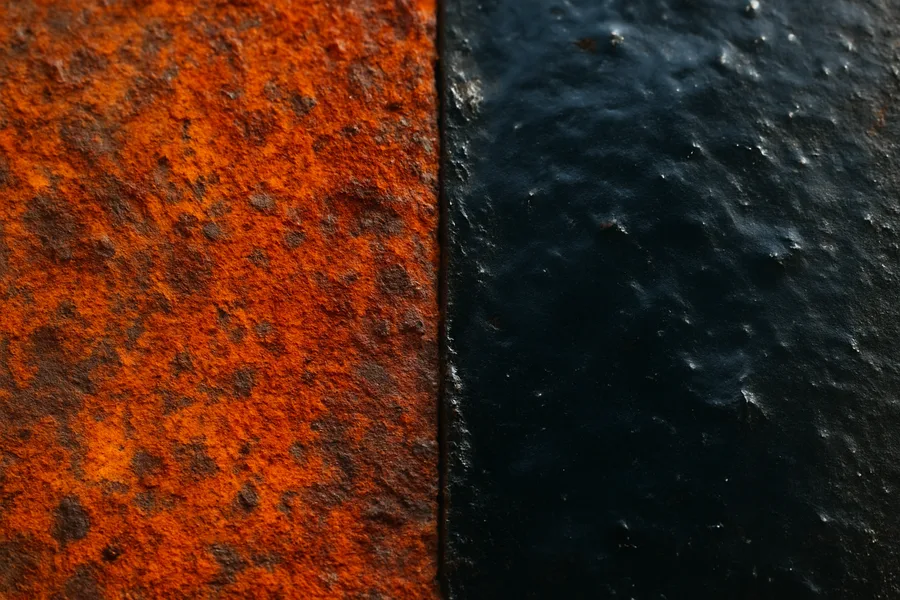
Here’s where it gets interesting. The red rust you see is mostly iron oxide, loose and porous and useless as protection. A rust converter carries two workers into the fight. The first is tannic acid. It grabs the iron in the rust and forms ferric tannate, a stable bluish black compound, and it grips the surface instead of flaking off it. The second worker is an organic polymer, often paired with a wetting agent, and it lays down a primer like film over the freshly converted rust so paint has something to bite into.
Watch a fresh coat and you’ll see it happen. Orange goes to brown. Brown goes to deep black. Within an hour or so, an ugly patch looks like a flat charcoal coating.
Some formulas add phosphoric acid to the mix. It lowers the pH, speeds the reaction, and turns a bit of the iron oxide into ferric phosphate, another inert layer. The chemistry is well documented — the same tannic acid treatment shows up in museum conservation work, where curators stabilize rusted iron artifacts they can never replace. Want the deeper version? Our breakdown of how rust converters work walks through the reaction.
So why is black good news? Because ferric tannate is far more stable than the iron oxide it replaced. Red rust is hungry. It pulls in moisture and keeps spreading under your paint, which is why a fresh coat over untreated rust bubbles within months. The converted black film does the opposite. It sits tight, sheds water, and gives the next coat a clean anchor.
And the practical upshot? You stop the corrosion cycle without blasting the part back to bare metal.
Know The Difference
Converter vs Remover vs Encapsulator
People throw these three terms around like they mean the same thing. They don’t. Each solves a different problem, and picking the wrong one is how a Saturday project turns into a Sunday redo.
| Product | What It Does | Best For | Leaves Behind |
|---|---|---|---|
| Rust Converter | Reacts with rust, turns it into a black paintable film | Surface to moderate rust on hard to reach parts | Stable black primed layer |
| Rust Remover | Dissolves or strips rust off down to bare metal | Small parts you can soak or scrub | Clean bare steel |
| Rust Encapsulator | Seals over rust without converting it chemically | Tight rust you want locked under a coating | Sealed top coating |
The short version. Want bare metal? Use a remover. Want to seal and paint in place? A converter earns its keep. Want to wrap rust in a thick barrier and move on? Grab an encapsulator. We dig into the first matchup in our guide on rust converter vs rust remover, worth a read before you buy anything.
Application
How to Use a Rust Converter the Right Way
The chemistry is forgiving. The prep is not. Skip the prep and even the finest converter peels within a season, so give this part the few minutes it deserves.
Knock off the loose stuff
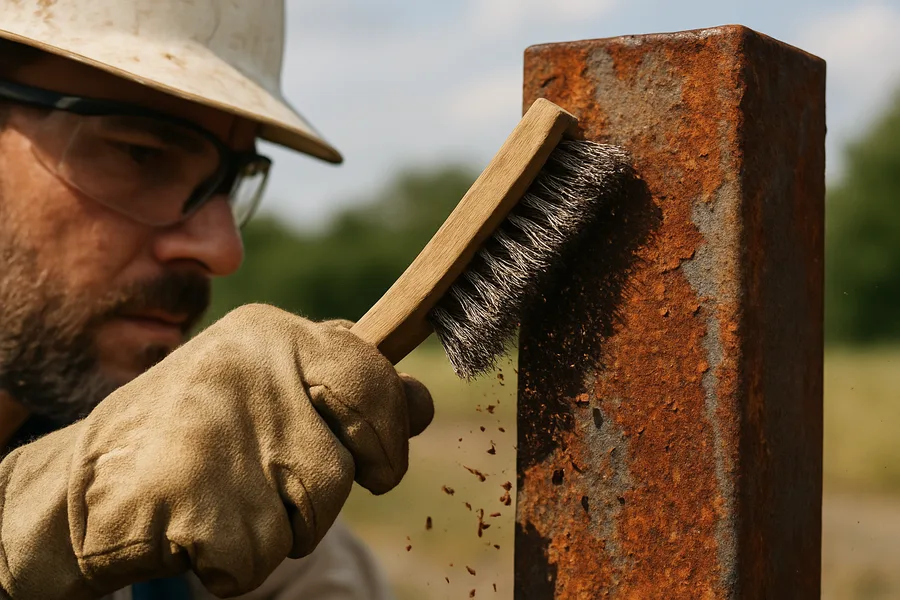
Grab a wire brush. Scrub away anything flaking, powdery, or crumbling — the converter needs tight rust to bond to, not loose scale sitting on top. You don’t have to reach bare steel. You just want a surface that won’t shed. For a deeper walk through, our notes on surface preparation for rust treatment cover the details.
Clean and dry
Wipe off grease, dirt, and salt. A degreaser helps on automotive parts. Let it dry. Water trapped under the coating defeats the whole purpose.
Brush or spray two coats
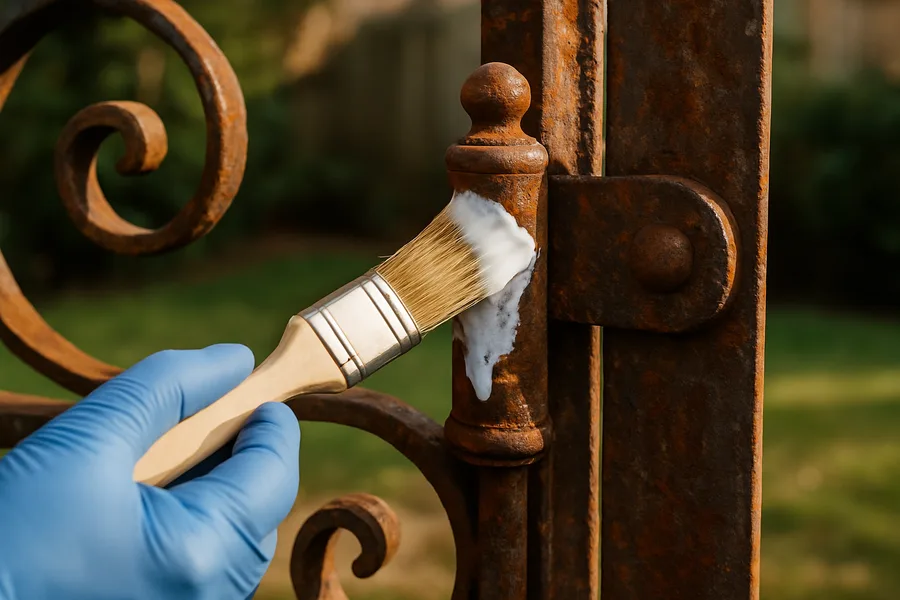
Stir the bottle. Apply a thin first coat and let the color shift to black. Then a second coat, usually after the first one cures. A gallon stretches a long way — many converters cover around 500 square feet per gallon on smooth metal. Our walkthrough on how to use rust converter to treat rust shows the timing.
Topcoat if it lives outside
The black film resists moisture, but UV and weather still chip away over the years. A coat of paint, or a dedicated rusty metal primer, locks everything in for the long haul.
The Honest Part
Where It Works and Where It Fails
Fair warning — a rust converter is not magic. It shines on surface and moderate rust, the kind you find on fences, trailers, frames, fuel tanks, mower decks, and old patio furniture. Anywhere a sandblaster can’t easily reach, this is your friend. Salt belt drivers, Gulf Coast boat owners, anyone fighting a losing battle with the elements — this is the cheap first line of defense.
But it has limits. If rust has eaten clean through the metal, no coating brings that steel back — you’re into welding or replacement territory, and a converter only buys time on what’s left. It also struggles on thick, layered scale that keeps shedding no matter how hard you brush. And on a surface already clean down to bare steel, a converter has nothing to react with, so it behaves as a so so primer at best.
One more thing. Humidity and cold mess with cure times. Treat metal on a dry, mild day and you’ll get a far stronger bond than on a damp 40 degree morning in the Pacific Northwest.
Picking A Product
Choosing the Right Converter
Not every bottle on the shelf is built the same. Some are pure converters and still need a separate primer. Some are solvent heavy and reek for hours. And some combine the converter and the primer into one step, which is exactly what you want when you’re treating a long fence line or a whole truck frame in an afternoon.
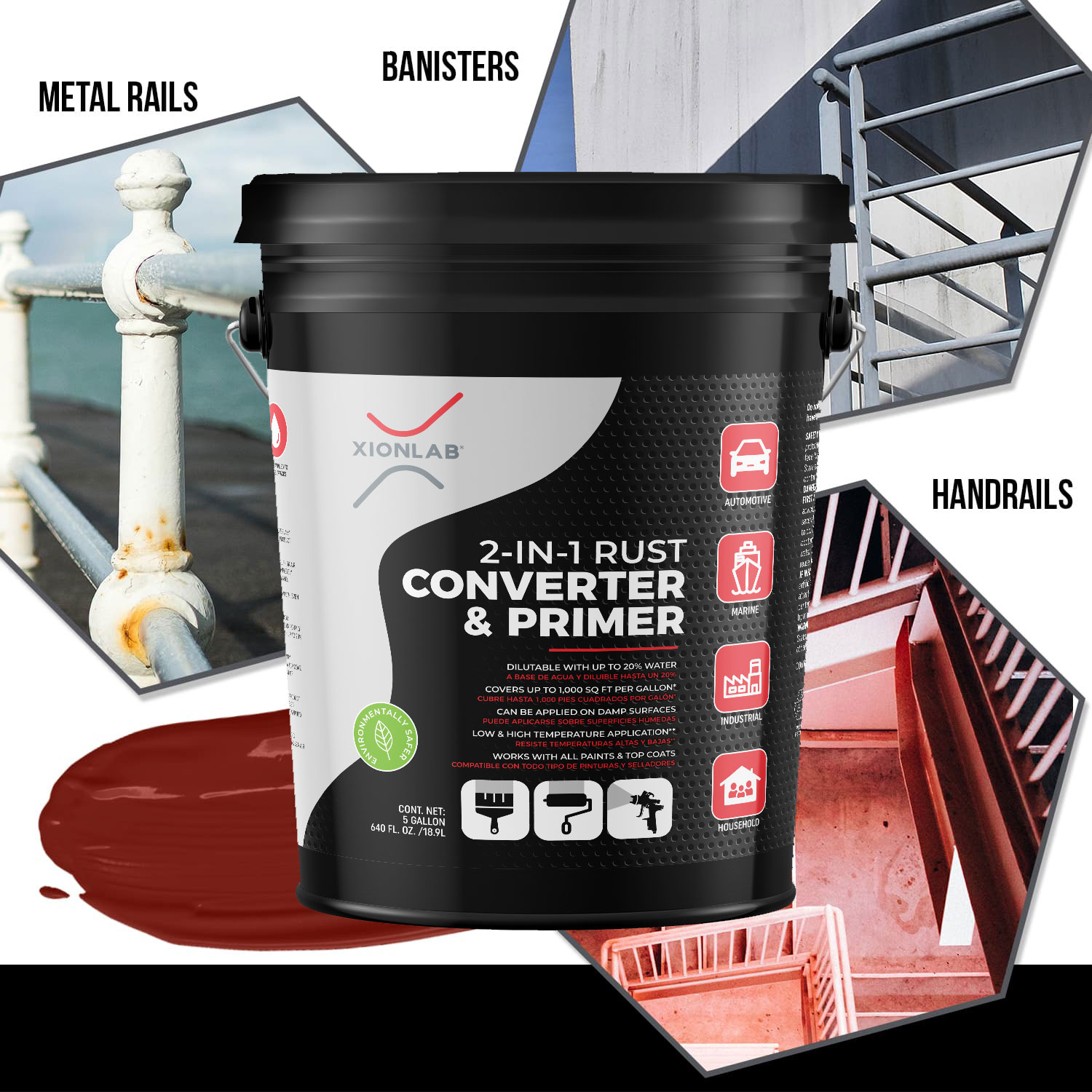
The XionLab 2 in 1 rust converter and metal primer handles both jobs in a single water based coat — safer for you, safer for the environment, and no second product to buy. Whatever brand you land on, look for a water based formula, a true primer layer, and clear coverage numbers on the label.
Coverage matters too. A bottle that covers around 500 square feet per gallon goes a lot further than a thick bodied gel when you’re painting a whole frame, though the gel grips better on a vertical surface. Match the formula to the job. Spreading thin over a big flat panel? A liquid wins. Treating a pitted bolt head or a weld seam? Reach for something thicker so it won’t run.
And read the fine print on dry time and recoat windows. A converter you can topcoat the same day saves you a return trip to the garage. One that needs a full day of cure before paint can stretch a weekend project into two.
Still weighing options? Our roundup of the best rust converter picks lays out what to consider before you spend a dime.
FAQ
Common Questions
Is a rust converter the same as a rust remover?
No, and mixing them up wastes time. A remover strips rust off so you get back to bare metal. A converter leaves the rust in place and changes it into a stable black coating. You reach for a converter when the rust is hard to blast away, like a frame rail, a fence panel, or the underside of a trailer.
How long does rust converter take to dry?
Most water based formulas feel dry to the touch in about 20 to 30 minutes. Full cure, where the film is hard enough for topcoat, usually wants 24 hours. Cold or humid air slows things down. So plan your second coat around the weather, not the clock.
Can you paint over a rust converter?
Yes. The whole point of the black film is that it accepts paint. Wait for a full cure first, then lay down your primer or topcoat. Some converters double as a primer, which saves a step. Read the label before you assume.
Will a rust converter work on heavy scale rust?
Only partly. Thick flaking scale has to come off first with a wire brush or grinder. The converter bonds to tight surface rust, not to crumbling layers. If you can flick chunks off with a screwdriver, that area needs mechanical prep before any chemistry happens.
Does rust converter stop rust forever?
Not on its own. The film seals out moisture and buys you years, but bare edges, scratches, and missed spots can still corrode. A topcoat seals the deal. Think of the converter as the foundation, not the whole house.
Is rust converter safe to use at home?
Generally, yes, with sensible care. Most consumer formulas are water based and low odor next to solvent strippers. Still, wear gloves and eye protection, work in fresh air, and keep it off your skin. The acids are mild, but they are still acids.
Turn Rust Into a Protected Surface
One coat converts the rust and primes the metal. Safer for you, safer for the environment.