Rust converter
Rust Converter vs Rust Encapsulator: What’s the Difference?
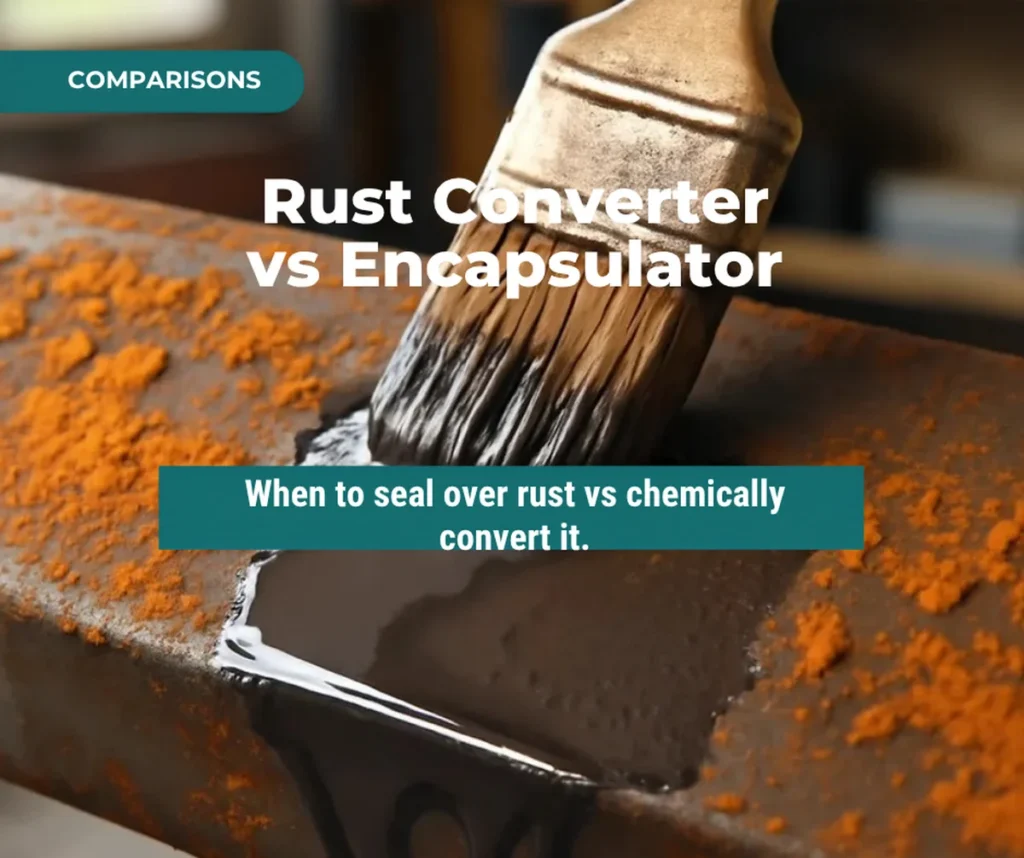
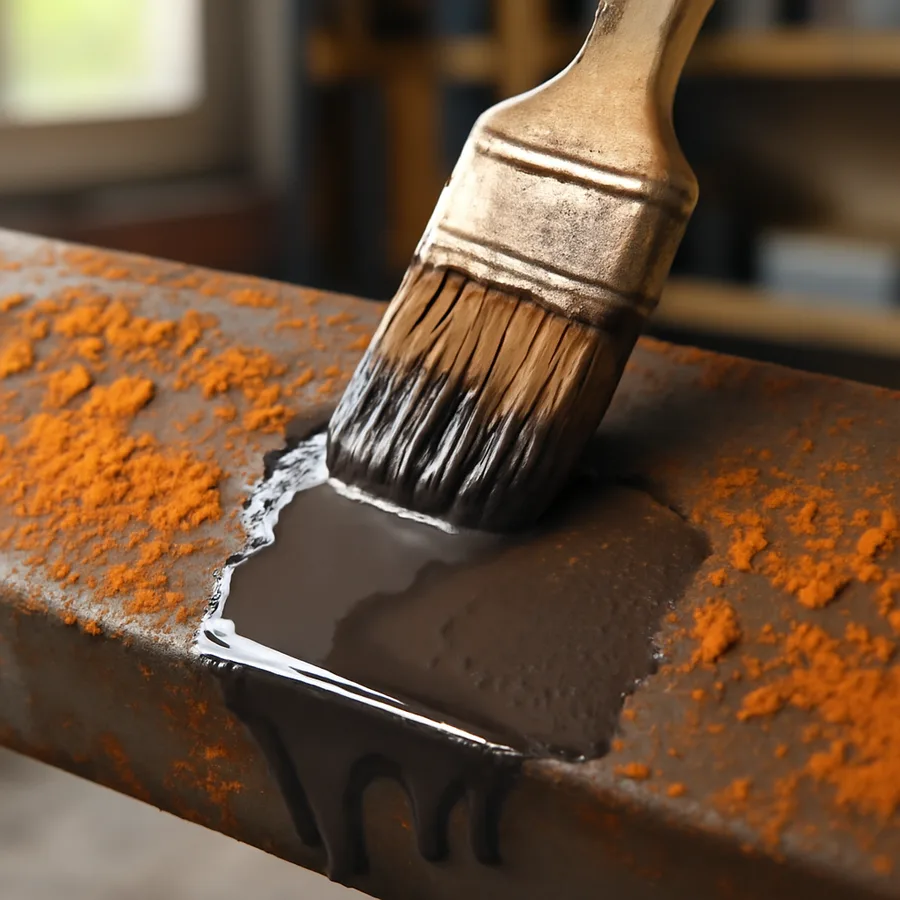
Quick answer — A rust converter chemically reacts with rust and turns it into a stable black primer you can paint. An encapsulator doesn’t change the rust at all. It seals over the rust like a thick paint to lock out moisture, which means you grab a converter for heavy, fully rusted metal and an encapsulator for light surface rust or mixed surfaces where bare steel and old paint sit side by side.
Start Here
Two products, two different jobs
Walk down the rust aisle and the labels blur together. Converter. Encapsulator. Reformer. Sealer. They all promise to kill rust. So people grab whichever bottle is cheapest and hope for the best. Then the coating peels in four months and they’re back where they started.
Here’s the thing. A rust encapsulator and a rust converter are not interchangeable. One changes the chemistry of the rust. The other just buries it. Pick the wrong one for your situation and you waste a weekend plus the cost of materials.
The confusion is understandable. Both come in a can. Each goes on with a brush or a sprayer, and each dries to a dark coating that looks roughly the same once it’s down. But what’s happening underneath could not be more different — and the difference decides whether your repair lasts two years or ten.
So let’s pull them apart. We’ll look at the chemistry, the prep each one demands, where each shines, and the exact spots where each one fails hard. Knowing the mechanism behind each product is what turns a frustrating guessing game at the hardware store into a five second decision once you’re staring at the actual rust on your trailer, your fender, or your fence post. By the end you’ll know which can to reach for.
The Chemistry
How a rust converter actually works
Rust converter is a chemical reaction in a bottle. Most formulas lean on tannic acid — the same compound found in strong, bitter tea. When tannic acid meets iron oxide (your rust), the two react and form iron tannate, a stable blue black compound that won’t keep corroding. Many converters add phosphoric acid too, which turns surface rust into iron phosphate and leaves a tougher base for paint.
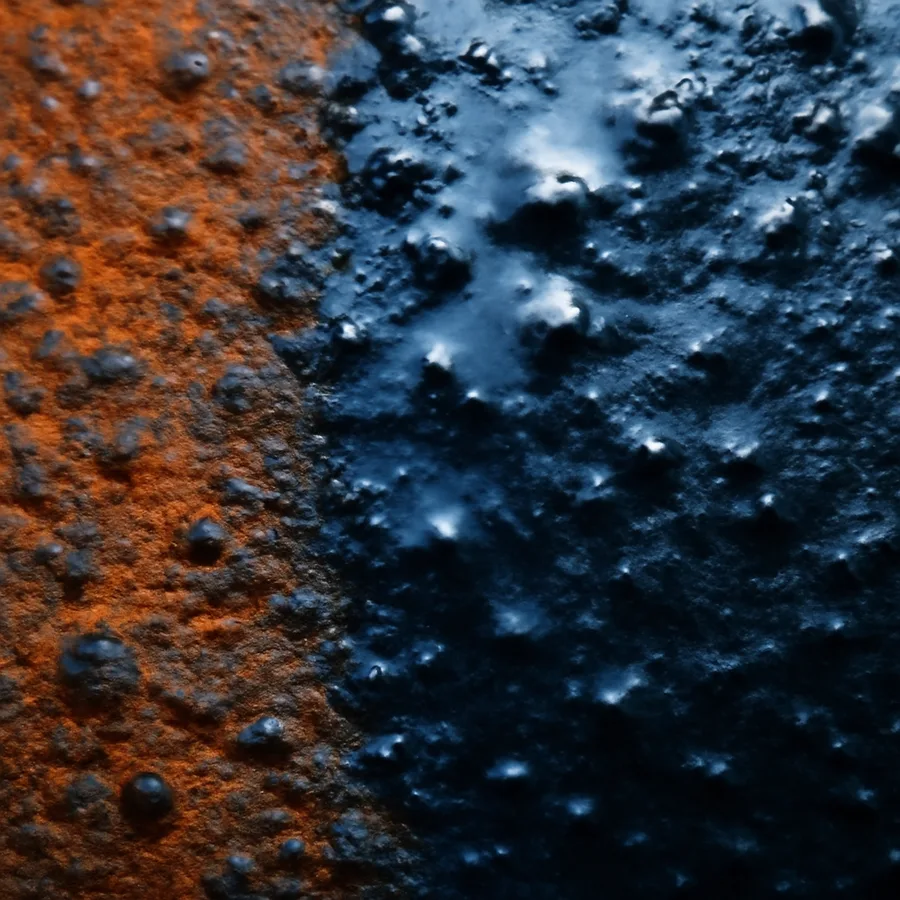
The visual cue is hard to miss. You brush on a milky liquid over orange rust, and within a few hours it darkens. Purple, then near black. That color shift tells you the reaction took hold. Once it cures, you’ve got a paintable primer instead of crumbling oxide.
But converters are picky. Really picky. They need rust to react with — pretty much 100 percent rust across the surface. Brush converter onto clean steel and nothing happens. Worse, the leftover acid can sit there sticky and even flash rust the bare spots. So a converter is a tool for one specific job: heavily rusted metal you can’t strip down to shiny steel.
Estimated global cost of corrosion each year, roughly 3.4% of world GDP, according to a landmark NACE International (now AMPP) study. Catching rust early with the right treatment is far cheaper than replacing the metal.
Want the deeper science on the reaction and why curing time matters? Our guide on how rust converters work breaks down the tannic acid process for you.
The Other Approach
What a rust encapsulator does instead
An encapsulator skips the chemistry entirely. It doesn’t care what rust is made of. Instead it acts like a thick, tough paint that wraps the rust in a moisture proof shell. No oxygen, no water, no fuel for the reaction. The rust already there gets locked in place and starved.
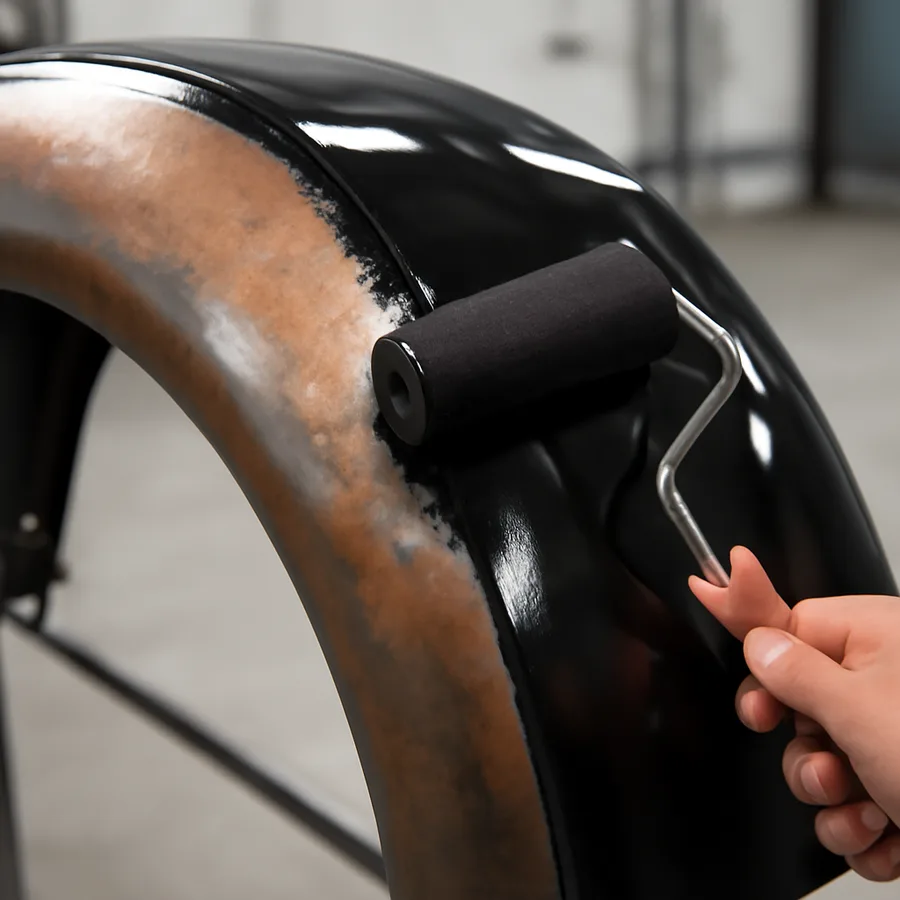
This makes encapsulator the forgiving one. It goes over light surface rust, medium rust, bare metal, even old sound paint. Mixed surface? No problem. Such flexibility is why bodywork pros keep a can around for patch jobs where one panel shows three different conditions at once.
The catch is in the prep and the film. Encapsulator wants loose, flaking rust knocked off first with a wire wheel, and it needs full, even coverage — a thin or missed spot is a door for moisture. It also usually wants a topcoat for UV protection, since sunlight breaks down many encapsulators over time. Fair warning — skip the topcoat on an outdoor piece and you may see chalking within a year. On a shaded indoor part, a bare encapsulator can ride along for a good while, but anything that lives in the sun, the rain, and the freeze thaw cycle of a northern winter will degrade noticeably faster without that protective layer over the top.
Think of it as a sealer with muscle. It buys you time and stops the spread. It just never transforms the rust the way a converter does.
Head To Head
Side by side comparison
Sometimes a table says it faster than three paragraphs. Here’s how the two stack up on the things you care about while standing over a rusty part, deciding what to do.
| Factor | Rust Converter | Rust Encapsulator |
|---|---|---|
| What it does | Chemically converts rust to stable iron tannate | Seals over rust to block moisture and air |
| Best surface | Heavy, fully rusted metal | Light surface rust, bare metal, mixed areas |
| Needs rust present? | Yes, nearly 100 percent | No, works on almost anything |
| Works on bare metal? | No, may stay sticky or flash rust | Yes |
| Prep required | Knock off loose flakes, degrease | Knock off loose flakes, degrease |
| Topcoat needed? | Yes, after curing | Yes, for UV protection |
| Forgiveness for beginners | Low, surface must be right | High, very flexible |
| Typical color result | Blue black to purple black | Black, gray, or aluminum |
Notice the overlap on prep. Both want loose rust gone and a clean, oil free surface. If you’re fuzzy on that part, the surface preparation guide covers the wire wheel and degrease routine that makes either product stick.
The Decision
Which one should you grab?
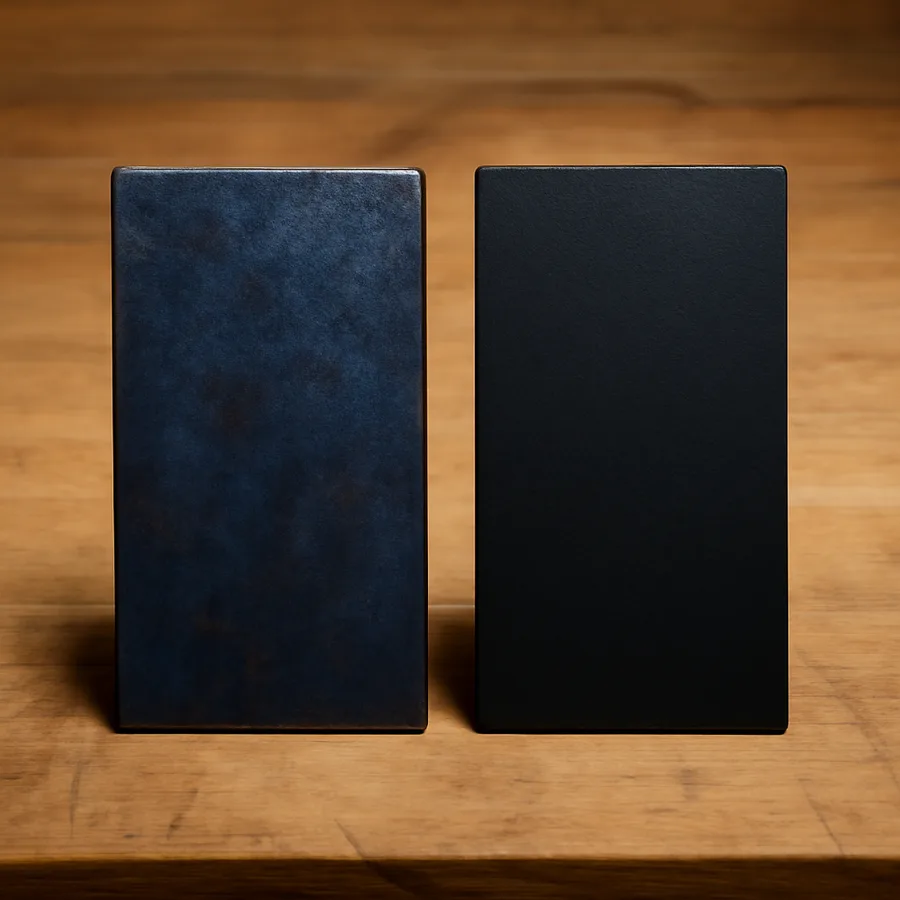
Picture three real jobs.
Job one, a crusty trailer frame
The whole rail is orange and scaly, pitted about a sixteenth of an inch deep, and no bare steel is left to find. Converter territory. The rust is uniform and total, exactly what the chemistry wants. Knock off the flakes, brush it on, watch it go black.
Job two, a fender with a quarter sized rust spot
Around it sits good factory paint you don’t want to wreck. This is encapsulator’s wheelhouse — it’ll seal the little spot and feather into the surrounding paint without needing the whole panel rusted. A converter here would just sit sticky on the painted areas.
Job three, a patch repair with welds
You’ve got fresh bare steel from grinding, old paint nearby, and a halo of light rust. Three conditions, one area. Encapsulator wins because it tolerates all three at once.
And road salt changes the math. Up in the salt belt — Michigan, Ohio, the New England states where brine hits the roads all winter — corrosion runs deeper and faster. Heavy uniform rust is common there, which pushes a lot of frame and underbody work toward converters. Down on the Gulf Coast, salty humid air tends to leave broader, shallower surface rust an encapsulator handles nicely.
Still unsure which problem you even have? Our breakdown of rust converter vs rust remover helps if you’re also weighing a full strip down to bare steel instead.
Best Of Both
Can you use both together?
Yes. And honestly, it’s a smart combo for serious jobs.
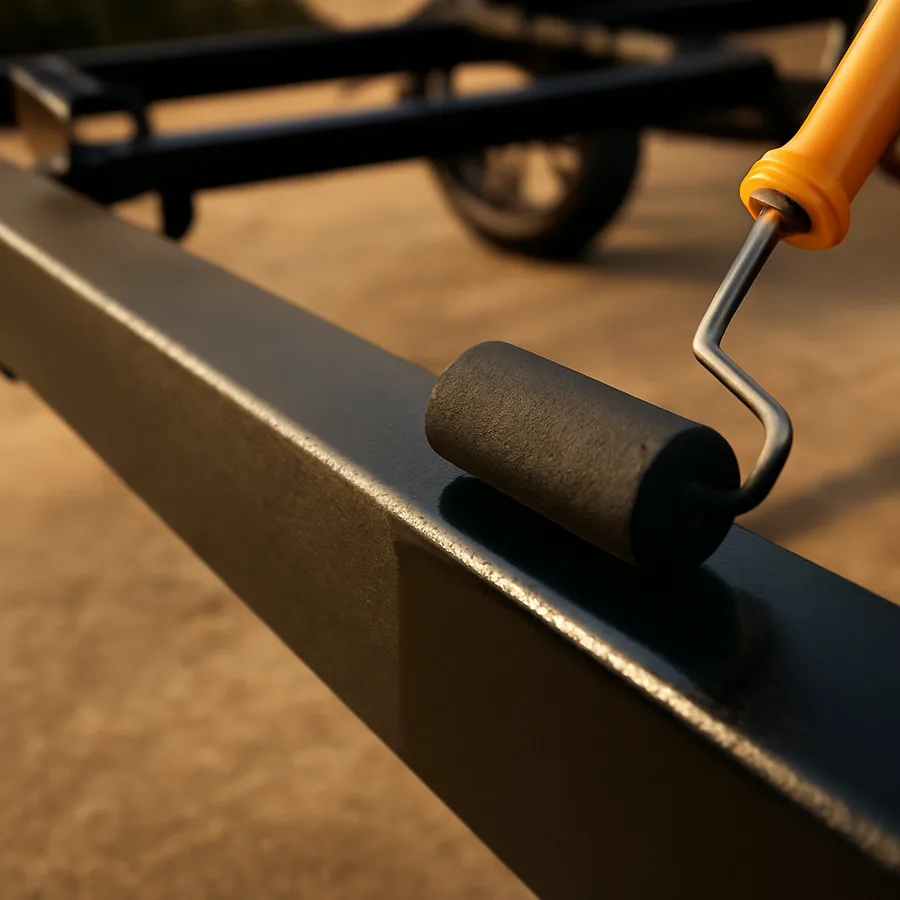
The pro sequence on a heavily rusted part goes like this. Convert first to neutralize the deep rust and build a stable base. Let it cure fully. Then lay an encapsulator over the top as a tough, moisture proof barrier. Finish with your topcoat for color and UV. You get chemical neutralization plus a sealed shell plus weatherproofing — a layered defense outlasting any single product on its own.
Order matters, though. Converter always goes first, directly on the rust, because it needs the oxide to react with. Encapsulator goes second, once the converter has done its job and dried. Flip the order and the converter has nothing to bite into.
Is the layered approach overkill for a mailbox post or a patio chair? Probably. For a light surface job, one product and a topcoat will do fine, and stacking coatings just burns time and money you don’t need to spend. But on a structural piece living through salty winters — a frame rail, a boat trailer tongue, a fence post sunk in wet ground — the extra hour of layering can buy you years before the rust ever wakes back up. Match the effort to the stakes.
One more note on topcoats. A converted surface isn’t a finish — it’s a primer. Same goes for most encapsulators in direct sun. Curious about painting over a treated surface? The rust converter paint guide walks through which topcoats bond well and which ones lift.
Questions
Frequently asked questions
Is a rust encapsulator the same as a rust converter?
No. A converter chemically reacts with rust and transforms it into a stable compound. An encapsulator simply seals over the rust to block moisture and air without changing it. Different mechanisms, different best uses.
Can I put rust converter on bare metal?
You shouldn’t. Converter needs rust to react with. On clean steel it won’t cure properly, can stay tacky, and the leftover acid may even trigger flash rust. Reach for an encapsulator or an etch primer on bare metal instead.
Does an encapsulator stop rust from spreading?
It does, as long as the film stays unbroken and fully covers the rust. By cutting off oxygen and water, it starves the reaction. A thin spot or a scratch, though, gives moisture a way back in, so even coverage is everything.
Do I still need a topcoat over either product?
Usually yes. A converted surface is a primer, not a finish. Most encapsulators also want a topcoat for UV protection outdoors. Without one, sunlight can chalk or break down the coating within a year.
Which lasts longer, converter or encapsulator?
Neither wins outright — it hinges on matching the product to the surface. On heavy uniform rust, a properly cured converter plus topcoat lasts for years. On mixed or light rust, an encapsulator with good coverage does. Mismatch them and both fail fast.
How much rust is too much for these products?
If the metal has rusted clean through, has holes, or has lost structural thickness, no coating fixes it. You’re into welding or replacement. Converters and encapsulators treat surface and scale rust, not metal already gone.
Still figuring out your rust problem?
Browse our full library of rust treatment guides, from frame repair to surface prep, and find the exact method for your project.