
No products in the cart.
Rust Converter Spray vs Brush-On: Which Application Is Better?
June 15, 2026
By Xion Lab
Free Shipping
easy returns
secure paymentS
FAQ | MY ACCOUNT | SUPPORT
June 15, 2026
By Xion Lab

Quick answer: Spray rust converter wins on speed and on reaching pits, seams, and tight corners a brush can’t touch. Brush on wins on flat, accessible panels where you want a thicker film and firmer contact with the metal. Most honest jobs use both methods — brush the easy flats, spray the awkward stuff.
The Short Version
You’re standing in the garage with a rusty fender on one side and a can of rust converter spray on the other, and the question won’t go away. Brush it? Spray it? The answer isn’t loyalty to one method. It’s matching the tool to the metal in front of you.
Spray rust converter shines when the surface is uneven, when the rust hides in seams, or when you’ve got a lot of square footage and not a lot of time. Brushing pulls ahead on flat, reachable panels, because the bristles drag the liquid into the rust and let you build a heavier coat exactly where you want it. Both turn orange rust into a stable, paintable layer. The difference is how they get there.
And the truth most product labels won’t tell you? Plenty of weekend projects need a brush and a can sitting on the same bench.
The Mechanics
A rust converter does one job. It reacts with iron oxide — the rust — and turns it into a stable black compound, a layer locking onto the steel and giving paint something to grip. If you want the chemistry in detail, we broke it down in our guide to how rust converters work. The application method doesn’t change the reaction. It changes how much converter reaches the rust, and how evenly it lands.
A brush physically works the liquid into the surface. Bristles flex into shallow pits, push converter past flaking edges, and let you feel resistance as you go. You control the film thickness down to the stroke. The tradeoff? It’s slow, and a brush can’t follow rust into a folded panel seam or the back of a frame rail.
Aerosol and spray converters atomize the liquid into a fine mist. So the mist settles into texture a bristle would skip right over — pinholes, weld pits, the rough crater field left behind by old scale. Coverage gets fast and even. The catch is film thickness. One pass lays down a thin coat, so heavy rust usually wants two or three passes spaced a few minutes apart. We covered the single pass workflow in our piece on rust converter spray paint.
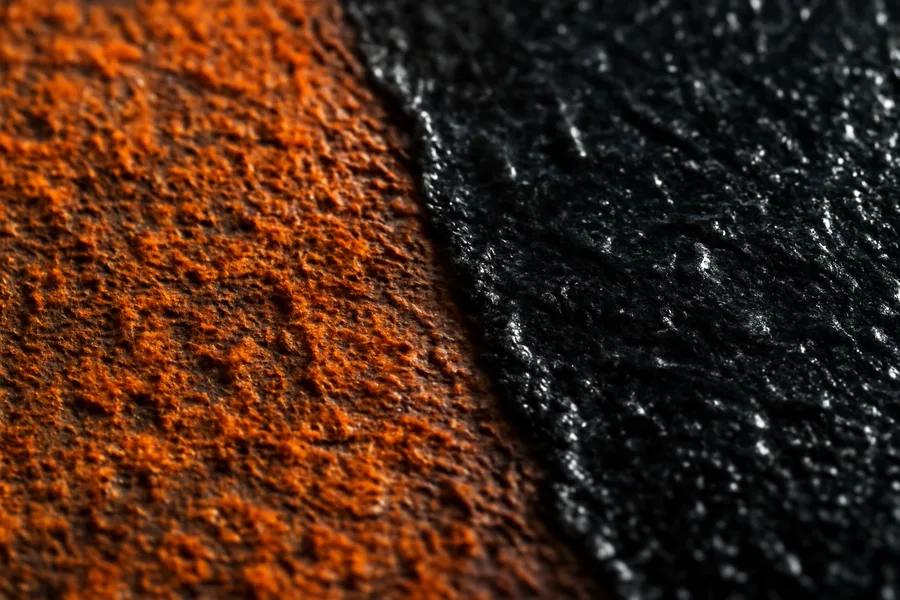
Head to Head
Numbers help. Here’s how the two stack up across the factors people actually care about on a real job.
| Factor | Spray Converter | Brush On Converter |
|---|---|---|
| Speed | Fast. A panel sprays in minutes. | Slow. The same panel can take five times longer. |
| Pits & seams | Excellent. Mist reaches what bristles miss. | Poor. Bristles bridge over deep texture. |
| Penetration into rust | Moderate. Thin coats sit on the surface. | Strong. Bristles drag liquid into the metal. |
| Film thickness control | Low. Builds in thin layers. | High. You build it as thick as you like. |
| Overspray & waste | Higher. Mist drifts, so mask everything nearby. | Minimal. Liquid goes where the brush goes. |
| Best surface | Frames, undercarriages, textured panels. | Flat sheet, tabletops, accessible body work. |
| Cleanup | None. Toss the can. | Brush soak or disposal afterward. |
See the pattern? Neither column is all green. The “right” answer flips depending on whether you’re treating a flat truck door or the rusted crossmember hiding behind it.
Think about a real garage afternoon. You drop the spare tire, look up, and the whole underside of the bed is freckled with surface rust running into welded seams. Brushing all of it? Hours, and you still miss the tight folds. A few light passes of spray covers the open steel and creeps into the seams in a fraction of the time. Then you flip to the brush for the flat bumper bracket sitting right there at eye level, where a heavy worked in coat will outlast everything around it. Same project. Two tools. No contradiction.
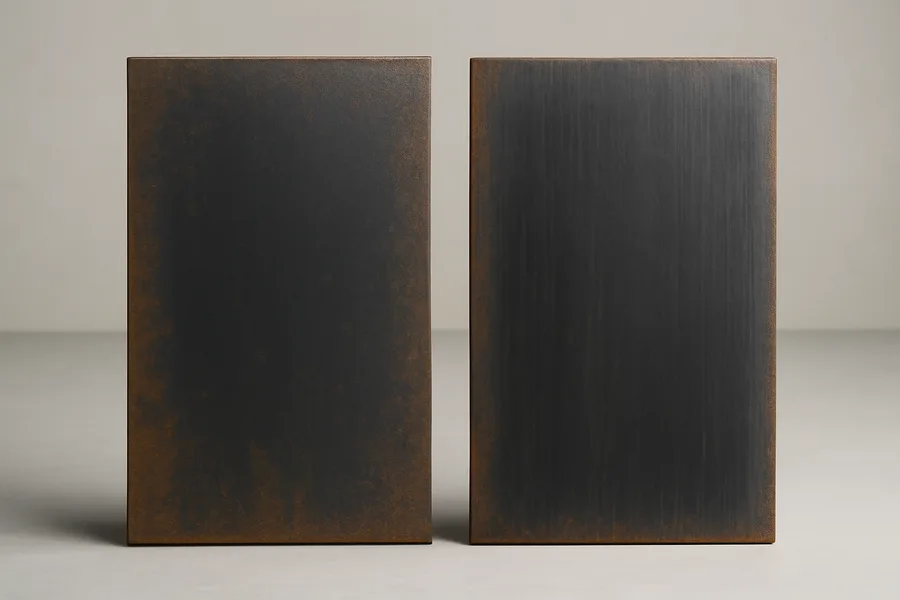
Spray Scenarios
Reach for the can when the geometry fights you. Undercarriages. Frame rails. Coil springs, suspension arms, the inside lip of a wheel well caked in salt grime. If you live in a salt belt state like Michigan or Ohio, you already know the spot — it’s where rust does its quiet damage, long before it ever shows on the paint.
Spray also wins on volume. Got a whole trailer frame to coat before the weekend’s out? A can knocks out in about eight minutes what a brush would chew through forty. That math adds up fast across a fleet.
One more case. Thin, scattered surface rust over a wide area — the kind blooming across a tailgate after one wet winter — goes down faster and more evenly with a light misted coat than with brush strokes leaving ridges. For the deeper question of which product to even start with, our rust converter vs rust remover breakdown is worth reading first.

Brush Scenarios
Flat and reachable. That’s the brush’s home turf. A rusted patio table top, a sheet of barn steel, the accessible face of a tractor bucket — anywhere you can lay a brush flat and work the converter in, you’ll get a denser, more durable layer than a mist can manage in a single pass.
Brushing also gives you precision. Treating a small spot of rust on an otherwise clean panel? A brush hits the rust and nothing else. No masking, no drift onto the good paint, no cloud of overspray hanging in the shop air. For heavy, crusty rust where you genuinely need a thick converted layer, the brush builds it in one go while a spray needs patient coats.
There’s a control factor too. As you brush, you feel the rust grab the liquid. You can tell where the converter is working and where the metal’s still bare. That feedback matters on a restoration where every panel counts.
But the brush has a quieter advantage people forget — it wastes almost nothing. No overspray cloud. No drifting mist coating the floor and the tools and your forearms. On a small repair, a single bottle of brush on converter stretches across a surprising number of jobs, because every drop lands where you aimed it. Body shop folks doing spot repairs on rocker panels lean on this all the time.

Don’t Skip This
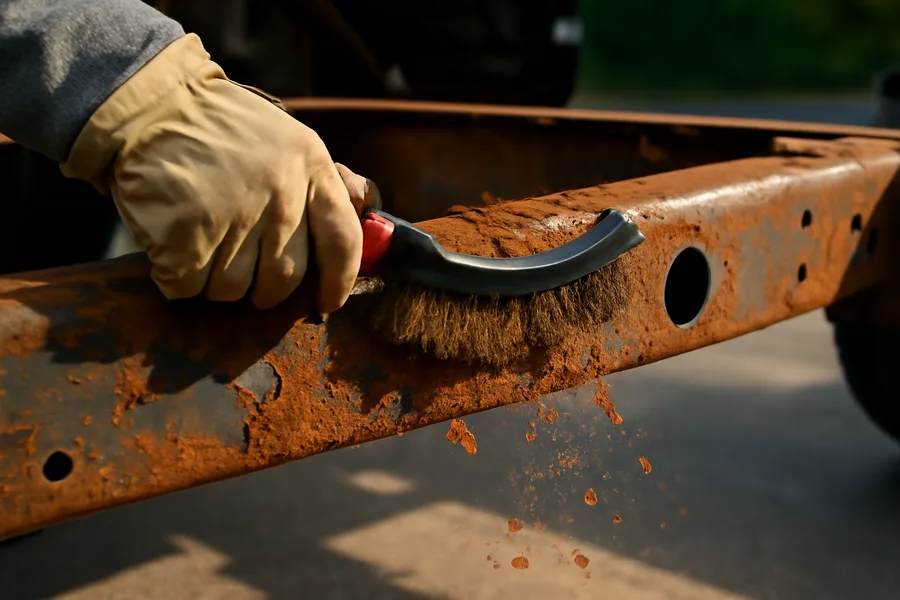
Here’s the part both camps agree on, and it’s the part most people rush. Neither spray nor brush will save a surface you didn’t prep. Knock off the loose, flaking scale with a wire brush or a grinder wheel. Wipe away oil, grease, and dirt. Let the metal dry. Skip that, and your converter bonds to junk instead of steel — then it peels in months.
Corrosion gets expensive when it’s ignored. A landmark global study by NACE, now part of AMPP, put the worldwide cost of corrosion at roughly $2.5 trillion a year — about 3.4% of global GDP. I’d treat the number as a well cited estimate rather than gospel, but the scale is real.
Estimated annual global cost of corrosion, about 3.4% of world GDP (NACE/AMPP IMPACT study). Verify against the primary source for exact figures.
Good prep is also where converter and topcoat earn their keep together. A converter stabilizes the rust. A sealing topcoat keeps moisture from restarting the cycle. We walk through the full routine in our guide to surface preparation for rust treatment, and the U.S. EPA publishes the VOC limits shaping which spray formulas you can even buy in certain states.
Avoid These
Spraying in the wind. Mist drifts, lands on your neighbor’s car, and never reaches the rust evenly. Pick a calm day or a still garage.
Then there’s the thickness trap with aerosols. Folks blast one heavy wet coat to save time, it runs and sags, and the converter underneath never fully reacts. Thin coats. Spaced out. Patience beats a drippy mess every time.
On the brush side, the classic error is treating a pitted surface and assuming the bristles reached the bottom. They didn’t. Deep pits want a spray follow up, or a thinned first coat worked in hard.
Fair warning, though. Yet a converter is not a miracle. If the steel has rusted clean through — if you can poke a screwdriver through a frame or see daylight through a panel — no spray and no brush will bring the metal back. That’s a cutting and welding job, full stop. Converters stabilize rust. They don’t rebuild what’s already gone. Curious whether your treated surface will take paint? Our note on whether you can paint over rust converter covers the timing. For more on corrosion basics, Corrosionpedia is a solid neutral reference.
Questions & Answers
Is spray or brush rust converter better?
It depends on the surface. Spray reaches pits, seams, and tight spots fast and covers large areas evenly. A brush gives a thicker, denser film on flat, accessible metal and lets you work the liquid into the rust. Many jobs use both.
Does spray rust converter penetrate as well as brushing?
Not in a single pass. A spray lays down a thin coat sitting more on the surface, while a brush drags converter into the rust. Two or three light spray coats close most of the gap, especially on textured or pitted steel.
Can I brush a spray rust converter, or spray a brush on one?
Sometimes. Some brush on liquids thin down and load into a sprayer, and some aerosols can be decanted. Check the label first. Mixing methods works best when you follow the maker’s directions for the exact formula you bought.
How many coats of rust converter do I need?
Light surface rust often needs one good coat. Heavy or scaled rust usually wants two. With spray, plan on two or three thin passes rather than one heavy one, letting each flash off for the time the label specifies.
Do I still need primer after a rust converter?
Yes, for anything exposed to weather. The converted layer is stable, but a sealing primer and topcoat keep water and oxygen out so rust can’t restart. Skipping the seal is the most common reason a treated surface fails early.
Will rust converter work on rusted through metal?
No. If the steel has holes or you can flex it through, the metal is gone and needs cutting and welding. Converters stabilize rust on solid steel. They don’t restore structure already lost to corrosion.
From prep to topcoat, our guides cover every surface and every method without the sales pitch.