Rust converter
How to Get Rid of Rust: Complete Rust Converter and Primer Guide (2026 Guide)
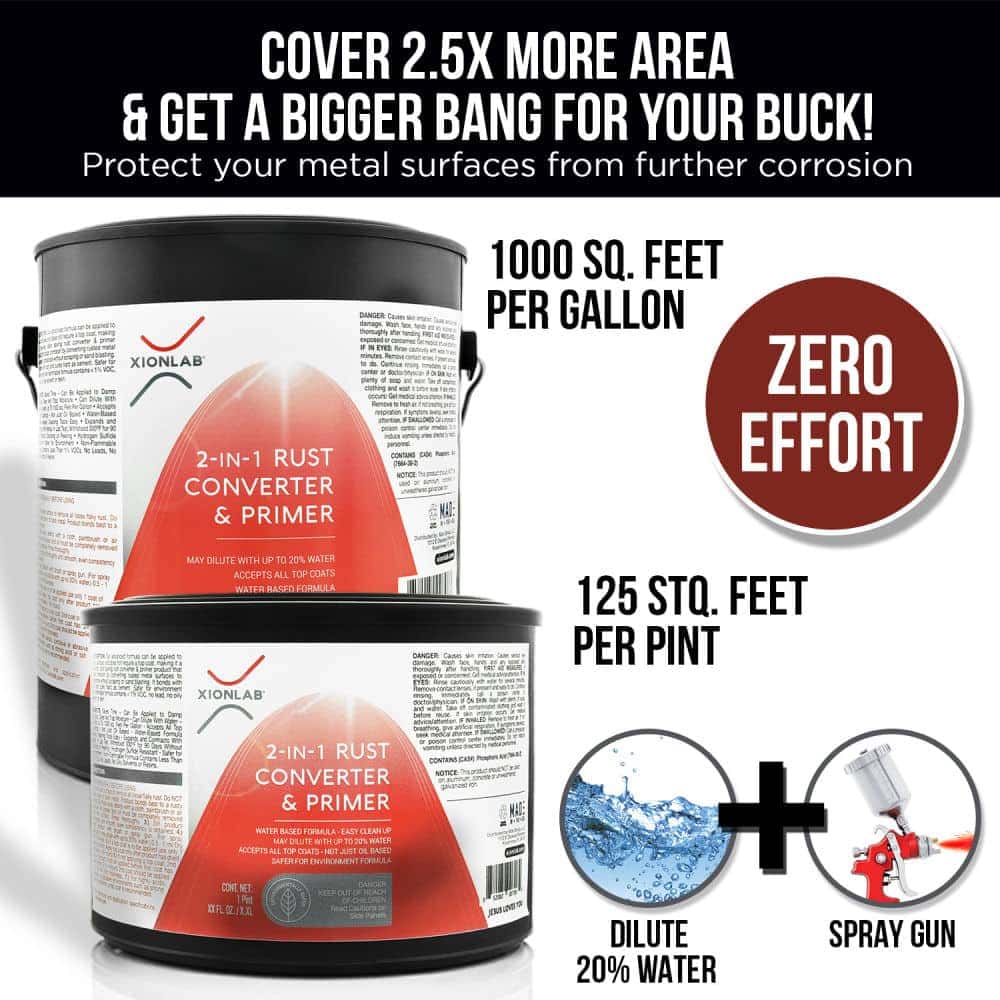
Quick answer: A rust converter and primer like the XionLab 2-in-1 chemically transforms iron oxide into a stable, paint-ready coating in one application. Brush, roll, or spray over light-to-moderate rust after a quick wire-brush prep, and you lock the corrosion down. Salt wins every time you skip prep.
Why Rust Spreads So Fast (And Why It Costs So Much)
Rust is the slow-motion enemy of every steel surface outside a vacuum chamber. Iron meets oxygen, water joins the party, and the molecule rearranges itself into iron oxide — a flaky, brittle compound roughly seven times bulkier than the metal it came from. So tiny pits become deep craters within a season, and a perfect weld can blister apart in a year.
And the bill is enormous. According to NACE International’s IMPACT study, global corrosion costs the world economy about $2.5 trillion annually, roughly 3.4% of global GDP. In the United States alone, corrosion accounts for over $450 billion in yearly losses. Read the full breakdown at NACE Economic Impact, and see the broader industry consensus at AMPP (Association for Materials Protection and Performance).
Annual global cost of corrosion — NACE International IMPACT Study
Most homeowners and shop owners do not feel that number. But you do feel the smaller version of it: a porch railing eaten through after six winters, a trailer crossmember curling like a potato chip, a boat trailer crossbar that snaps under load. Rust always starts small. Then it does not stay small for long.
So why does it move so quickly? Three reasons. Moisture provides the electrolyte. Salt amplifies conductivity by a factor of ten or more. And the rust layer itself holds water against the parent metal like a sponge, so corrosion keeps running even after the sky clears. Read more from Corrosionpedia’s rust primer if you want the deeper electrochemistry.
How a Rust Converter and Primer Actually Works
A rust converter is not paint. Paint sits on top. A converter goes into the rust and changes its identity. The active ingredient — usually tannic acid, phosphoric acid, or a blend — reacts with iron oxide to form iron tannate or iron phosphate, a stable black film bonded to the steel beneath.
Our XionLab 2-in-1 Rust Converter and Metal Primer takes the chemistry one step further. One coat does two jobs at once. First it neutralizes existing rust by converting iron oxide into a passive layer. Then a polymer carrier cures into a tough, paintable primer. One application, two outcomes, no mixing.
How does this compare to the traditional two-step approach? Older systems demand a wash-and-rinse converter, then a separate zinc-rich or epoxy primer, then a topcoat. Three trips around the job. Three drying windows. Our chemistry collapses the middle step, saving a half-day on most projects and a real chunk of material cost across a fleet job.
What the Reaction Looks Like in Real Life
Brush it on. Within roughly twenty minutes the rust starts darkening from reddish-orange to a deep purple-black. By the next morning the surface is hard, flat, slightly satin, and ready for topcoat. No rinsing. No neutralizing wash. Sequence is everything.
Plain English: The acid grabs the loose oxygen atoms in the rust molecule and locks them into a new compound the rust cannot reverse. So oxygen and moisture can no longer feed the reaction. The rust is starved.
Step-By-Step: Getting Rid of Rust the Right Way
Surface prep accounts for roughly 80% of any successful rust treatment. Skip prep and any product underperforms, even a great one. So here is the routine I follow on every project, from a garden gate to a 30-foot trailer.
1. Clear Loose Scale
Wire-brush, scrape, or use an angle grinder with a flap disc. Knock off anything flaking. Solid rust can stay — the converter feeds on it. But loose chunks of scale will lift the coating off later.
2. Degrease the Surface
Oil and silicone block the conversion reaction. Wipe down with acetone, mineral spirits, or a dedicated metal prep solvent. Let it flash off fully. A clean rag, light pressure, no shortcuts.
3. Apply the Converter
Brush, roll, or spray a thin, even coat. Think of it as staining wood — too thick is worse than too thin. About a wet-film thickness of three to five mils works. Avoid puddles in corners.
4. Recoat Stubborn Patches
After the first coat sets and turns dark, hit any spots still showing brown with a second coat. Heavy rust sometimes needs two passes. Light surface rust almost never does.
5. Cure Time
Allow at least 24 hours before topcoating at 70 °F and 50% humidity. Cold or damp air slows the cure. In Pacific Northwest winter, expect 48 hours. Patience pays.
6. Topcoat
The cured converter accepts oil-based enamel, acrylic latex, and most two-part urethanes without sanding. For maximum durability on a vehicle or marine surface, follow with a high-build epoxy primer and a polyurethane topcoat.
Of coating failures trace back to surface preparation — per AMPP and SSPC industry guidance
Picking the Right Rust Converter and Primer
Not all converters are equal. The cheap stuff at a big-box store is often heavily diluted phosphoric acid with little polymer content. The film cracks the moment your trailer hits a bump. Premium products like XionLab combine active acid chemistry with a flexible polymer carrier, so the coating bends with the metal instead of fighting it.
Here is how the main options stack up against each other on the criteria homeowners and pros care most about. See our deep dive on the science of rust converters and primers for the chemistry behind these differences.
| Feature | XionLab 2-in-1 | Generic Tannic Wash | Phosphoric Etch |
|---|---|---|---|
| Converts rust | Yes — full conversion | Yes — light surface only | Partial |
| Acts as primer | Yes — no separate coat | No | No |
| Water-based | Yes — low VOC | Varies | Often high VOC |
| Flexibility on flex panels | High | Low — cracks easily | Brittle |
| Adhesion to bare steel | Strong | Weak | Moderate |
| Top-coat compatible | Oil, latex, urethane | Limited | Limited |
Corroseal works well for lighter surface rust on a static fence post. Where XionLab pulls ahead is on heavier rust, on flexing panels, and on jobs where you want the primer step folded in. One coat. Done.
A Real Project: Saving a Salt-Belt Trailer Frame
A buddy of mine in central Ohio brought over a 14-foot utility trailer last spring. Six winters of road brine had done a number on the frame. The crossmembers wore a quarter-inch crust of scale in spots. Two of the wheel wells had blistered through, but the main rails were still solid.
I scraped the loose stuff off with a stiff wire wheel on a 4-inch grinder. The whole frame took about two hours. After a wipe-down with acetone, I brushed on XionLab 2-in-1 with a chip brush, coat one going on rust-orange, coat two going on jet-black the next morning. Total product used: roughly a quart and a half on a 14-foot frame.
Eight months later — through an Ohio winter complete with brine pre-treatment on the highways — the converted coating still looked the day I put it down. No bleed-through. No flaking. Just a flat black skin sealing in what used to be a rust factory. Read about more situations like this in our guide to rust converters for automotive protection.
Bottom line from the field: Prep harder than you think you need to. Apply thinner than you think you need to. The chemistry handles the rest.
Where Rust Converters Fail (And When To Skip Them)
Honesty matters. A converter is not a miracle product. There are situations where the right answer is mechanical removal, replacement steel, or a totally different chemistry. Skipping these realities just sets you up for a re-do.
Perforated Metal
If you can see daylight through the rust, no converter will fix it. The chemistry cannot rebuild missing iron. Patch the hole with welded plate or fiberglass first, then convert any surrounding rust.
Galvanized Surfaces
Galvanizing protects steel by sacrificing zinc. Acid-based converters strip the zinc layer and can leave the substrate worse off. Use a dedicated galvanized primer instead.
Aluminum and Stainless
Neither rusts in the traditional iron-oxide sense. Tannic and phosphoric chemistries do not bind to aluminum oxide or chromium oxide the same way. Pick an etching primer formulated for those substrates.
Common Mistakes To Skip
- Applying too thick. Heavy films skin over and trap uncured material below. Three to five mils wet is the sweet spot.
- Skipping degrease. Even a thumbprint of oil can stop the conversion reaction cold in that spot.
- Topcoating too early. The conversion layer needs to fully harden, or solvents in the topcoat re-wet it.
- Using on hot metal in direct sun. Above 90 °F surface temperature, the carrier evaporates before the acid can react.
- Expecting a converter to glue down loose scale. If it flakes off with a thumbnail, it must come off first.
Six Ways the XionLab 2-in-1 Stands Apart
Plenty of converters claim to do everything. Few actually deliver on the marketing copy. Here is the short list of what sets the XionLab formula apart in side-by-side testing and in the field.
True 2-in-1 Chemistry
Converter and primer in a single coat. Save a step and a separate gallon of primer.
Water-Based, Low VOC
Safer for indoor application, garages, and operators. Cleans up with soap and water.
Flexible Polymer Carrier
Bends with the metal. Resists cracking on doors, tailgates, and trailer panels.
Universal Topcoat Compatible
Accepts oil-based enamel, latex, two-part urethane, and most epoxies.
Multi-Substrate Bond
Works on rusted steel, mill scale, weathered iron, and even sound bare metal as a primer.
USA-Made, 2015 Founded
Engineered and packaged in the United States by a small team obsessed with corrosion.
Want the long-form competitor comparison? Our best rust converter and rust remover head-to-head goes deeper.
Keeping Rust Off After You’ve Beaten It
Conversion is the start, not the finish. The single biggest predictor of how long a rust treatment lasts is what happens after the topcoat dries. Maintenance routines matter. Climate matters more.
Quick Routine for High-Risk Items
- Rinse after salt exposure. A garden hose on the underside of a vehicle or trailer pulls 90% of the chloride load off in under a minute.
- Inspect every six months. Catch a tiny bleed-through before it tunnels under the topcoat.
- Touch up scratches the same day. A nicked panel rusts faster than a flat panel because moisture pools in the scratch.
- Store under cover. A simple tarp doubles outdoor steel lifespan in most climates.
- Keep a small can of converter on hand. Spot treatment is the cheapest insurance policy on a fleet vehicle.
Climate Realities Across Regions
Gulf Coast humidity feeds corrosion year-round. Salt-belt states (Michigan, Ohio, Pennsylvania, upstate New York) get their rust season from December to March. The Pacific Northwest produces a slower, mossier version of the same problem. Desert metal often lasts decades without intervention. Adjust prep frequency to match where you live.
Reduction in corrosion damage when industry best practices are implemented — NACE IMPACT
Frequently Asked Questions
Does a rust converter actually stop rust, or just hide it?
Real converters chemically stop it. The reaction with phosphoric or tannic acid creates a passive iron compound the air can no longer attack. Cheap “rust paints” only hide the color. Verify the data sheet lists iron tannate or iron phosphate formation — without those words, you are buying tinted paint.
How thick should the coat be?
Three to five mils wet on the first pass. Too thick traps solvent below the surface, and the film never fully cures. Two thin coats almost always outperform one heavy coat.
How long before I can paint over it?
24 hours at room temperature is the safe minimum. Allow 48 hours in cool or humid weather. Topcoating early can re-wet the conversion layer and cause peeling later.
What if parts of the surface stay brown after the first coat?
Those spots had too much rust for the first pass to fully convert. Apply a second coat directly over them. After that second pass cures, the surface should read uniformly dark.
Can I use it on a boat or marine hardware?
Yes — XionLab 2-in-1 works well on ferrous marine hardware above the waterline. For full submersion or chronic spray, follow with a marine-grade epoxy and polyurethane. Read our marine corrosion protection guide for the complete system.
Does it work on a car’s underbody?
Excellent fit. Brush or spray onto cleaned, scaled frame rails and crossmembers. For salt-belt vehicles, recoat any nicks every spring after the road-salt season.
Is the cured coating safe to store long term?
The cured film is inert, low-VOC, and family-safe once dry. Indoor storage of treated tools, hardware, and furniture is fine.
Can I spray it or do I have to brush?
Both work. A medium-cap HVLP gun lays it down beautifully. Foam rollers move fast across large flat panels. Chip brushes reach the awkward corners a sprayer never sees.
Will the converted coating crack or peel over time?
Not when applied to a properly prepped surface within the cure window. Cracking almost always traces back to one of three issues: oily substrate, application above 90 °F, or a coat far too thick.
What You Need In Your Rust-Treatment Kit
A well-stocked rust kit costs less than one good takeout dinner and saves thousands across a few years of home and shop maintenance. Most of these items already live in a typical garage. Pick up the rest at any hardware store before you start.
Prep Tools
- Wire brush — manual. A stiff brass or steel brush gets ninety percent of light scale off in five minutes. Cheap, fast, and never breaks down.
- Wire wheel for a drill or angle grinder. For larger jobs, a 4-inch knotted wire cup wheel chews through heavy scale at speed. Wear eye protection — the bristles fly.
- Sandpaper, 80–120 grit. Smooths out the bright steel after wire brushing and feathers edges where sound paint meets bare metal.
- Tack rag or microfiber. Lifts the last fine dust off the surface before solvent wipe.
- Acetone or denatured alcohol. A quart goes a long way. Skip mineral spirits if you can — residue interferes with the conversion reaction.
Application Tools
- Chip brushes, 1-inch and 2-inch. Disposable, reach tight corners, no cleanup hassle. Buy a multi-pack.
- Foam roller and tray. Lays a thin, even film across flat panels faster than any brush.
- HVLP spray gun, 1.4 mm tip. Optional, but a serious productivity boost on large projects. Thin the converter per the data sheet for spray work.
- Nitrile gloves and safety glasses. Tannic and phosphoric acids stain skin and irritate eyes. Cheap protection beats the alternative.
Curious how this kit holds up across a season? Our field test of rust converter spray paint walks through a year of outdoor exposure on treated panels and shows what holds and what doesn’t.
Pro tip: Decant only what you need into a separate cup. Returning unused converter to the original can shortens shelf life and risks contamination from the brush you have been using.
Ready To Get Rid of Rust For Good?
Stop the corrosion cycle with the XionLab 2-in-1 Rust Converter and Metal Primer. Safer For You, Safer For The Environment.