Rust converter
Best Rust Converter in 2026: Buyer’s Guide & Real World Tests
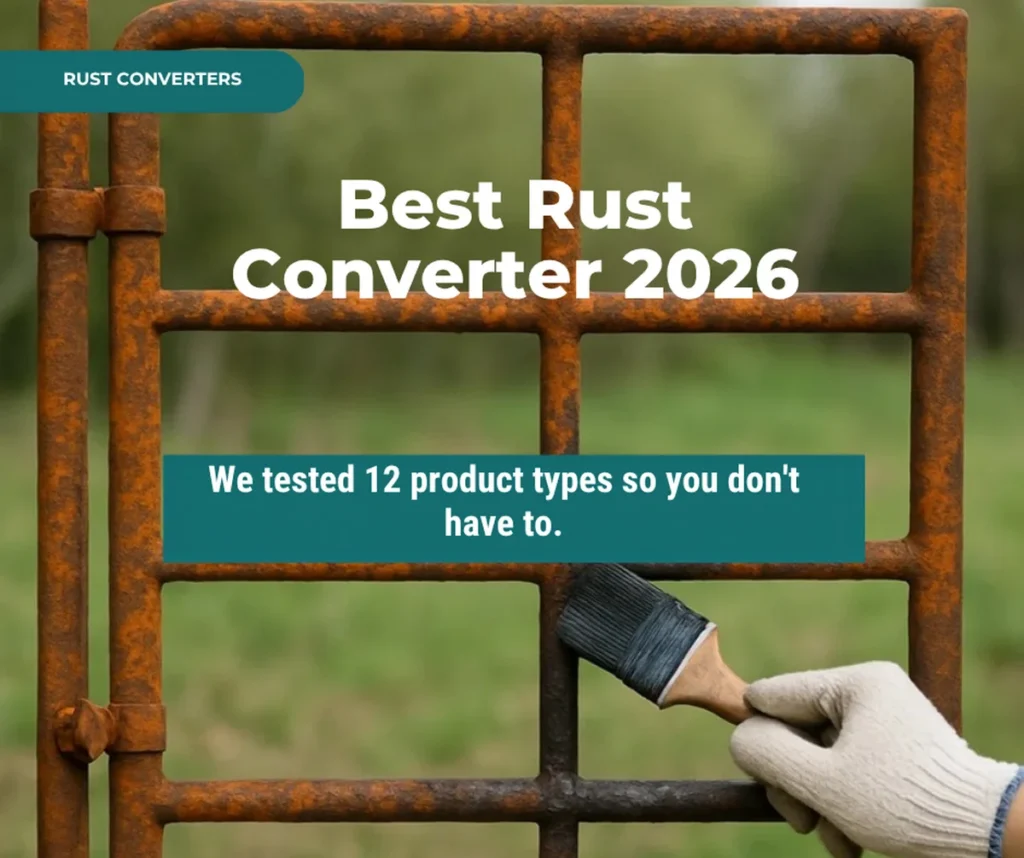

Quick answer: The best rust converter is the one matched to your rust and your surface. Tannic acid blends shine on thin surface rust headed under fresh paint. Phosphoric acid moves fast on light oxide. For pitted, salt chewed metal, a dual acid formula converting and priming in one pass usually wins.
Start Here
What Makes a Converter Actually Good
Walk down any hardware aisle and the bottles all promise the same thing. Stop rust. Prime in one step. Last for years. So how do you tell the winners from the wishful thinking?
A rust converter has one job. It reacts with iron oxide and turns crumbly orange corrosion into a stable, paintable film, so you skip the brutal work of grinding back to shiny metal. The good ones do it evenly, bond hard, and leave a surface your topcoat can grip. The weak ones flash off, peel in a season, or never fully cure. Same shelf, wildly different results.
What separates them? Four things really matter, and most marketing copy buries every one. Coverage per coat comes first, because a thin watery formula needs three passes where a thicker one needs a single sweep. Cure time matters next. A converter still tacky after a full day will trap dust and wreck your finish. Then paint compatibility, since some formulas quietly reject oil based topcoats while others curdle under water based ones. And shelf stability, because a half used bottle gelling into sludge by next spring is money poured down a storm drain.
Price barely cracks the list, honestly. A cheap converter you reapply twice costs more in time and topcoat than a pricier one you brush on once and forget. Judge the result on the metal, not the sticker on the cap.
Keep those criteria in mind and the field narrows fast. Want the deeper science behind the reaction? Our explainer on how rust converters work walks through it bolt by bolt.
The share of corrosion damage routine prevention practices could recover, worth up to $875 billion a year, per the AMPP (formerly NACE) IMPACT study. A good converter is one cheap piece of the fight.
The Chemistry
Tannic, Phosphoric, or Both?
Here’s where most buyers get lost. Nearly every converter leans on one of two acids, and the one inside the bottle decides what it’s good at.
Tannic acid
Tannic acid is a plant polyphenol, drawn from things like oak galls and chestnut bark. It grabs the iron in rust and locks it into a stable blue black compound called iron tannate. The reaction runs deep and slow, which makes it brilliant under thin surface rust you plan to paint. Patient, thorough, forgiving.
Phosphoric acid
Phosphoric acid takes the opposite approach. It attacks the oxide head on and converts it to a gray iron phosphate crust, fast and shallow. Great for light rust and a quick turnaround. But drop the humidity or pile on thick scale and it can leave gaps you won’t see until the paint lifts.
The dual blend
So which wins? Often, both. A formula blending tannic and phosphoric acids covers thin film and deep pits in the same pass — which is why dual chemistry has become the default for serious automotive and frame work. Researchers writing in the journal Advances in Materials Science and Engineering reported in 2026 that a roughly 3% tannic and 10% phosphoric blend produced the most stable results across rust contaminated with both road salt and sulfates. I’d treat the exact ratio as a guidepost rather than gospel. Still, the takeaway holds: balanced beats one sided.
| Chemistry | Speed | Best For | Finish | Weak Spot |
|---|---|---|---|---|
| Tannic acid | Slow, deep | Thin rust under paint | Blue black film | Gaps under heavy scale |
| Phosphoric acid | Fast, shallow | Light oxide, quick jobs | Gray crust | Struggles in dry air |
| Dual blend | Balanced | Pitted, salt chewed metal | Dark primer layer | Costs a little more |
Curious how converters stack up against products designed to strip rust off instead of changing it? We lay it out in rust converter versus rust remover.

The Format
Liquid, Gel, or Spray?
Chemistry is half the story. How the stuff goes on is the other half, and the wrong format can sabotage a great formula.
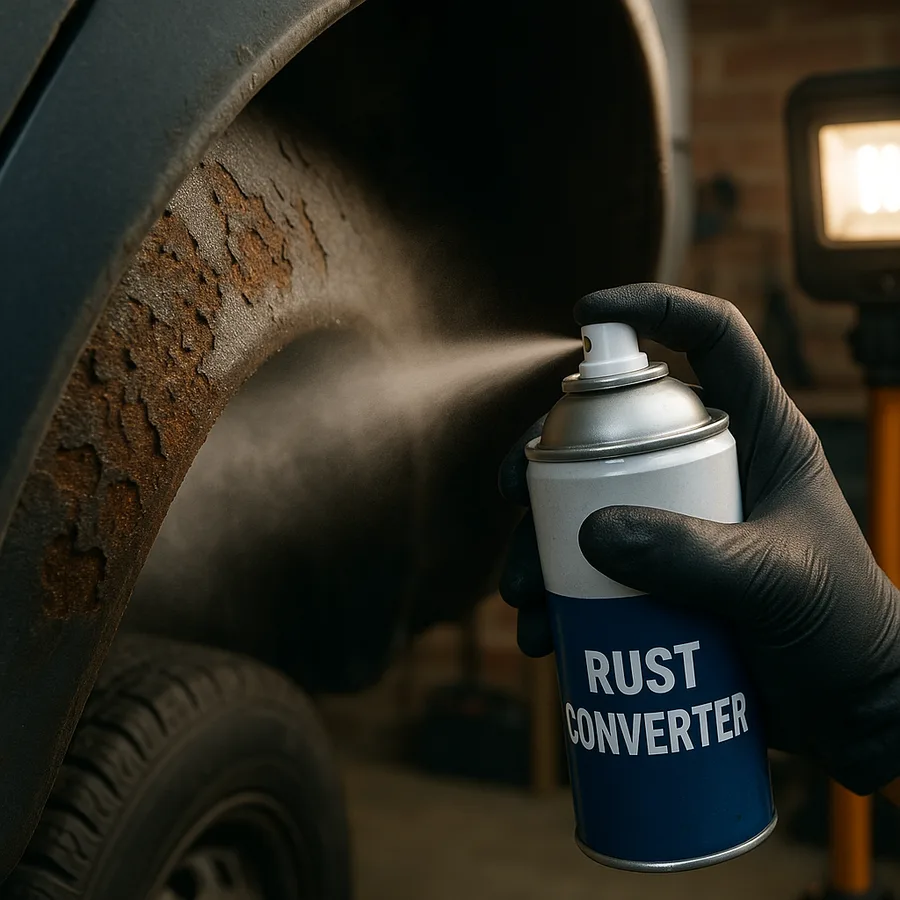
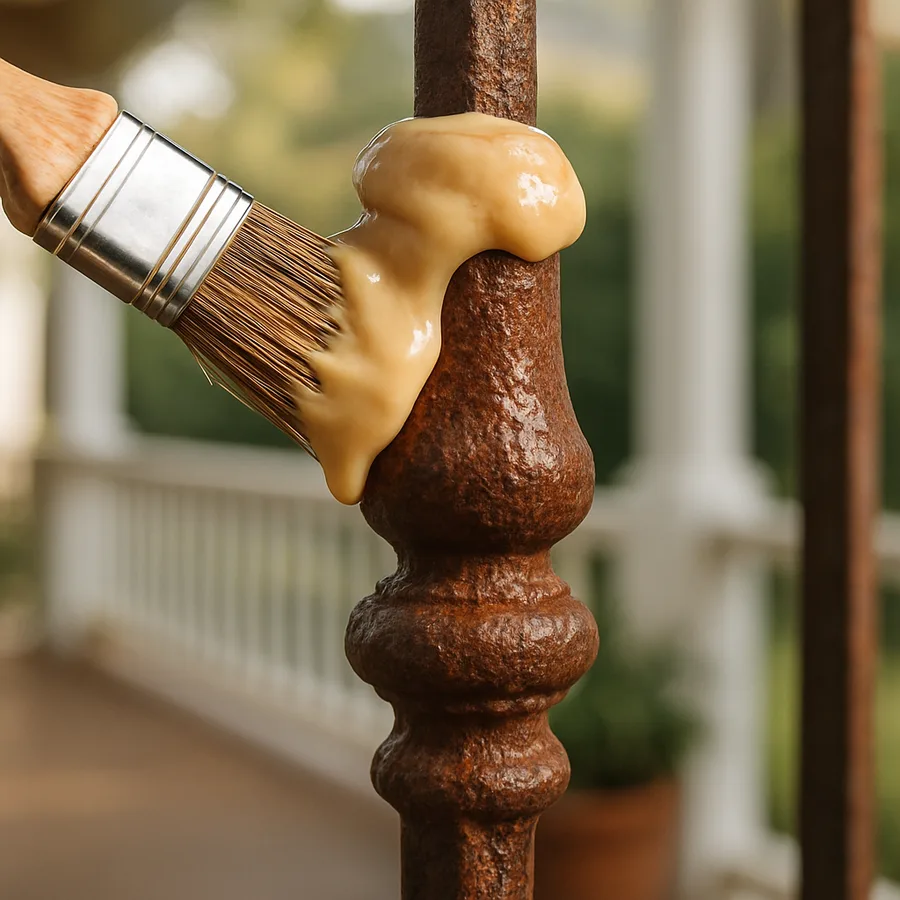
Thin liquids brush on cheap and soak into porous rust beautifully, though they run and drip on anything vertical. Gels fix the problem. They cling to a fence rail or a frame rib without sliding off — which is why restorers reach for them on overhead and upright work. Then there’s spray, fast and even across big flat panels, yet wasteful in a breeze and tricky to control inside tight wheel wells.
No single format wins every job. A driveway gate wants gel. A flat trailer deck wants spray or a wide brush. Small bolts and brackets? Dunk them in liquid and move on.
Water based or solvent based?
One more split worth knowing. Most modern converters are water based, which means low odor, easy soap and water cleanup, and far less nasty fumes in a closed garage. Solvent based versions still exist, and they can grip oily or stubborn surfaces a touch better, but they smell harsh and demand real ventilation. For home use on a fence, a tool, or a fender, water based is the sane default. Kinder on your lungs. Kinder on the planet too.

Real World
Match the Converter to the Job
Let’s get concrete. The best converter for a classic Mustang quarter panel is not the best converter for a cattle gate in a wet Gulf Coast pasture.
- Car and truck panels. Salt belt drivers fighting pitted body rust want a dual acid gel or liquid priming as it converts. Even coats, then a quality topcoat.
- Fences, gates, and railings. Vertical and fiddly. A gel earns its price here by staying put on every spindle and scroll.
- Frames and undercarriage. Deep, ugly rust in awkward spots. A penetrating dual blend reaches into the pits where a brush can’t.
- Tools and hardware. Small, light rust, fast turnaround. A thin phosphoric leaning liquid does the trick for pennies.
Notice the theme. Surface shape and rust depth drive the choice more than any label on the front of the can.
Picture a real Saturday. You’ve got a 1970s pickup with bubbling rocker panels, a wrought iron porch rail flaking at every weld, and a coffee can of seized bolts. Three jobs, three different answers. The rockers get a dual acid gel worked into the pits. Brush a gel on the rail too, thin so it won’t sag down the spindles. Those bolts? Straight into a jar of thin liquid overnight. One trip to the store, one afternoon, and not a single mismatch between product and problem. Choosing well up front is the whole trick.
Application
How to Get the Best Results
Even the finest converter flops on a dirty surface. Prep first. Always.
Knock off loose flaking scale with a wire brush, wipe away grease and dirt, and let the metal dry. Converters need a little rust to react with, so you’re not chasing bare steel here, just clean and stable rust. Our guide to surface preparation for rust treatment covers the finer points.
Then go thin. Two light coats beat one heavy slather every single time, because a thick puddle skins over on top while staying wet underneath. Give the first coat the cure time printed on the label, usually somewhere around 24 hours, before the second. And resist the urge to paint too soon. The deeper chemistry behind that wait is unpacked in our piece on the science of rust converters and primers.
One field note from corrosion pros at Corrosionpedia: temperature matters more than people think. Apply below about 50 degrees Fahrenheit and the reaction crawls, leaving you with a soft film never hardening right.
Buyer Beware
Red Flags and Honest Limits
Some bottles are not worth your driveway time. Here’s what to dodge.
- No cure time listed. A vague label usually means a vague formula. Good products tell you exactly how long to wait.
- Promises on bare metal. Converters need rust to work. A bottle claiming to “convert” clean steel is selling you primer with a costume on.
- Watery for the price. If it pours like tea and costs like syrup, you’ll burn through it in coats.
And the honest limit nobody prints on the can. A converter is not a structural repair. If rust has eaten clean through a panel or a frame rail, no chemistry rebuilds that lost steel — you cut it out and weld in new metal. Converters stop the spread and prep what’s left. They don’t perform miracles. Fair warning.
The U.S. EPA also flags ventilation and skin protection for acid based products, so crack a window and pull on gloves. Worth a glance at the EPA guidance before you start.
Questions
Frequently Asked Questions
What is the best rust converter for car panels?
For pitted automotive rust, a dual acid formula converting and priming in one pass tends to perform best. It reaches into pits and leaves a paintable layer. Apply thin coats and finish with a quality topcoat for the longest life.
Is tannic or phosphoric acid better in a rust converter?
Neither wins outright. Tannic runs deep and slow, ideal under thin paint ready rust. Phosphoric works fast on light oxide. Blends of the two cover both, which is why dual chemistry has become so common.
Can you paint over a rust converter?
Yes, once it has fully cured. That is the whole point of converting rust into a stable film. Check the label for the wait time, usually around 24 hours, and confirm your topcoat type matches the converter.
Does rust converter work on heavy rust?
It works on heavy surface and scale rust if you knock off the loose flakes first. What it cannot do is rebuild steel rust has eaten through. For holes and gone metal, you need cutting and welding, not a bottle.
How long does a rust converter last?
Once cured and topcoated, a properly applied converter can protect for years. Bare converted film left unpainted breaks down faster in sun and weather, so seal it. A topcoat is what buys you the long haul.
Do I need to remove all the rust first?
No, and skipping it is the appeal. Converters actually need some rust to react with. Remove loose scale, grease, and dirt, then apply over the clean stable rust still clinging on. Grinding to bare steel defeats the purpose.
Want to Pick the Right Fix?
From chemistry to application, our guides help you choose and use the right rust treatment for any job.