Rust converter
Ford F150 Frame Rust: Causes, Fixes & Prevention (2026)
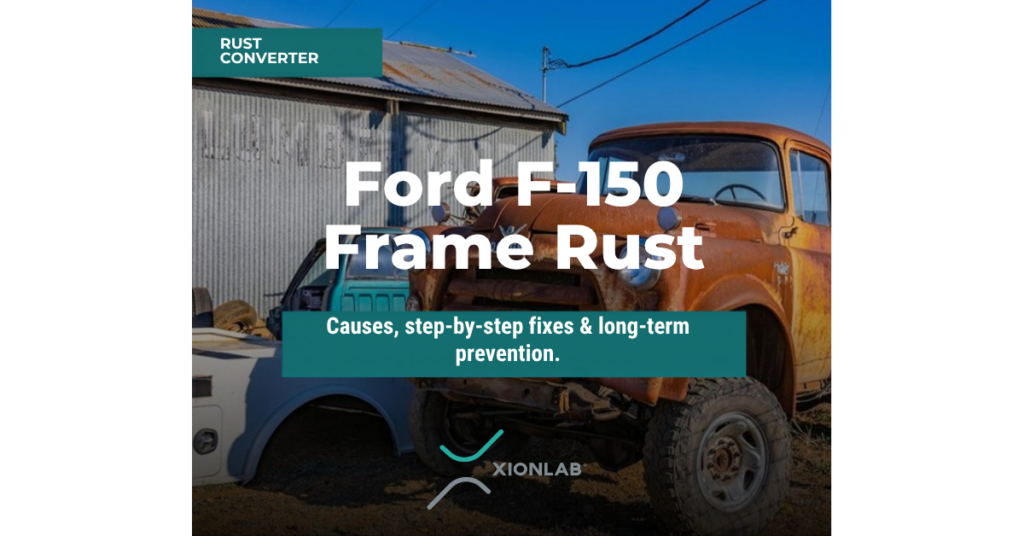
Quick Answer: F-150 frame rust hits hardest on 2004–2008 models, driven by road salt and moisture trapped inside box-rail crossmembers. Surface rust responds well to a quality rust converter. But once you see daylight through the metal—holes, perforations, structural thinning—you’re looking at weld patches or a full frame swap.
Model Years
Which F-150 Model Years Are Most Affected?
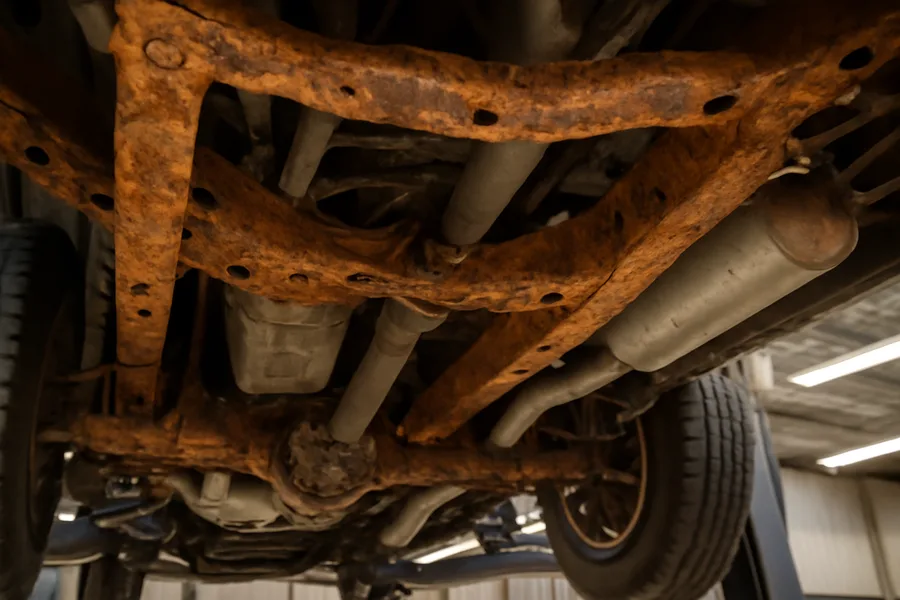
Not every F-150 rusts the same way. Generation matters. Geography matters more. And the combination of both determines whether your truck’s frame is solid steel or Swiss cheese.
2004–2008: The Worst Offenders
Ford moved to a fully boxed frame during this generation. Stronger, yes. But the enclosed design created pockets where road salt slurry collects and never drains. Crossmember joints became standing-water reservoirs after every winter drive. The NHTSA complaint database documents 46+ owner reports tied directly to F-150 frame corrosion in these model years. Most complaints come from Michigan, Ohio, Pennsylvania, and upstate New York.
2009–2014: Better, Not Immune
Ford tweaked the coating process and improved some drain points. Still, trucks registered in salt belt states for five or more winters often show scale rust on crossmembers and rear frame sections. We’ve seen 2011s with clean bodies and frames crumbling underneath. A nine-year-old truck in Minnesota ages differently than a nine-year-old truck in Arizona.
2015–Present: Aluminum Body, Steel Frame
The aluminum body panels get all the press. And they don’t rust—fair enough. But the frame underneath is still high-strength steel. It corrodes. Slower than earlier generations, partly because Ford upgraded the e-coat primer process, but rust doesn’t read press releases. A 2017 F-150 from Buffalo with eight winters of calcium chloride exposure will have frame issues. Count on it.
Root Causes
Why F-150 Frames Rust (The Real Causes)
Frame rust isn’t random bad luck. It follows a pattern, and once you understand the pattern, prevention gets a lot simpler.
- Road salt and brine spray. States like Michigan, Ohio, New York, Pennsylvania, and most of New England dump millions of tons of sodium chloride and calcium chloride on highways every winter. Salt solution splashes up into every crevice of the undercarriage. It sits there for months.
- Moisture trapped inside box-frame rails. A boxed frame is essentially a hollow steel tube. Water and salt get in through bolt holes, weld seams, and bracket openings. Getting back out? Much harder. Some crossmember sections hold standing water for weeks after a single storm.
- Cracked factory undercoating. Ford applies a rubberized undercoating at the plant. Over time—say three to five years—it cracks from temperature cycling and road debris impacts. Once cracked, it actually makes things worse: water wicks underneath the coating and stays trapped against bare steel. The coating hides the damage until it’s severe.
- Poor drainage in crossmember design. Several crossmember sections on the 2004–2008 frames have no drain holes at all. Or drain holes so small they clog with road grime in one season.
- Regional transfer vehicles. If you bought your truck in Texas and it’s clean underneath, great. If it came from Michigan or spent winters in the Northeast, crawl under it before you do anything else. Carfax won’t tell you about frame corrosion. Your own eyes will.
NHTSA complaints filed for F-150 frame rust issues, concentrated in 2004–2008 model years and salt belt states
Assessment
How to Assess Your F-150 Frame Damage
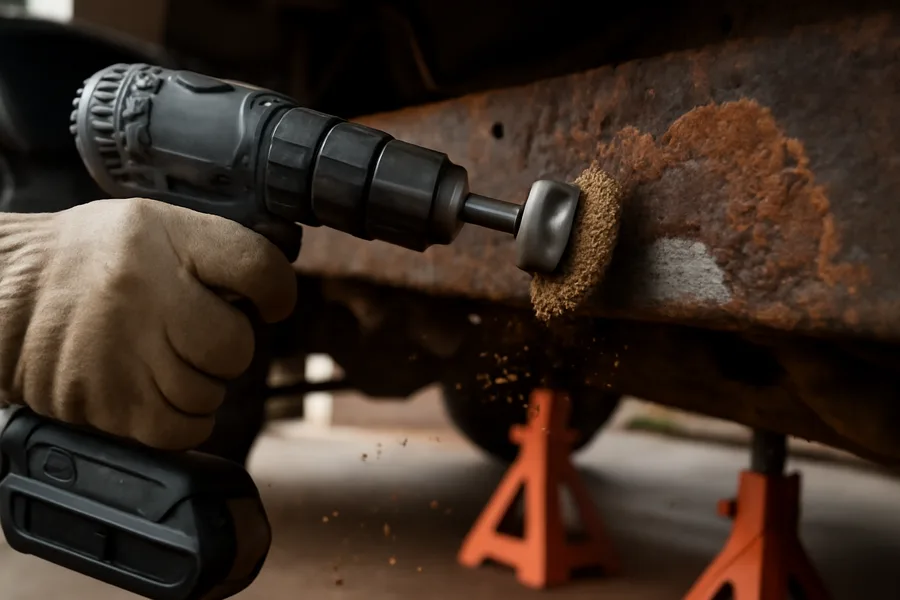
Before you buy a single product or call a welder, you need to know exactly how bad things are. Guessing wastes money. Here’s a honest framework.
| Severity Level | What You’ll See | What to Do |
|---|---|---|
| Surface Rust | Orange-brown discoloration, no flaking, smooth to the touch | Wire brush lightly, apply rust converter, topcoat |
| Scale Rust | Flaking, pitting, rough texture, paint bubbling | Aggressive wire brushing, rust converter, primer, and undercoating |
| Structural Rust | Holes, perforation, daylight visible through the metal | Weld patches, reinforcement plates, or full frame replacement |
The ball-peen hammer test works surprisingly well. Tap the frame rail firmly. Solid metal rings. Compromised metal thuds—and you might see flakes fall to the ground. Move along the rail, tapping every six inches or so. Mark the dead spots with chalk.
Be honest with yourself here. If your crossmember has a hole in it, no converter in the world fixes structural loss. You need metal work. A converter stops rust from spreading on steel that still has integrity. Asking it to rebuild material is asking the wrong tool to do the wrong job.
One more thing: check both sides. Rust rarely develops symmetrically. The driver side often corrodes faster because of road crown drainage patterns in the U.S.—water runs to the right shoulder, and salt spray concentrates on the left undercarriage from oncoming traffic splash.
Treatment
Treating F-150 Frame Rust Step by Step
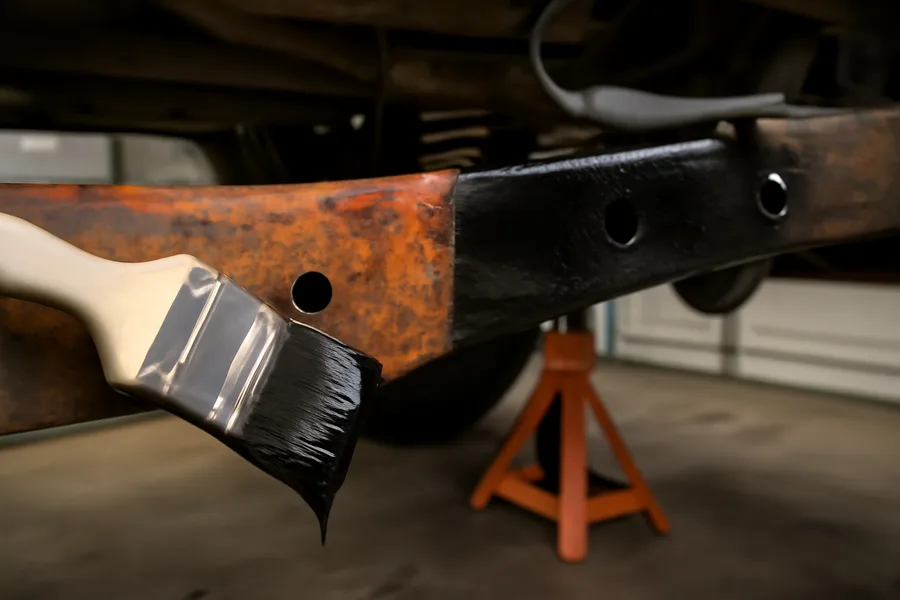
Once you’ve confirmed surface or scale rust—not structural—a weekend afternoon and some basic supplies will handle it. This isn’t a full restoration tutorial (we cover deep-dive rust removal in our guide to removing rust from metal). Here’s the F-150-specific approach.
- Step 1: Jack it up and get underneath. Use jack stands on a flat surface. A creeper makes the difference between doing the job right and giving up halfway through. You’ll be under there for a while.
- Step 2: Wire brush all loose rust and debris. A knotted wire cup brush on a drill works fastest on frame rails. Get aggressive on the flaky stuff. Don’t worry about getting down to perfectly shiny metal—the converter handles tightly bonded rust.
- Step 3: Degrease everything. Hit the brushed areas with brake cleaner or mineral spirits. Road grime, old grease, and oil residue will block the converter from bonding. Let it dry fully. Fifteen minutes minimum.
- Step 4: Apply rust converter with a brush. A quality rust converter goes on milky white and cures to a dark protective layer. Brush it on thick enough to see the wet film, but not so thick it drips and pools in crevices. One coat covers most surface rust. Heavy scale may need two.
- Step 5: Wait 24 hours for full cure. Don’t rush this. The phosphoric acid reaction with iron oxide needs time. Touching or topcoating too early compromises the bond.
- Step 6: Apply undercoating or topcoat. A wax-based undercoating like Fluid Film or a rubberized spray provides the outer barrier. The converter handled the chemistry; the topcoat handles the weather.
A truck owner in Erie, Pennsylvania documented his 2006 F-150 frame treatment last March. Both rear crossmembers had heavy scale rust from seventeen winters of PennDOT salt. He wire-brushed for about three hours, degreased, and applied two coats of converter over a weekend. Follow-up photos eight months later showed the converted areas stayed black and solid through another full winter. No new flaking, no breakthrough. That’s the difference between catching scale rust early and waiting until you need a $3,000 welding job.
Prevention
Prevention—Keeping Your F-150 Frame Clean
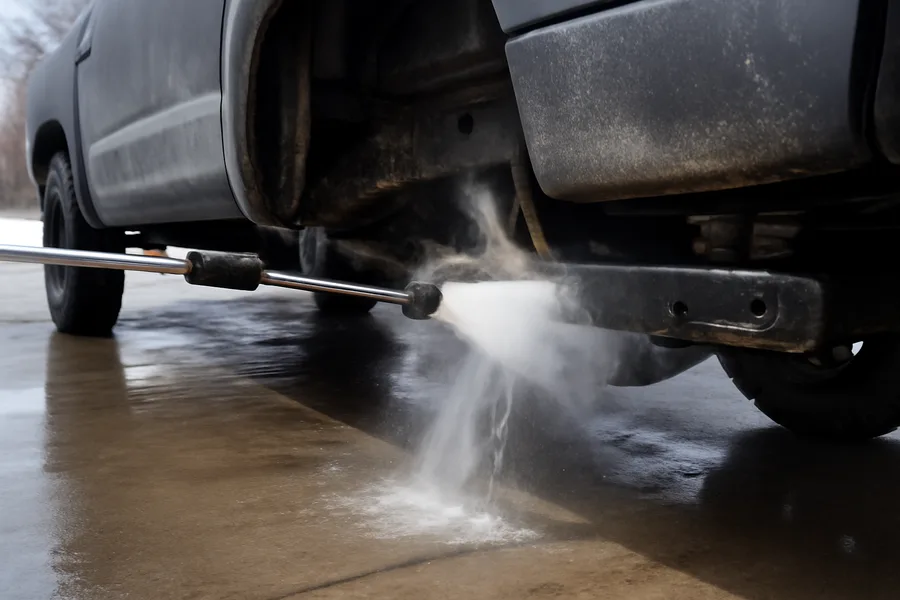
Fixing rust is good. Not getting rust in the first place is better. Here’s what actually works, stripped of the usual marketing noise.
- Wash the undercarriage after every winter. Not the body. The undercarriage. A pressure washer aimed up into the frame rails, behind the wheel wells, and along every crossmember. Once in spring at minimum. Twice is smarter. Some self-serve car washes have undercarriage nozzles—use them weekly during salt season if you can stand the cold.
- Apply wax-based undercoating annually. Fluid Film or a similar lanolin-based product sprayed inside and over the frame rails before winter. Not rubberized. Wax-based coatings stay flexible, creep into seams, and don’t crack. Rubberized coatings crack. And cracked coatings are worse than no coating at all. Some shops in the Northeast charge $150–250 for a full application.
- Check crossmember drain holes. Crawl under the truck every spring with a flashlight. Find the small drain openings on the bottom of each crossmember. Poke a screwdriver through any that look clogged. Standing water inside a crossmember is basically a rust incubator.
- Inspect twice a year in the rust belt. Fall (before salt season) and spring (after). Look for new orange spots, bubbling undercoat, and soft spots. Catching surface rust early means a quick converter application instead of a $3,000 welding bill.
One limitation worth noting: if your truck lives outside year-round in a state like Minnesota or Vermont, even perfect maintenance only slows corrosion. It doesn’t stop it permanently. Steel exposed to road salt every day for five months a year will eventually corrode. The goal is extending the useful life of the frame by years—maybe a decade—not achieving immortality.
FAQ
Frequently Asked Questions
Surface rust? Yes. Scale rust with no perforation? Likely safe, but address it soon—it gets worse fast. Structural rust with holes or thinning in load-bearing areas like crossmembers or spring mounts? No. A weakened frame can fail during hard braking, hauling, or a collision. Get it inspected by a qualified shop before driving further.
The 2004–2008 generation is the most affected, with the fully boxed frame design trapping moisture in crossmember joints. The 2006 and 2007 model years show the highest concentration of NHTSA complaints. Models from 2009–2014 can also develop significant frame rust, particularly trucks registered in salt belt states.
It depends on severity. Surface and scale rust can be treated in place with wire brushing and a rust converter. Localized structural damage—a small hole or thin spot—can often be patched by a welder using reinforcement plates. Widespread perforation across multiple frame sections usually means replacement. A used F-150 frame from a southern or western state runs $800–$2,500 plus installation labor.
DIY rust converter treatment runs $30–$80 in materials. Professional undercoating and converter application costs $200–$600. Weld repairs on specific sections run $500–$1,500 depending on extent. A full frame replacement—parts and labor—can hit $5,000–$10,000 at an independent shop. Dealerships charge more.
Ford has not issued a recall specifically for F-150 frame corrosion as of 2026. Ford did issue frame-related recalls and buyback programs for the Super Duty (F-250/F-350) line and the Econoline, but the F-150 was not included. Owners have filed complaints with the NHTSA, and some have pursued claims under state lemon laws or implied warranty statutes with mixed results.
Yes—rust converters work well on F-150 frames with surface or scale rust. The converter reacts with iron oxide to form a stable compound and leaves a paintable primer surface. Clean loose debris first, degrease, then brush on the converter. It won’t rebuild lost metal, so structural holes still need welding. For intact but rusty steel, a converter bonds directly to the corroded surface and stops further oxidation.
Tap suspect areas with a ball-peen hammer. If the metal rings and holds firm, it’s treatable. If it thuds, crumbles, or flakes fall off, you’re past converter territory. Visible holes, metal thinner than roughly 1/16 inch, or any perforation near mounting points (spring hangers, body mounts, tow hitch brackets) means professional welding or replacement. When in doubt, ask a frame shop—most will inspect for free or a nominal fee.
More Rust Treatment Guides
We publish in-depth guides on rust prevention, metal restoration, and surface prep for trucks, trailers, fences, and industrial equipment.