
No products in the cart.
Your A to Z Guide to Rust Formation and Prevention (2026 Guide)
June 1, 2026
By Xion Lab
Free Shipping
easy returns
secure paymentS
FAQ | MY ACCOUNT | SUPPORT
June 1, 2026
By Xion Lab
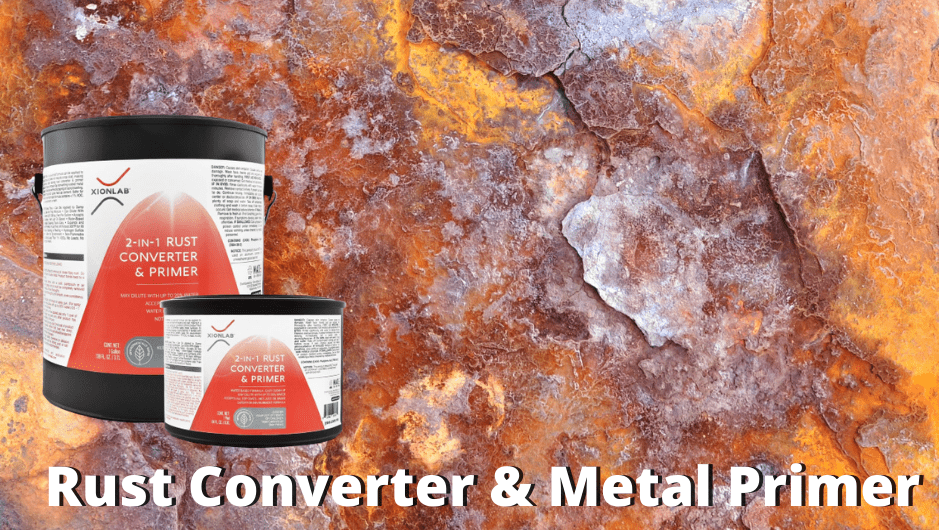
Quick answer — Rust formation happens when iron meets oxygen and water, producing flaky iron oxide, which keeps eating into the metal. Stop it by blocking moisture, priming bare steel early, and converting any rust already there before paint goes on. A 2-in-1 product like the XionLab rust converter folds the last two steps into a single coat.
Rust formation and prevention start with one stubborn reaction. Iron wants oxygen. Water speeds the handshake. Put bare steel outside and the air does the rest, pulling electrons from the metal and leaving behind iron oxide, the reddish-brown crumble most people simply call rust.
Here is the frustrating part. Rust is porous. A protective oxide, like the kind on aluminum, seals the surface and stops there, but iron oxide flakes off and exposes fresh metal underneath, so the reaction never really finishes on its own. One scratch becomes a freckle. A freckle becomes a hole. Left alone through a couple of wet seasons, a clean steel railing can lose real structural thickness, and the damage often hides under paint long before anyone notices a stain bleeding through.
Most homeowners meet rust on a gate hinge, a trailer frame, or the underside of a car. Same chemistry every time. The trick is catching it early, because prevention costs pennies and repair costs weekends. According to NACE International, the price of ignoring corrosion adds up fast across every industry.
Think of it like a slow leak. You rarely catch the first drop. But the puddle shows up eventually, and by then the cleanup is bigger and messier and far more annoying than a quick wipe would ever have been. Rust behaves the same way on a fender or a fence post. So the smartest move is rarely heroic. It is simply early.
Three ingredients drive the whole mess: iron, oxygen, and an electrolyte, usually water carrying dissolved salts. Knock out any one and the reaction stalls. Block a single ingredient and you win. This simple truth sits behind every coating, oil, and converter on the shelf.
Salt makes everything worse. Dissolved chloride turns plain water into a far better electrical conductor, which lets electrons move faster and corrosion accelerate. Coastal air and winter road brine are loaded with it. Salt wins every time. A truck in Phoenix can go a decade with barely a freckle, while the identical truck in coastal Louisiana shows bubbling fenders inside three winters.
Temperature and humidity matter too. Below roughly 50% relative humidity, rust slows down sharply, and below about 35% it nearly stops. Crank the moisture back up and the clock restarts. For a deeper look at the reactions, our explainer on how rust converters work walks through the electron exchange step by step, and Corrosionpedia keeps a solid plain-English glossary if you want the textbook version.
Bolt two different metals together in a damp spot and you build a tiny battery. The more reactive metal corrodes to protect the other. Engineers use this on purpose with sacrificial zinc anodes on boat hulls and water heaters, but the same effect quietly destroys a steel bracket fastened with the wrong hardware. Sequence matters. Material pairing matters even more.
None of this is mysterious. It is just electrons looking for somewhere easier to be. And once you picture rust as a flow of charge rather than a stain, every prevention trick suddenly clicks into place. Dry the metal. Seal the metal. Or hand the electrons a cheaper victim, like a zinc anode, and spare the part you actually care about.
Corrosion is not a small nuisance line item. It is one of the largest hidden expenses on the planet, and most of it traces back to the same simple reaction happening on a railing in your backyard.
Estimated annual global cost of corrosion, per the NACE International IMPACT study, equal to roughly 3.4% of world GDP.
The same study found a huge chunk of that bill is avoidable. Smarter prevention and earlier treatment could claw back hundreds of billions a year, money lost mostly because someone waited too long to prime a bare surface.
Annual savings the IMPACT study estimates are possible worldwide by applying known corrosion-prevention best practices.
Scale that down to a driveway. A rusted-through brake line, a perforated rocker panel, a trailer frame condemned at inspection. Each one started as a spot you could have wiped and primed in ten minutes. And that is exactly why early understanding of rust and corrosion pays for itself many times over.
Here is the reframe worth keeping. Every prevention dollar is really an insurance premium against a far larger repair down the road. The math almost never favors waiting. A pint of converter and one quiet afternoon now, versus a fabricated panel and a body-shop invoice later — that gap is enormous. Pennies today. Hundreds tomorrow.
Prevention beats repair on every axis — time, money, and frustration. The playbook is short. Keep water off bare metal, seal the pores, and check the vulnerable spots twice a year. Do those three things and most steel will outlast you.
Light oils have their place, but be honest about their limits. WD-40 and similar sprays protect for days or weeks, not years. For long storage, step up to a heavier rust-preventive oil or a sealed coating. Our guide to surface preparation for rust treatment covers the cleaning and degreasing behind any coating actually sticking.
One more habit pays off more than any single product. Look. A flashlight and two minutes under a trailer beats a tow bill every time. So build a rhythm — spring and fall, the same weekend you change the clocks. Small effort now. Big savings later.
Storage deserves its own note. Tools tossed in a damp shed rust faster than almost anything left in regular dry use. So wipe them down, add a light oil film, and drop a vapor-inhibitor chip in the toolbox. Cheap insurance. A few cents of prevention saves a good wrench from the scrap pile. And dry shelving beats a puddle-prone concrete floor every single time.
Sometimes prevention is already too late, and the steel is wearing a brown coat. Now the question shifts. Do you grind it all back to shiny metal, or convert what is there? Both work. They simply suit different jobs.
Mechanical removal, the wire-wheel-and-sandpaper route, gets you to bright steel but throws dust everywhere and struggles inside seams and pits. Chemical rust converters take a different path. They react with the iron oxide and turn it into a stable, paintable layer, sealing the surface instead of stripping it. For tight corners and complex shapes, conversion usually wins on time and sanity.
Which should you pick? Honestly, it depends on the mess in front of you. Light surface bloom on a flat panel sands off in a few minutes, so grinding makes plenty of sense. But pitted, scaly rust buried deep in a weld seam fights back hard against any wire wheel. So reach for chemistry there instead. Let the converter crawl into the spots a grinder will never reach.
| Approach | Best For | Effort | Finish |
|---|---|---|---|
| Wire wheel / grinding | Heavy scale, flat panels | High, messy | Bright bare metal |
| Sandblasting | Large or pitted jobs | High, needs gear | Uniform profile |
| Rust converter | Seams, frames, mixed rust | Low, brush or spray | Primed, paint-ready |
| 2-in-1 converter + primer | DIY and field repair | Lowest, one coat | Sealed and primed together |
A 2-in-1 formula folds two steps into one. It converts the rust and lays down a primer in the same pass, so you skip a whole drying cycle. The XionLab rust converter for automotive protection lives in exactly this lane, and it is why field crews reach for it on trailer frames and undercarriages.
Rust does not treat every zip code the same. Geography sets the difficulty level, and smart prevention follows the local threat.
On the Gulf Coast, salt-heavy humid air attacks year-round, so bare metal there needs sealing almost immediately. Across the salt belt, those northern states that brine their winter roads, the enemy is splash from the undercarriage up. A good rinse after every storm plus a converter-primer on the frame goes a long way. In the Pacific Northwest, the threat is relentless damp rather than salt, which favors moisture barriers and breathable coatings over heavy oils.
I learned this the hard way on a utility trailer parked near Galveston. Left a fresh weld bare over one humid August, figuring I would get to it. Three weeks later the seam wore a rusty halo about a quarter-inch wide on each side. A quick wipe, a single coat of converter, and it has held two years since. Lesson logged. In that climate, bare steel does not wait for your schedule.
Desert readers get a pass here, mostly. Dry air is rust’s worst enemy, and inland Arizona or Nevada metal can sit bare for years with barely a freckle to show for it. But move the same part to Seattle drizzle or a Minnesota winter and the timeline collapses fast. Geography is destiny for steel. Plan for your own climate, never the national average.
XionLab built its 2-in-1 rust converter and metal primer around the realities above: salt, humidity, awkward shapes, and people who want one coat and done. Here is where it earns its keep.
One product turns existing rust into a stable layer and seals it with primer, no separate steps.
Low odor, easy cleanup, and no harsh solvent fumes filling the garage while you work.
Built to be safer for you and safer for the environment, true to the XionLab promise.
Reaches into seams and pitted corners where a grinder simply cannot follow.
Holds up against coastal air and road brine, the two worst rust accelerators out there.
Skip the second coat and the extra dry time. One pass leaves you paint-ready.
None of these features are marketing fluff. Each one solves a specific headache people hit on real jobs — fumes in a closed garage, rust hiding deep in a seam, a second coat nobody has time for. So the design goal stayed simple. Fewer steps. Fewer excuses to skip the work.
Need the chemistry in detail? Our breakdown of the science of rust converters and primers shows exactly what happens between the formula and the iron oxide.
No product fixes everything, and anyone who says otherwise is selling you a story. A converter changes rust into a stable, paintable surface. It does not add back metal.
So if rust has eaten clean through a panel, you have a hole, not a stain. A converter will seal the edges, but it will not rebuild a perforated rocker or a frame with daylight showing through. That job needs welding or replacement. Be straight with yourself about how deep the damage runs before you reach for any bottle.
Competitor honesty, too. Corroseal works well on lighter surface rust and has fans for good reason. Where XionLab pulls ahead is the combined convert-and-prime step and the water-based, lower-odor formula, which matters a lot if you are working in a closed garage. For heavy marine exposure, pair any converter with the right topcoat, and lean on a dedicated guide like our marine corrosion protection and treatment walkthrough. Standards bodies such as AMPP publish surface-prep specifications worth following on serious jobs.
So treat any rust product as one tool, never a magic wand. It buys time, stops the spread, and readies a surface for paint. It will not undo years of neglect in a single coat. Set the expectation honestly and you will be happy with the result.
One more caveat. Skip the prep and any converter underperforms. Loose scale, grease, and flaking paint have to go first. Clean metal. Then chemistry. Sequence is everything.
What causes rust to form on metal?
Rust forms when iron reacts with oxygen and water. The reaction produces iron oxide, a flaky compound, and it keeps exposing fresh metal, so the damage spreads instead of sealing itself. Salt and humidity speed the whole process up.
Can you stop rust once it has started?
Yes. Remove or convert the existing rust, then seal the surface. A rust converter reacts with iron oxide and turns it into a stable, paintable layer, which halts the spread when you topcoat it properly.
How do I prevent rust on bare steel?
Keep water off it and seal the pores fast. Prime fresh-cut or welded metal within hours, store it below 50% humidity where you can, and inspect vulnerable spots every spring and fall.
Does a rust converter need primer afterward?
A plain converter usually needs a separate primer. A 2-in-1 product like the XionLab rust converter does both at once, converting the rust and laying primer in a single coat, so you can move straight to topcoat.
Will a converter fix rusted-through metal?
No. A converter seals and stabilizes a rusty surface, but it cannot replace metal already corroded away. Holes and perforated panels need welding or replacement first, then you can treat the surrounding surface.
Why does my car rust faster near the coast?
Salt. Dissolved chloride from sea air and road brine makes water a much better conductor, which accelerates the corrosion reaction. Coastal and salt-belt vehicles rust years faster than the same models in dry inland climates.
Is XionLab safe to use indoors?
The XionLab formula is water-based and low-odor, designed to be safer for you and the environment, which makes garage and shop use far more comfortable than solvent-heavy products. Still ventilate and follow the label.
How long does rust prevention treatment last?
It depends on exposure and topcoat. A properly prepped, converted, and painted surface can hold for years. Harsh marine or salt-belt conditions shorten that, so inspect and touch up annually for the best results.
Convert and prime in one coat with the XionLab 2-in-1 Rust Converter & Metal Primer. Safer for you, safer for the environment.