
No products in the cart.
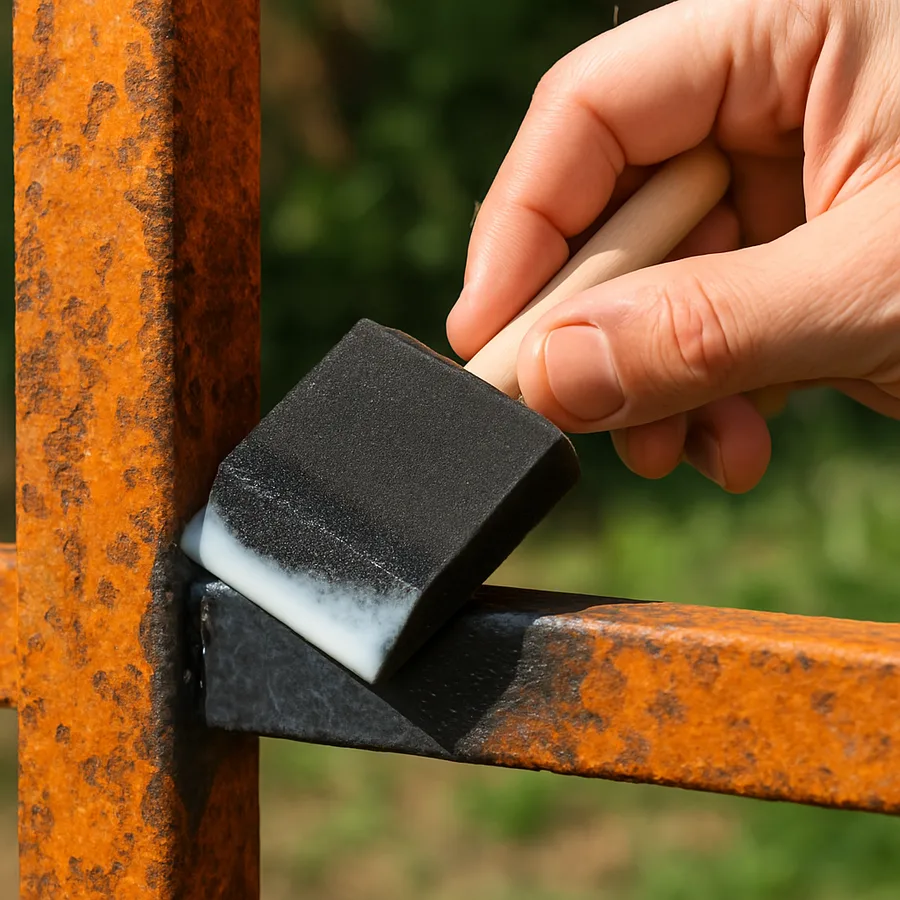
Quick answer: Rust converter paint is a water based primer packed with tannic acid. It reacts with orange rust and turns it into a hard blue black film you can paint right over. One coat. No sandblasting. The metal underneath gets sealed against fresh corrosion in the process.
The Basics
What Rust Converter Paint Actually Is
Rust never sleeps. It chews through steel from the surface down, and once it gets going, a wire brush alone almost never stops it. Rust converter paint takes another road entirely. Instead of fighting the rust, it puts the rust to work.
Pour a little onto a crusty fender, spread it thin with a brush, and the pale liquid sinks into that orange layer, where its acids reach down into the oxide and start trading the loose, flaking iron oxide for a hard dark compound bonded tight to the steel beneath it. That single swap is the whole trick. The crumbly stuff becomes stable. And the active rust goes quiet.
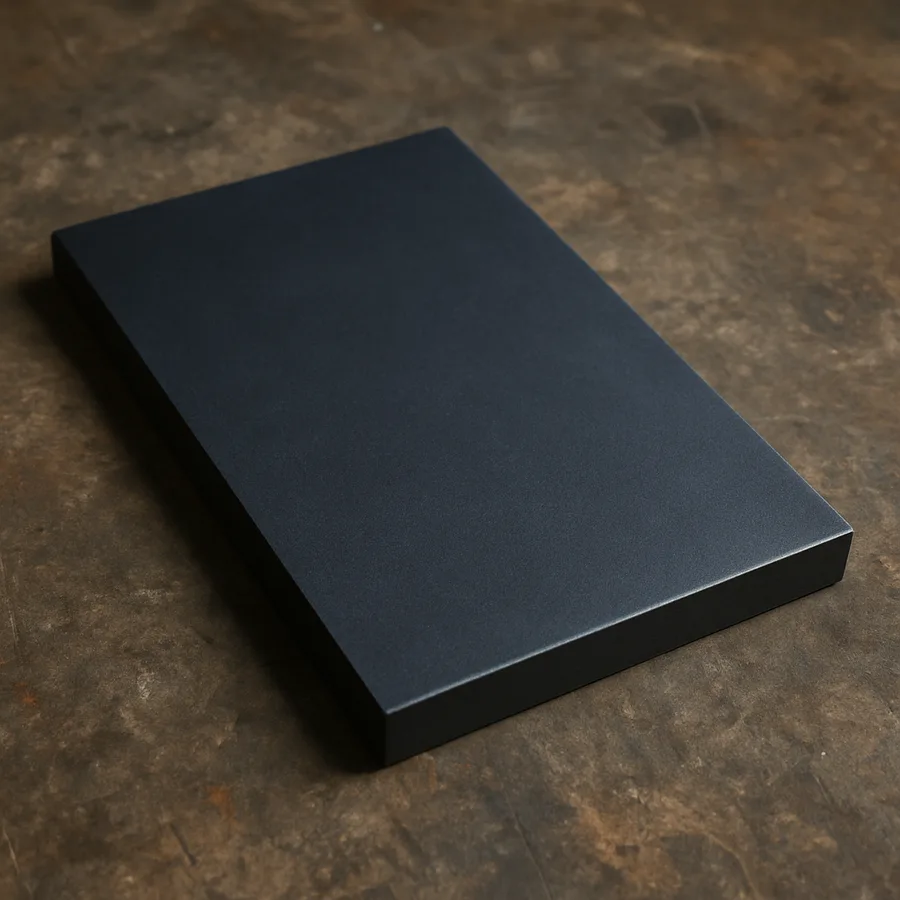
The dried result looks nearly black. It feels like primer because it basically is one. Most converters double as a primer coat, so your finish paint goes straight on top once the film cures. No bare metal required. And it’s the appeal people fall for.
Think of the worst spots. A trailer tongue. The underside of a mower deck. A gate hinge weeping orange down the post. These are the jobs where grinding back to shiny steel would take a weekend you don’t have. A converter skips that fight. You still knock off the loose flakes, sure, but you leave the tight rust right where it sits and let the chemistry handle it. Want the deeper version of how rust converters work? We broke down the full mechanism separately.
The Science
The Chemistry Behind the Color Change
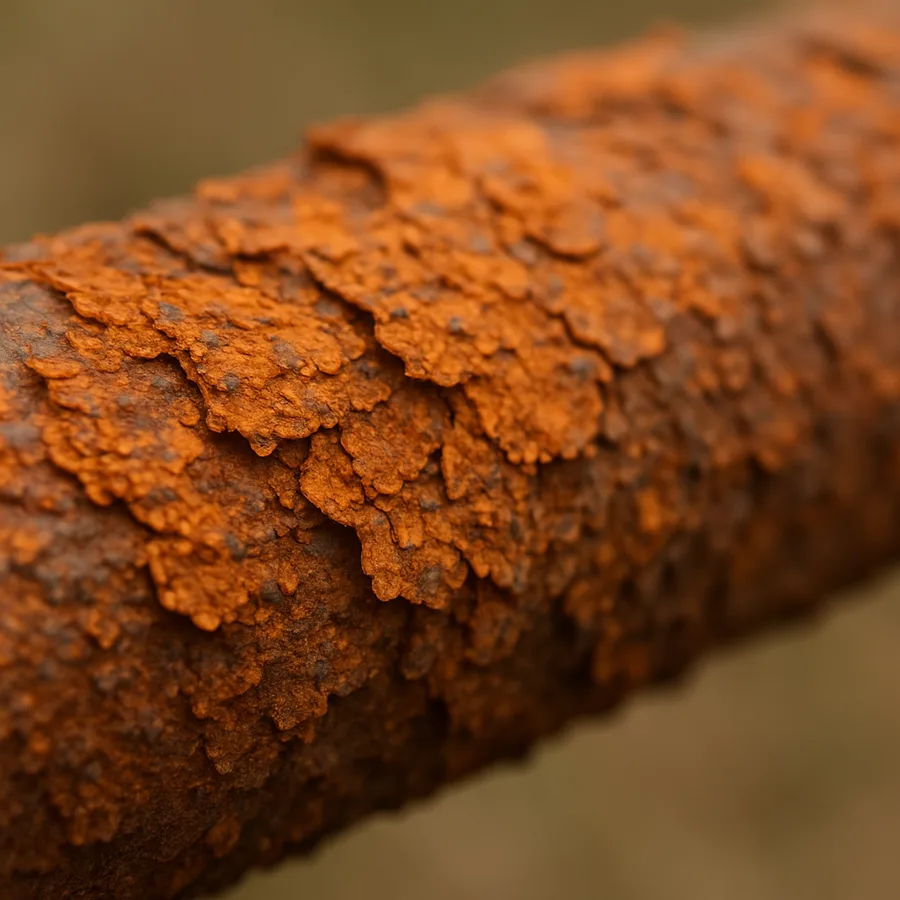
Here’s where it gets interesting. The magic ingredient is tannic acid, the same family of compound you’d find in strong tea or oak bark. When it meets rust, its phenolic groups grab onto the ferric iron ions locked inside the orange oxide and pull them into a brand new molecule called iron tannate. Iron tannate is the dark, stable, water shedding film you end up with.
Some products add phosphoric acid alongside the tannic. The two work as a team. Phosphoric acid bites into the loose oxide fast and lays down a thin iron phosphate layer, which then lets the tannic acid chelate deeper and bind harder. Fast etch — deep conversion. The Canadian Conservation Institute has used tannic acid on rusted iron artifacts for decades, which tells you the reaction is well understood and genuinely stable.
Why does any of this matter to a guy with a rusty truck frame? Because corrosion is expensive. Wildly so.
$2.5 Trillion
The estimated global cost of corrosion every year, roughly 3.4% of world GDP, according to NACE International’s IMPACT study. Stopping rust early is one of the cheapest repairs you’ll ever make.
The color shift is your progress bar. Orange means active rust, still alive. As the conversion runs, the surface darkens through a muddy purple and lands on a deep blue black once it’s done. Tannic based products usually show the shift within 15 to 30 minutes, while phosphoric heavy ones react in two to ten. If a patch stays stubbornly orange? That spot had too much loose scale, and it needs another pass. The science behind converters and primers goes a layer deeper if you’re curious.
Comparison
Converter Paint vs Primer vs Remover
People mix these three up constantly, and the confusion costs them time and money. They are not the same product. They don’t even solve the same problem. So before you buy anything, get clear on which one your project actually needs.
A rust remover strips the oxide off and leaves you with bare, vulnerable steel, which flash rusts within hours if you don’t coat it fast. Standard primer wants clean metal to bond to, which means you’re back to sanding. A converter sits in the middle. It treats the rust and primes the surface in a single move. Curious about the remover route instead? Our guide on converter against remover lays out when each one wins.
| Factor | Rust Converter Paint | Standard Primer | Rust Remover |
|---|---|---|---|
| Needs bare metal | No | Yes | No |
| Leaves paintable surface | Yes | Yes | No, needs coating after |
| Stops active rust | Yes | No | Yes, by removal |
| Best for | Tight surface rust on big areas | Clean or freshly stripped steel | Small parts, deep pitting |
| Typical cure | 24 to 48 hours | 1 to 4 hours | Rinse and dry same day |
See the pattern? Converters earn their keep on large, awkward, heavily rusted surfaces where stripping to bright metal is a nightmare. For a clean weld or a fresh panel, plain primer is faster and cheaper. Match the tool to the mess.
Surface Prep
Prepping the Surface First
Skip this and the whole thing fails. I’ve watched people slop converter over greasy, flaking metal and wonder why it peeled in a month. Prep is boring. It’s also the difference between a five year coat and a five week one.
Start by knocking off everything loose. A stiff wire brush, a scraper, or 80 grit paper will pop the flaking scale right off. You’re not trying to reach shiny steel here. You just want a surface where the remaining rust is tight and bonded, not powdery. Run your thumb across it. If rust comes off on your skin, keep brushing.
Then comes the part folks forget. The surface has to be clean and dry. Oil, wax, road grime, and old loose paint all block the acids from reaching the rust. Wipe the area down with a degreaser, rinse, and let it dry fully. A damp surface dilutes the converter and weakens the bond. We go deeper on surface preparation for rust treatment if your project is a big one.
- Knock off loose scale with a wire brush, scraper, or coarse sandpaper until the rust is tight.
- Degrease the whole area so no oil or wax sits between the acid and the metal.
- Dry it completely before the first drop goes on, because moisture thins the chemistry.
- Mask nearby surfaces like glass, chrome, or good paint, since the film stains.

Application
How to Apply It, Step by Step
Now the satisfying part. Watching orange turn black never gets old. Shake the bottle well, because the active ingredients settle, and pour a small amount into a separate cup so you never contaminate the main container with a rusty brush.
Lay down the first coat
Brush, roll, or spray it on thin and even. Aim for a wet film about the thickness of a business card, roughly four to six mils, which dries down to a paper thin protective layer. Too thick and the top skins over before the bottom converts, leaving a gummy mess underneath. Thin and uniform wins every time. One quart covers somewhere around 50 to 75 square feet of rusted metal, give or take with surface texture.
Wait, then add the second
Let the first coat react. Within half an hour you’ll see the color start to turn. Once it has fully darkened and feels dry to the touch, lay on a second coat to catch any spots the first one missed. Two thin coats beat one heavy coat — always.
Cure, then topcoat
Here’s where patience pays. The film needs 24 to 48 hours to cure hard before you put paint over it, longer in cold or humid weather. Rush it and your topcoat can bubble or peel. Most enamels, urethanes, and acrylics bond fine to a cured converter, though a quick compatibility test on a hidden patch saves heartbreak. Wondering whether you can paint over a rust converter straight away? The honest answer is to wait for the full cure.

Regional note for anyone in the salt belt or along the Gulf Coast. Chloride from road salt and sea air fights the conversion. Tannic based formulas tolerate chloride better than phosphoric, so reach for those if you’re treating a frame that sees winter brine. And give it the full cure time. Salt country is unforgiving.
The Honest Part
Where It Falls Short
Fair warning. A converter is not a miracle. It shines on surface rust, the orange film and light scale stage. It does not rebuild metal that rust has already eaten through. If you can push a screwdriver through a frame rail or see daylight through a panel, no bottle fixes that. That’s a welding and patching job, full stop.
It also won’t grip the wrong metals. Aluminum, copper, stainless, and galvanized surfaces don’t form the iron oxide the tannic acid needs, so the chemistry has nothing to convert. The product is for iron and steel. Period. And on heavily pitted rust with deep crusty pockets, you’ll need to remove more scale up front or accept a second and third pass. Still not sure it earns its place? We tackled the blunt question — do rust converters actually work? — head on.
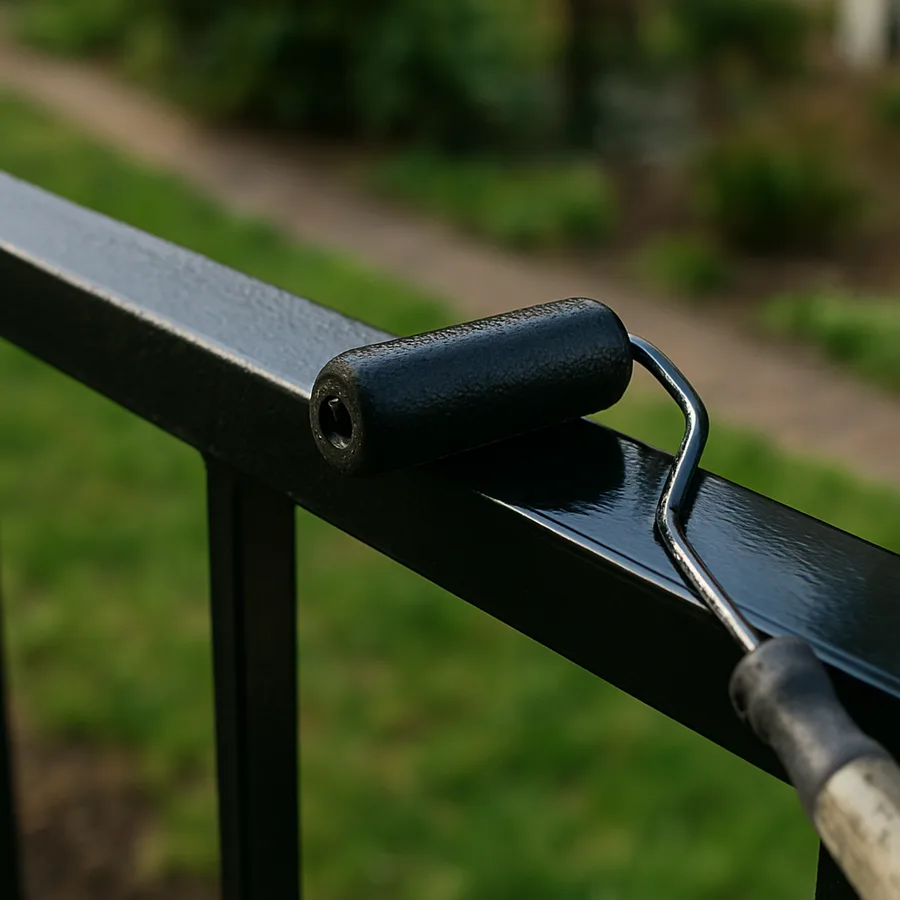
One more reality check from the corrosion world. Even a perfect conversion is only as good as the topcoat protecting it. The film resists moisture, but it isn’t a final finish on its own. Seal it. The folks at Corrosion Doctors make the same point about every converter on the market. Treat, then protect. Both steps, every time.
Questions
Frequently Asked Questions
Can you paint directly over rust converter paint?
Yes, once it cures. Most converters double as a primer, so a compatible enamel, urethane, or acrylic topcoat goes straight over the dried film. Give it the full 24 to 48 hours first, and test a hidden patch if you’re unsure about your paint.
How long does rust converter paint take to dry?
The color change kicks off in 15 to 30 minutes for tannic based products. Surface dry happens within a couple of hours. Full cure, the point where it’s ready for topcoat, runs 24 to 48 hours depending on temperature and humidity.
Do you have to remove all the rust before applying it?
No, and that’s the point. You only knock off loose, flaking scale. The tight, bonded rust stays put and gets converted. The surface does need to be clean, dry, and free of oil for the acids to reach the oxide.
Will rust converter work on aluminum or galvanized metal?
No. Tannic acid converts iron oxide, and aluminum, copper, stainless, and galvanized surfaces don’t produce it. The product is built for iron and steel only. On other metals it simply has nothing to react with.
How much area does one bottle cover?
Coverage depends on surface texture, but a rough rule is 50 to 75 square feet per quart on rusted metal, or up to 500 square feet per gallon on smoother surfaces. Pitted, porous rust drinks more product than tight surface rust.
Is rust converter paint the same as rust remover?
No. A remover strips rust off and leaves bare steel that needs coating fast. A converter chemically transforms the rust into a stable, paintable film in one step. Different jobs, different products. Pick based on how much rust you’re dealing with.
Tackling a Rust Project?
Browse our full library of rust treatment and prevention guides to find the right method for your metal.