Rust converter
Rusty Metal Primer: How to Paint Over Rust the Right Way

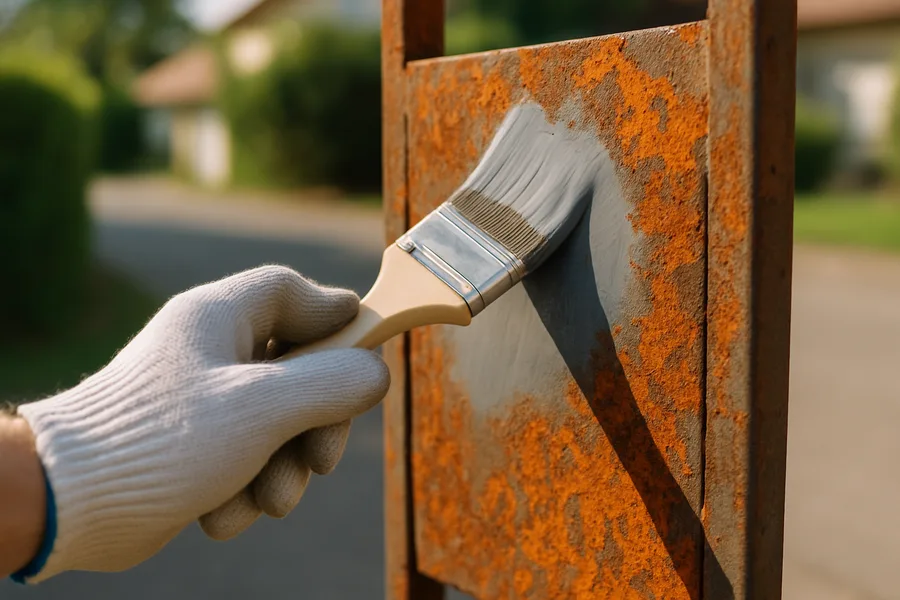
Quick answer — A rusty metal primer lets you paint over rust without stripping every surface down to bare steel. The trick is picking the right type. Conversion primers chemically neutralize light to moderate rust, while preventative primers seal clean or barely rusted metal. Brush off the loose flakes, degrease, let it dry, then prime. Sandblasting is rarely the only road.
The Problem
Why Paint Alone Fails on Rust
You found a rusty gate. Or a fender. Maybe a patio chair the winter chewed up. The temptation is obvious — grab a can of spray paint and bury the orange under a fresh coat. Don’t.
Here’s the thing about rust. It’s not a stain sitting on top of the metal. It’s the metal itself, oxidizing, swelling, lifting away in flakes. Paint can’t grip a surface that keeps shedding underneath it. So the topcoat bubbles, peels, and within a season you’re staring at the same brown bloom you tried to hide. Worse, rust under paint keeps eating. Sealed in moisture and a little trapped oxygen do plenty of damage on their own.
A rusty metal primer changes the equation. It either converts the rust into a stable, paintable layer or it bonds tight to sound metal and starves the surface of the oxygen corrosion needs. Your topcoat finally has something solid to grip. Skip the primer and you’re painting on a foundation of sand. Loose, shifting, doomed.
There’s a money angle here too. A good rusty metal primer runs maybe fifteen to thirty dollars a quart. A body shop charging to media blast and recoat a single panel? Hundreds. For a gate, a trailer tongue, a set of patio chairs, the math is lopsided in your favor. You’re trading an afternoon and a cheap can for work a pro would bill at shop rates.
Corrosion isn’t a small problem either. It’s a global one with a staggering price tag.
The estimated annual global cost of corrosion — roughly 3.4% of world GDP — according to the 2016 IMPACT study by AMPP (formerly NACE International). A primer is the cheapest defense you’ll ever buy against your slice of the bill.
The Options
The Two Kinds of Rusty Metal Primer
People say “rusty metal primer” like it’s one product. It isn’t. There are two families, and using the wrong one is how good weekends go sideways.
Rust conversion primers
These contain an acid — usually tannic or phosphoric — and it reacts with iron oxide. The reaction transforms the rust into a stable black or dark blue compound — iron tannate, in the tannic acid version. The flaky orange becomes an inert film you can paint. Curious about the chemistry? Our breakdown of how rust converters work walks through the reaction in plain language.
Conversion primers shine on light and moderate rust where bare steel is hard to reach. Think wrought iron scrollwork, frame seams, the underside of a mower deck.
Rust preventative primers
These don’t react with anything. They’re barrier coatings — often oil based alkyds or epoxies — laying down a tough, oxygen blocking film on clean metal or very light surface rust. No chemistry, just a seal. They penetrate slightly into the surface and grab the underlying steel.
So which one? Depends entirely on how far gone your metal is. Here’s the side by side.
| Factor | Conversion Primer | Preventative Primer |
|---|---|---|
| Best for | Light to moderate rust | Clean metal or trace rust |
| How it works | Reacts with iron oxide | Forms an oxygen barrier |
| Prep needed | Knock off loose flakes only | Near bare, clean surface |
| Finish color | Usually black or dark | Gray, red oxide, or white |
| Dry to topcoat | 24 to 48 hours typical | 1 to 4 hours typical |
| Weak spot | Heavy scale defeats it | Won’t fix existing rust |
Still torn between treating rust and removing it outright? We compared both routes in our guide to rust converter vs rust remover.
Diagnosis
How Much Rust Are You Dealing With?
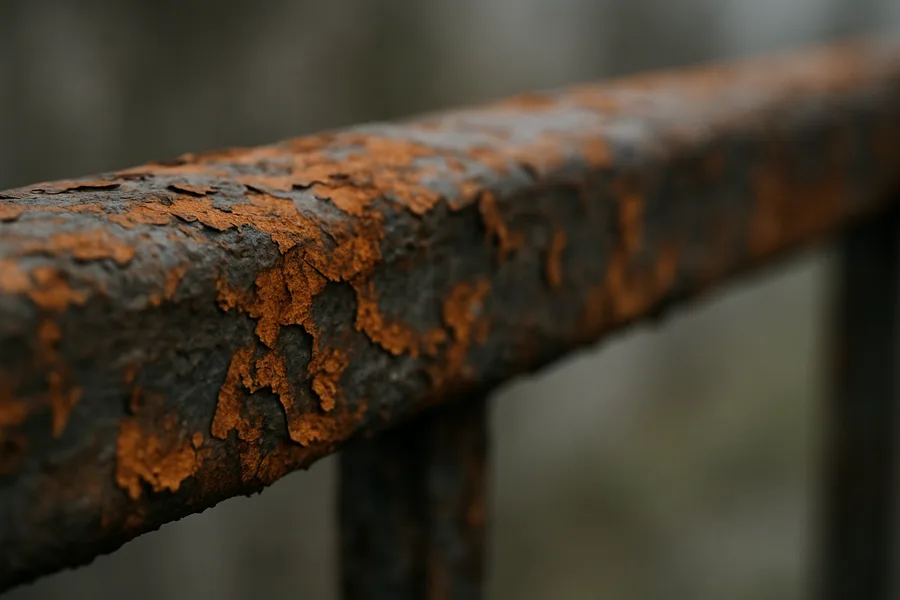
Before you buy anything, look hard at the metal. Rust comes in stages, and the stage decides the product.
- Surface rust. A thin orange film, maybe a little texture. Wipe it and your rag comes back rusty. This is the easy case. A conversion primer eats it for breakfast.
- Scale rust. Rust you can feel — rough, layered, flaking off in chips about the thickness of a fingernail. Conversion primer still works, but only after you knock the loose scale off first.
- Penetrating rust. The metal is pitted, thin, sometimes holed through. No primer fixes structural loss. You’re into welding, patch panels, or replacement. A primer protects what’s left, not what’s gone.
Run a screwdriver across a suspicious spot. If it flakes and reveals solid gray metal beneath, you’re fine. If it punches through or crumbles? The section needs more than a coating. For the full diagnostic walkthrough, our piece on surface preparation for rust treatment covers what to look for.
Fair warning — a conversion primer on penetrating rust is lipstick on a structural problem. It’ll look fine for a while. Then it won’t. Know which fight you’re actually in.
Preparation
Prepping Rusted Metal the Right Way
Prep makes or breaks the job. Not the brand. Not the price. Prep. And no, you don’t always need a sandblaster.
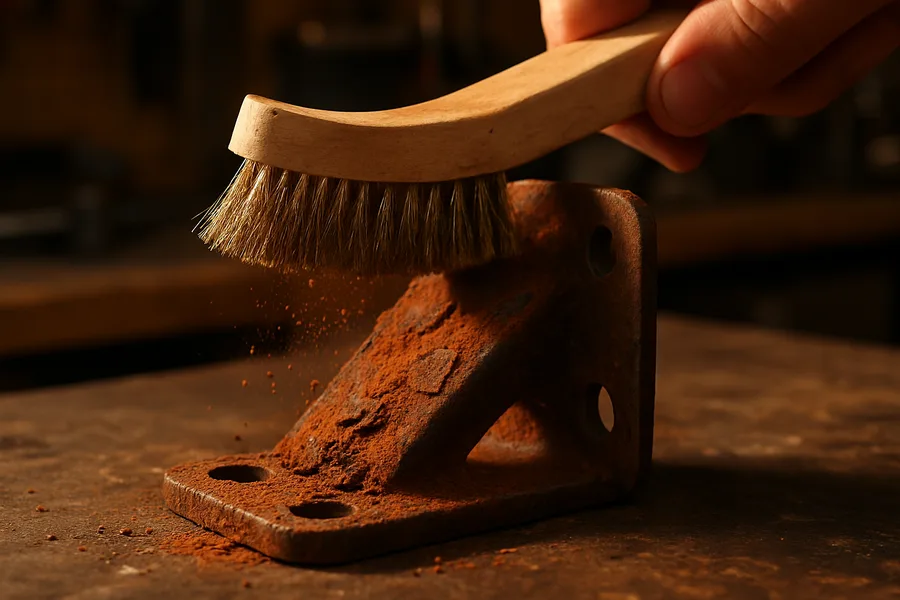
Step One — Knock Off the Loose Stuff
Wire brush, sandpaper, or a flap disc on an angle grinder. The goal isn’t bare shiny steel. It’s removing anything loose enough to flake away later. Flaking rust under primer is a future failure point. Brush until what’s left feels solid and tight.
Step Two — Degrease
Oil and primer hate each other. Mix four teaspoons of dish soap into a gallon of warm water, wipe the surface down, then rinse with a clean damp rag. Family Handyman and other restoration sources recommend this exact ratio, and it works. Grease left behind means peeling later.
Step Three — Dry It Completely
Water and conversion primers are a bad mix on most products. Let the metal air dry fully — an hour in sun, longer in a cool garage. Damp steel ruins the reaction.
Regional note — If you’re in the salt belt — Michigan, Ohio, the northern plow states — or anywhere near the Gulf Coast, rinse with plain water first to flush chloride salts out of the pits. Salt left in the rust keeps corrosion churning right under your fresh primer.
Application
Priming and Painting, Step by Step
Metal’s clean and dry. Now the satisfying part.
Apply the primer
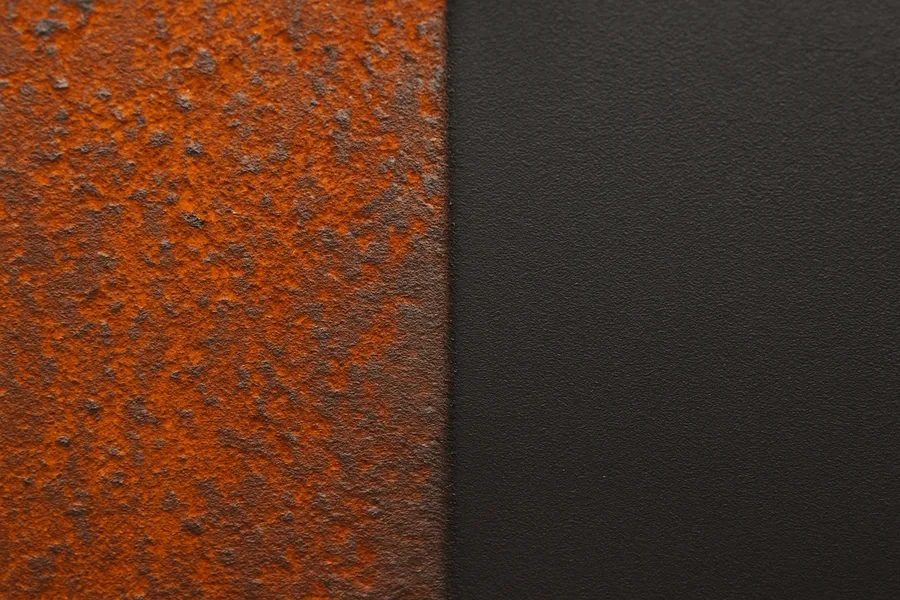
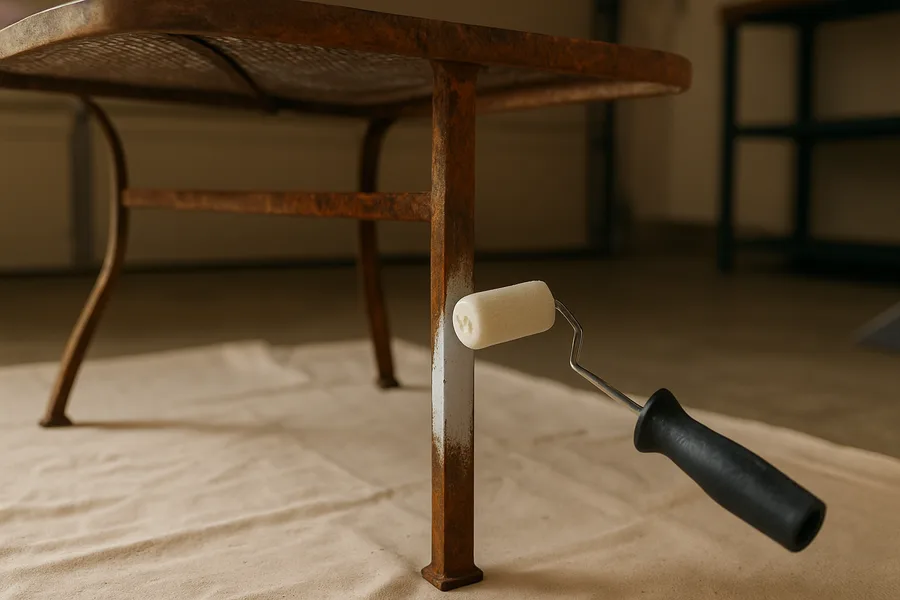
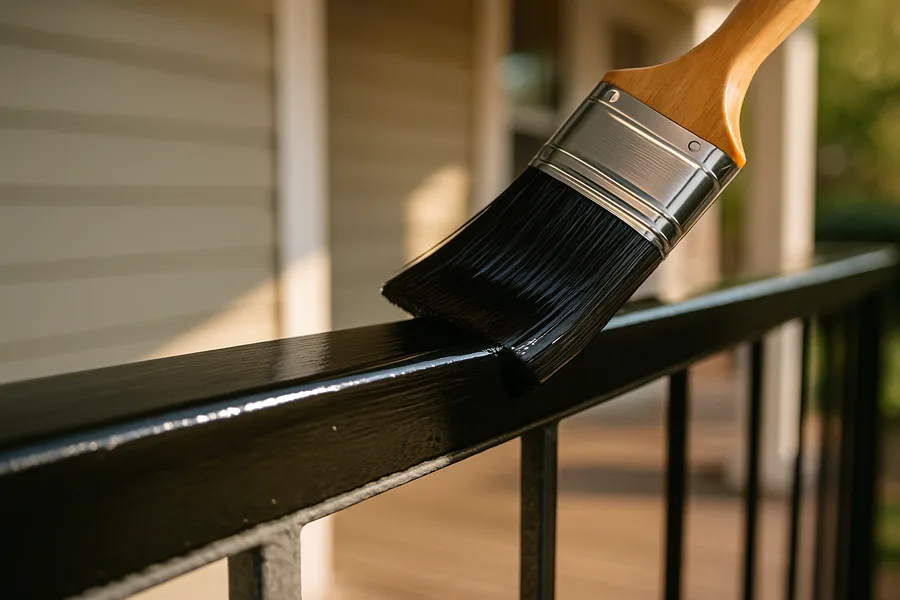
Brush, roll, or spray — your call. Thin, even coats beat one thick gloppy layer every time. A conversion primer often goes on milky and darkens as it reacts. The color shift is the chemistry working. Watch it turn from cloudy white to deep black or blue.
Two coats are common. The first does most of the converting. The second seals and evens things out. Want to know if you can layer your finish straight on top? We tackled it for home improvement projects in a separate guide.
Let it cure
Read the label, then double the patience. Conversion primers usually want 24 to 48 hours before topcoat. Rushing this is the single most common reason a paint job fails. Cure time isn’t a suggestion. It’s chemistry finishing its work.
Topcoat it
Once the primer’s fully cured, two coats of a quality oil based or acrylic enamel locks everything in. Pick a paint labeled for metal. Skip the cheap stuff — you did the hard part, so don’t crown it with a topcoat going chalky in a year.
Pitfalls
Mistakes That Bring the Rust Back
Most rust comebacks trace to a handful of avoidable slips. Here they are.
- Priming over loose rust. If it flakes now, it flakes under paint. Brush harder.
- Skipping the degrease. Invisible oil wrecks adhesion. One wipe saves the whole job.
- Topcoating too soon. Half cured primer can’t hold paint. Wait the full window.
- Wrong primer for the rust stage. Preventative primer on heavy scale is wasted money.
- Ignoring the back side. Rust loves hidden seams and undersides. Coat what you can’t see.
One honest tradeoff worth naming. A conversion primer buys you years, not forever. On metal living outdoors in brutal conditions — a trailer frame, a coastal railing — even a perfect job needs a look every couple of seasons. Catch a new spot early and it’s a five minute touch up. Let it sit through a couple of wet winters, ignored behind a bracket or down in a frame seam where nobody bothers to look, and the same creeping bloom you spent a Saturday beating back will quietly hollow out the steel until there’s nothing solid left to coat. So check it. Twice a year.
Answers
Frequently Asked Questions
Can I really paint over rust without sandblasting?
Yes, in most cases. For light and moderate rust, a conversion primer handles what a sandblaster would, minus the equipment rental and mess. Knock off loose scale with a wire brush, prime, and paint. Sandblasting only earns its keep on heavy industrial scale or when you want truly bare metal.
How long does rusty metal primer take to dry?
Surface dry usually happens within an hour or two. But conversion primers need 24 to 48 hours of full cure before a topcoat goes on. Preventative primers move faster, often 1 to 4 hours. The label is your guide — and honestly, waiting longer never hurts.
Do I have to remove all the rust first?
No. You remove the loose, flaking rust — the chips refusing to stay put. Tightly adhered surface rust is exactly what a conversion primer neutralizes. Bare metal isn’t the target. A solid, stable surface is.
What’s the difference between primer and a rust converter?
Overlap is real here. A rust conversion primer does both jobs at once — it converts the rust and primes the surface for paint. A plain converter only neutralizes rust and may still want a separate primer on top. Check the label to see whether yours is paint ready.
Can I use rusty metal primer indoors?
You can, though ventilation matters. Many oil based and acid bearing primers carry strong fumes and volatile organic compounds. Open windows, run a fan, wear a respirator for spray work. Water based options exist and smell milder if indoor air is a concern.
Will the primer stop rust that’s already started?
A conversion primer neutralizes the rust it touches and seals out fresh oxygen and moisture. So it stops active surface rust cold. What it can’t do is rebuild metal already lost to deep pitting. Treat early, while the damage is still skin deep.
Want the Full Rust Playbook?
From frame rust to fence posts, our guides break down every job with real steps and honest tradeoffs. No fluff, no guesswork.