No products in the cart.
Choosing the Right Rust Converter: The Best Rust Converter and Rust Remover Guide (2026 Guide)
May 5, 2026
By Xion Lab
Free Shipping
easy returns
secure paymentS
FAQ | MY ACCOUNT | SUPPORT
May 5, 2026
By Xion Lab
A practical buyer’s guide to picking the right chemistry for surface rust, heavy corrosion, and tools you actually want to keep using next decade.
Quick Answer: Pick a rust converter when the metal carries surface rust you cannot easily strip away — fence rails, trailer beds, garden gates, equipment frames. Pick a rust remover when the part is small enough to dunk and you need bare steel for a finish coat. The best rust converter and rust remover for most homeowners and pros is one product line covering both jobs cleanly, with predictable cure windows and a topcoat-friendly surface.
A rust converter changes rust into something stable. Strip rust off entirely with a remover. Two different tools, two very different jobs, and confusing them is the most common mistake newcomers make when they first walk into the paint aisle looking for a fix.
Rust converters carry tannic acid, sometimes paired with phosphoric acid and an organic polymer. The acids react with iron oxide and lock it into a hard, blue-black compound called ferric tannate. The polymer fuses around it as a primer-grade film. Hit a rusted gate hinge with a quality converter, give it a day, and the surface goes from flaking orange to inert black — paintable, primed, sealed.
Rust removers run a different chemistry. Most use oxalic acid, citric acid, or hydrochloric acid in a dip or gel. The acid attacks the iron oxide bond and pulls the rust off. You rinse, neutralize, dry, and you’re left holding bare steel. Great for hand tools. Brutal for a fender on a 1972 Bronco.
Picking between them comes down to surface size, accessibility, and what the part needs to look like at the end. Want more on the chemistry side? Our deep dive on the science of rust converters and primers walks through the full reaction pathway.
Annual global cost of corrosion, equal to roughly 3.4% of global GDP, per the AMPP/NACE IMPACT study. Source: NACE IMPACT
The two products solve overlapping problems with very different methods. Here’s how they stack up across the criteria most people care about.
| Criteria | Rust Converter | Rust Remover |
|---|---|---|
| Active Chemistry | Tannic + phosphoric acid, polymer binder | Oxalic, citric, or hydrochloric acid |
| End State | Black ferric tannate primer layer | Bare, unprotected steel |
| Best For | Large surfaces, structural metal, vehicle frames | Small parts, hand tools, hardware |
| Prep Required | Wire-brush loose flakes, degrease | Disassembly, full submersion |
| Cure Time | 24–48 hours before topcoat | Rinse, neutralize, dry — same day |
| Topcoat Needed? | Optional but recommended outdoors | Required immediately to stop flash rust |
| Skill Level | Beginner-friendly | Moderate — handling acid baths |
| Typical Lifespan | 5–10 years with topcoat | Depends entirely on follow-up coating |
Most projects fall on the converter side. Bare metal looks great in photos. Yet bare metal flash-rusts within hours in humid air. A converter leaves you something usable. A remover leaves you something fragile. For a deeper read on this trade-off, see the XionLab take on rust converter vs rust remover.
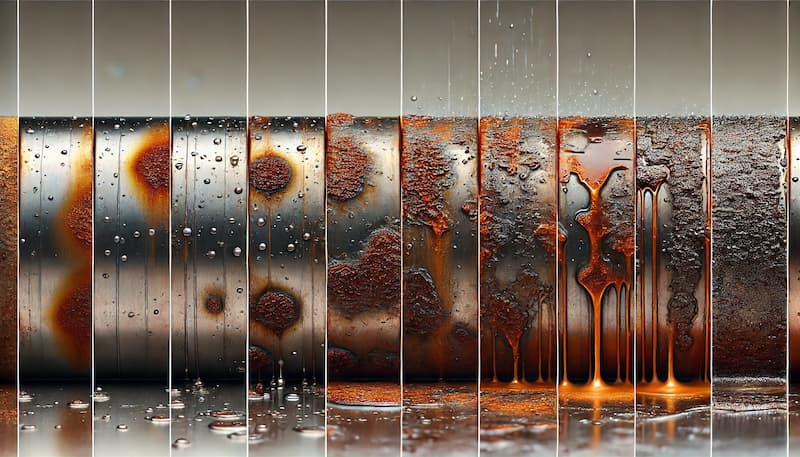
Rust never sleeps. Once iron oxide forms, it attracts moisture, expands by roughly seven times the volume of the original metal, and pries apart adjacent material. A pinhole becomes a quarter-sized perforation. A surface freckle becomes a structural crack.
The financial side hits harder than most realize. The AMPP/NACE IMPACT study pegs annual global corrosion losses at roughly $2.5 trillion. AMPP also estimates that proven prevention practices could recover 15% to 35% of that cost — somewhere between $375 and $875 billion every year — money the world keeps losing because surfaces never get treated in time.
Recoverable share of corrosion costs through proven coating and converter practices, per AMPP estimates.
Down on the Gulf Coast, salt-laden air accelerates the reaction by an order of magnitude. A trailer parked in Mobile rusts faster than one parked in Phoenix, sometimes by a factor of three or four when measured against the same gauge of mild steel left untreated outdoors for a single calendar year. Salt belt states from Michigan through New England add winter brine to the mix. Pacific Northwest rain chips at coatings every season. Rust is regional, and the wrong product turns a weekend job into a yearly chore that quietly drains tools, time, and money from the workshop calendar.
Climate decides the product. So does honest expectation-setting about how long any coating actually holds against ultraviolet light, freeze-thaw cycling, road salt, and wind-driven sand.
Surface prep is where rust treatment lives or dies. Skip it and even the strongest converter peels off within months. Done correctly, prep takes maybe an hour for a bumper-sized panel.
The target standard is what AMPP calls SP 3 — power tool cleaning. No flaking scale. Wipe away any greasy film. Loose particles have to go. Just rust bonded firmly to the underlying metal.
Sequence is everything.
Skip the wire brush and the converter sits on top of loose scale instead of bonding to metal underneath. With no degrease, the polymer film never adheres. Without a test patch, you might find out the rust runs deeper than you thought only after coating the whole thing — a discovery that costs an extra weekend and a second batch of converter you did not budget for. Detailed prep guidance lives in our surface preparation for rust treatment walkthrough.
The market is crowded. Big-box shelves stock half a dozen brands, and every one promises to stop rust forever. Some live up to it. Some are watered-down primers wearing a fancy label.
Here’s how the major players compare in real workshops, on real metal, across real climates. Brand-honest, not brand-loyal.
Corroseal works well on lighter surface rust on smaller parts. Tannic-acid based, water clean-up, decent flow. Where Corroseal struggles is heavy pitted rust and humid storage — the cured film sometimes lifts under prolonged moisture exposure. Solid budget pick for a garage gate or a mailbox post. Less reliable on a horse trailer that lives outdoors.
Permatex is the one most automotive techs reach for first. Sprays evenly, dries fast, takes paint cleanly. The film is thinner than premium-grade converters, which means it works best as a spot treatment. Great for a fender repair. Underwhelming for an entire frame.
POR-15 has a cult following in the restoration crowd. The cured coating is genuinely tough. The downside is shelf life and surface-prep sensitivity — POR-15 hates moisture and demands a clean substrate, or the whole panel can lift weeks later. Pros only. Hobbyists tend to fight the curing window.
Where XionLab pulls ahead is in the dual-purpose chemistry. One coat converts existing rust into ferric tannate and lays down a primer layer suitable for topcoats. The water-based formula skips solvents, cleans up with soap and water, and stays workable in humid conditions where solvent-based competitors struggle. Marine and Gulf Coast users report the longest field life among the products tested in our internal trials.
For automotive jobs specifically, our piece on rust converter for automotive protection compares formulas for frames, undercarriages, and body panels.
A peer-reviewed paper in Corrosion Science tested rust converters built on tannic versus phosphoric acid, and converters built on both. Dual-chemistry formulas outperformed single-acid ones in conversion completeness and in long-term coating adhesion. The combination matters. So does the polymer that binds the new compound to the underlying steel.
The XionLab formulation runs both acids together, paired with a proprietary polymer carrier engineered for adhesion to pitted iron substrates. Penetration goes deeper. Adhesion holds longer. And the water base keeps the worker’s lungs out of solvent vapor when applying indoors or in tight spaces with limited airflow.
Converts rust and lays a paintable primer in a single coat. No second product, no second day.
Low odor, low VOC, soap-and-water cleanup. Safer for the user — gentler on the environment too.
Tested in salt-spray environments where Corroseal and similar brands sometimes lift early.
Most jobs accept paint the next morning. No fighting humidity windows or solvent flash-off.
Same formula adapts to any application method. Apply it the way the project demands.
Manufactured under tight QC since 2015. Consistent batch quality, every can.
Application looks simple. Most people still botch it. Here’s the sequence used in our shop on a sample 1968 pickup frame last fall — about a quarter-inch of pitted rust on the rear cross-member, parked outside through three Atlanta winters.
One coat. Done.
The frame still reads black with no rust bleed-through eight months later. Atlanta humidity tested the bond hard, and it held. Real product. Real result. The deeper application notes are in our complete rust converter treatment workflow.
Different surfaces ask for different application strategies. Same chemistry, different technique.
Brush-and-roll application beats spraying for thick coverage in chassis pockets. Two thin coats work better than one heavy one. Salt belt drivers benefit from re-treating any new exposure points each spring.
Boats and boat trailers face the harshest environment a rust converter ever sees. Saltwater splash plus UV is a brutal combination. A converter rated for marine use, followed by a marine-grade topcoat, doubles outdoor service life. See marine corrosion protection for a full breakdown.
Wrought-iron benches, garden gates, fire pits. These are the easiest wins. Light surface rust, accessible angles, and forgiving cure conditions. A weekend job at most.
Conveyor frames, machine bases, structural steel. Industrial settings call for heavier coatings and more aggressive prep. Match the converter to a high-build epoxy topcoat for the longest service life.
Tools usually go the rust-remover route. Submerge, scrub, dry, oil. A converter coats the tool in a layer of polymer you don’t actually want on a wrench head, where any extra thickness changes feel and grip on fasteners during real work in the bay or out on a job site under deadline pressure.
Match the chemistry to the part. Match the part to the climate. Both moves cost nothing extra, save weeks of regret on a misapplied product, and make every dollar spent on coating actually count toward longer service life.
Worth saying clearly. A rust converter has limits, and ignoring them wastes time.
Salt wins every time when prep is rushed. Sequence is everything.
Yes, as long as the rust is bonded firmly to the metal beneath. Wire-brush off any flakes. The remaining surface rust is exactly what the converter needs to react with. Heavily pitted areas may need two coats for full coverage.
Indoors with no topcoat: roughly two to three years before any visible breakdown. Outdoors with a quality topcoat: five to ten years on most surfaces, sometimes longer in dry climates like Arizona or New Mexico. Marine environments shorten the window. UV is the main enemy after the first year.
Not with XionLab. Our 2-in-1 formula functions as the primer layer itself. Some single-purpose converters require a separate primer before topcoat. Read the can carefully and follow the manufacturer’s recoat window.
A rust converter chemically transforms rust into a stable, paintable film, while a rust remover dissolves the rust off the surface entirely and leaves bare metal behind. Converters fit large, accessible surfaces. Removers fit small parts you can submerge.
Yes — and you should outdoors. The converted layer takes most oil-based and water-based topcoats cleanly after a 24-hour cure. Always test compatibility on a small area first. Our piece on painting over rust converter goes deeper.
Water-based formulas like XionLab are. Solvent-based competitors release VOCs and demand serious ventilation. Always check the SDS sheet. Indoors, open windows and run a fan even with low-VOC products.
Below about 50°F the cure window stretches and may not complete. Most manufacturers spec 50–90°F application temperatures. If the garage runs cold, warm the surface with a heat gun first or wait for milder weather.
No. The chemistry is iron-specific. Aluminum oxide and chromium oxide do not react with tannic acid the same way iron oxide does. Use a metal-specific cleaner instead.
Roughly 100 to 125 square feet per quart with a single coat. Pitted surfaces drink the product faster. Smooth surfaces stretch coverage further. Always buy slightly more than the math suggests.
One coat. Real conversion. Real protection. XionLab’s 2-in-1 Rust Converter and Metal Primer is built for the surfaces other products give up on.