Rust converter
GMC Sierra Frame Rust: Prevention & Repair Guide
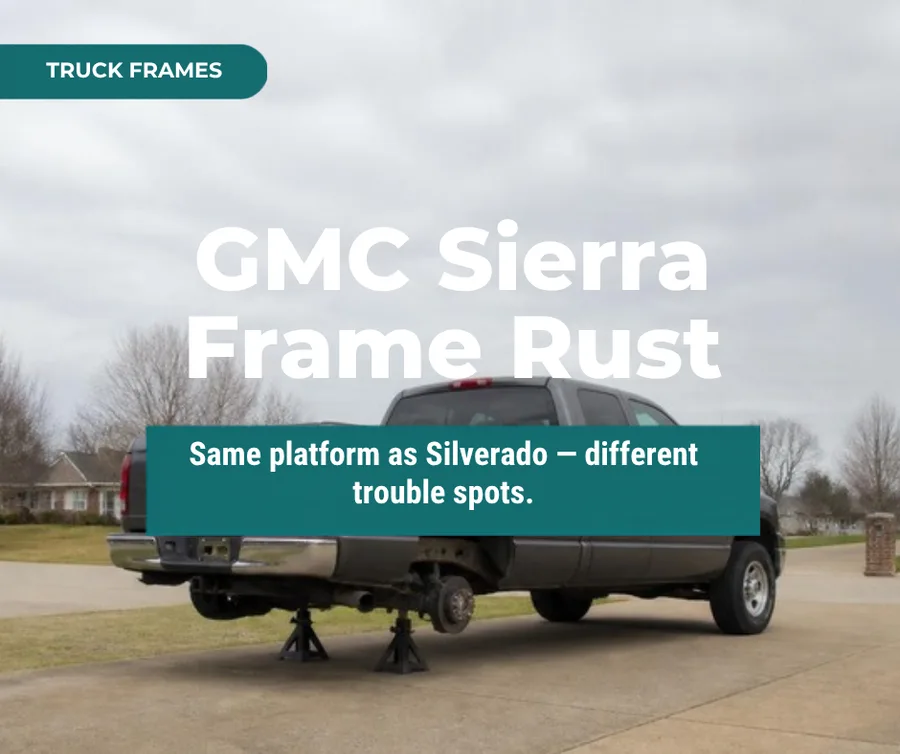
Quick Answer — GMC Sierra frames rust first at the crossmembers behind the cab, the rear rails near the spring hangers, and around the fuel tank straps. Catch it while it’s flaky surface scale, clean it to a tight dull surface, convert or coat it, and keep the boxed sections oiled. Once rust eats through the steel, no coating brings the metal back.
The Root Cause
Why a Sierra Frame Rusts in the First Place
Your Sierra’s frame is a steel ladder, and steel has exactly one job it can’t do alone: stay dry. Mud, slush, and road brine collect in every seam, every boxed section, and every pocket where a crossmember meets a rail. They sit there — for months.
Factory coatings help, but they’re thin. A gravel chip or a scrape from a hitch opens a pinhole, moisture finds it within days, and the rust creeps sideways under the paint. So a frame can look fine from the outside while the coating lifts in sheets underneath.
Geography matters more than most owners admit. A truck parked outside through ten winters in Michigan, Ohio, or upstate New York lived in a salt bath. Gulf Coast trucks get a different punishment, with humid air that never quits and a salty haze settling on everything. Pacific Northwest trucks sit damp for whole seasons. Different weather, same result. But the frame doesn’t care which one rotted it.
Estimated yearly cost of corrosion worldwide, roughly 3.4% of global GDP, according to the NACE IMPACT study now carried forward by AMPP.
Sierra and Silverado share a lot of underpinnings, so the weak spots overlap. If you’ve read our Chevy Silverado frame rust guide, plenty of what follows will look familiar. Sierra owners still report a pattern of their own, and it’s worth walking through slowly.
Know Where to Look
The Usual Trouble Spots
Owner reports collected on CarProblemZoo keep circling the same handful of places. Frame crossmembers behind the cab. Suspension mounts and shock towers. The fuel tank area. Brake and fuel lines running along the rails. None of it is a lab study, mind you. It’s a pile of real complaints, and the overlap is hard to ignore.
| Location | What Happens | Urgency |
|---|---|---|
| Crossmember behind the cab | Scale builds on the top edge where water pools | Moderate, treat this season |
| Rear rails near spring hangers | Rust works from inside the boxed section outward | High, inspect twice a year |
| Fuel tank straps and skid area | Strap corrosion weakens the hold on the tank | High, safety item |
| Brake and fuel lines | Coating fails, lines pit, then weep fluid | Critical, replace if corroded |
| Shock towers and control arm mounts | Flaking at welds and seams | Moderate |
Complaints on that site cluster around 1999 to 2002 and 2013 to 2015 trucks, though it’s anecdotal and not a failure rate. Where the truck lived tells you far more than the model year on the title.
Brake lines deserve their own paragraph. NHTSA investigated corrosion on roughly 6 million 1999 to 2003 GM trucks and SUVs, the Sierra included, and closed the probe without ordering a recall. The agency called it an age and climate problem and urged owners in salt regions to wash the underside every winter and have the brakes checked. Fluid loss or a soft pedal? Don’t wait — get it looked at. You can also look up open campaigns on your own truck by VIN at NHTSA’s recall lookup, since recall status changes over time.
The Honest Assessment
How Much Rust Is Too Much
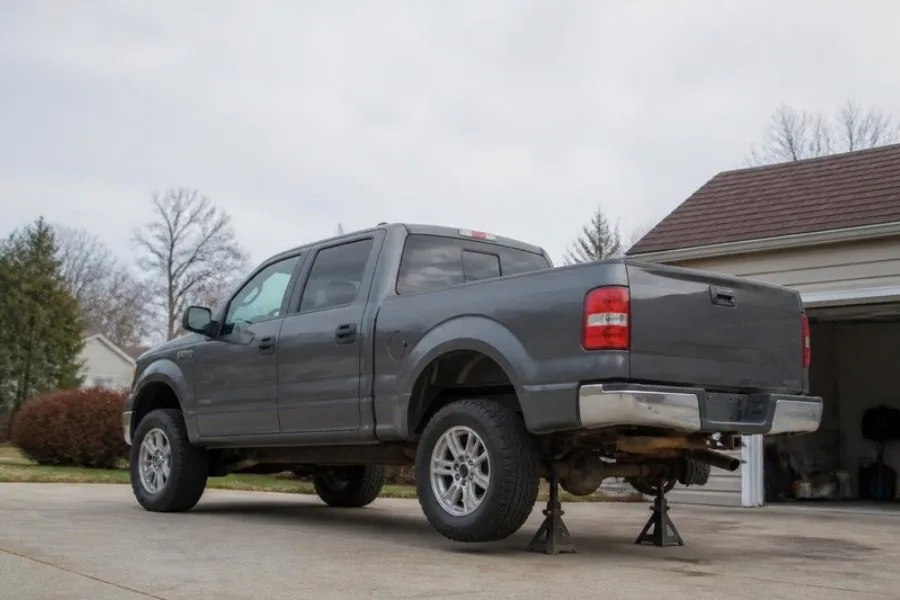
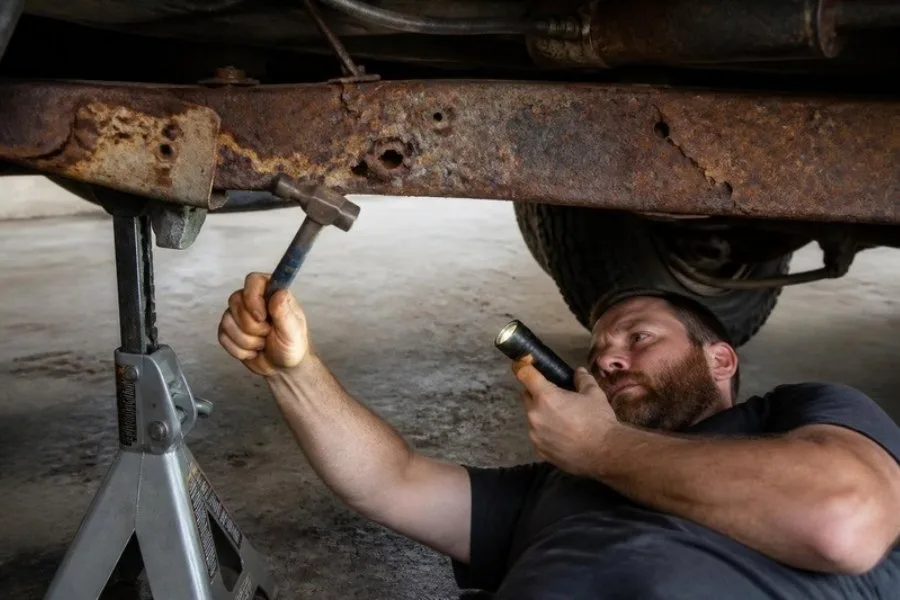
Grab a flashlight, a flathead screwdriver, and a small hammer. Park on level ground and put the truck on jack stands rated well above its weight. Then tap along the rails and crossmembers. A bright ring means sound steel. A dull thud, or a crunch, means you’ve found trouble.
- Surface rust. orange dust or a light film, and the steel underneath stays hard. Easy fix, and the best time to act.
- Scale rust. flakes and layers, usually up to about a quarter inch thick, with pitting once you knock them off. Fixable, but it takes real cleaning.
- Penetrating rust. holes, soft spots, or a screwdriver tip pushing through. Stop here and have a frame shop look at it.
Spring is the best time for the first look. Winter salt is still fresh on the steel, the snow is gone, and you can see what the season did. Walk the whole frame once, front to back, and take photos with your phone. Next April, those pictures tell you whether a spot is growing or holding still. It’s a small trick, but it turns a vague worry into something you can measure.
- Crossmembers. Look along the top edges and at the welds, where water pools and scale starts first.
- Rail ends. Check the rear rails near the bumper mounts and spring hangers, especially any weep marks or rust streaks running down from seams.
- Fuel tank straps. Look for flaking at the bolts and swollen scale around the strap edges.
- Brake and fuel lines. Run a gloved hand along them and look for rough, blistered coating or damp spots.
One owner described a hole about 3 inches by three quarters of an inch on a truck only six years old, and another was quoted around $12,000 for a frame replacement. Those are single reports, so treat them as warnings and not averages. But they show what waiting costs.
Cracks matter even more than holes. A crack running partway around a rail near the rear suspension is a structural problem, full stop, and no spray or brush job fixes it. For a deeper look at the borderline cases, our truck frame rust repair walkthrough covers what shops check before they call a frame repairable.
What about a frame already past saving on one side and sound on the other? Shops do sometimes weld in repair sections or fish plates on a rail, but that call belongs to a qualified frame technician, not a weekend crew. A bad weld next to a suspension mount can do more harm than the rust ever did. Get a written opinion before spending money in either direction.
The Repair
Treating Surface and Scale Rust
If the steel is still solid, you can handle this in a weekend with basic tools. Wear safety glasses, gloves, and a respirator, because rust dust and old undercoating aren’t things to breathe. Here’s the order that works. And yes, the order matters.
Clean and Strip the Loose Stuff
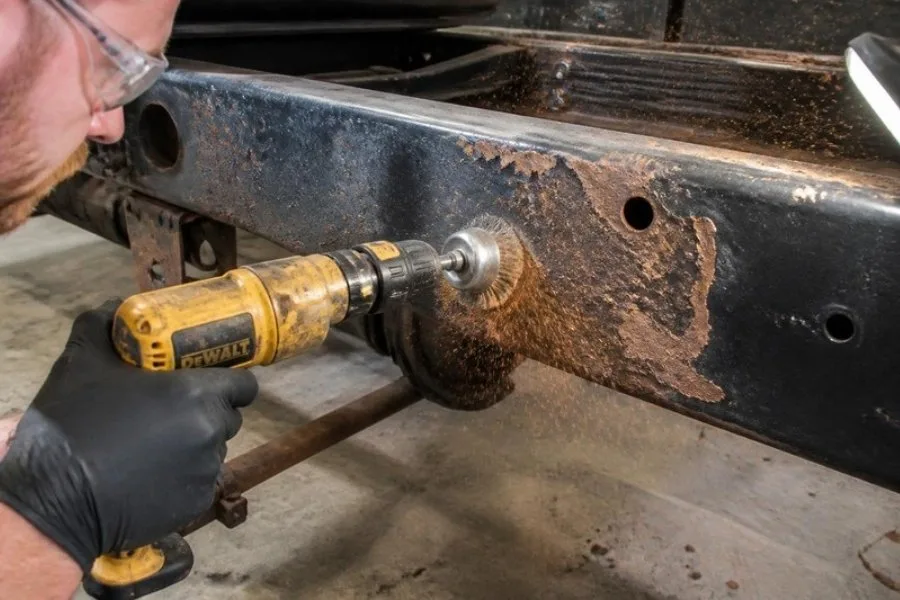
Pressure wash the frame, then let it dry completely. Degrease any oily spots. Knock off thick scale with a chisel or scraper, then follow with a wire wheel or a rotary brush until the surface looks dull and tight. Shiny bare steel isn’t the goal. Firm, stable rust with the loose layers gone is plenty for a converter to grab.
Convert, Then Coat
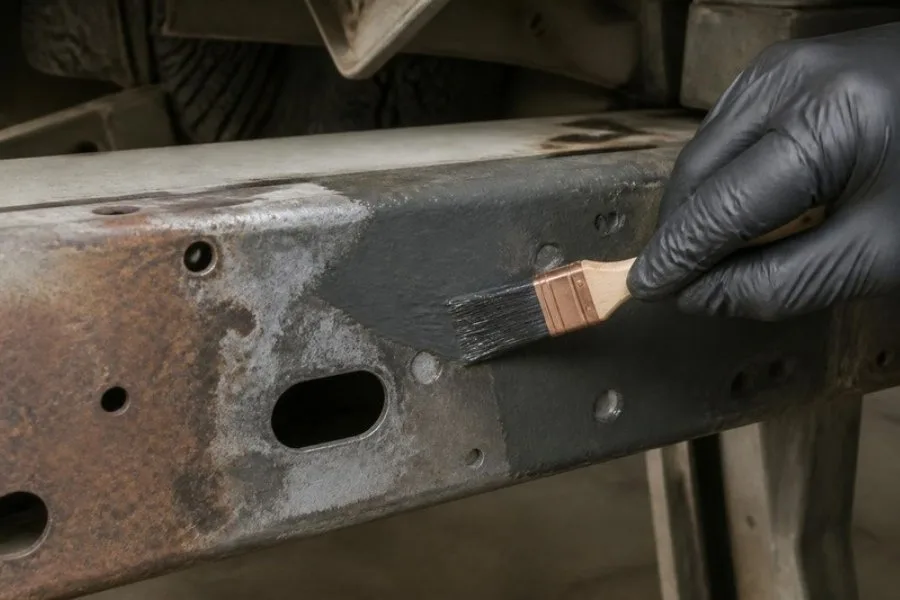
A rust converter chemically changes iron oxide into a stable, paintable layer. Brush it on in thin, even coats and follow the label on temperature and recoat timing. Most want a dry day somewhere between about 50 and 90 degrees. Skip a damp March morning in the salt belt and wait for a better afternoon. Once cured, topcoat with a chassis paint or a quality primer and finish, so the converted layer stays sealed from water.
Fair warning. A converter can’t rebuild steel that’s already gone. It also won’t reach the bottom layer if thick scale is still sitting on top, so the cleaning step isn’t optional. So skip it and you’re just painting a problem.
Budget a full day if the frame is in decent shape, and more if the truck has years of packed mud on it. Most of the time goes into cleaning, not painting. A rotary wire brush on a drill saves hours over hand brushing, and a cheap inspection mirror lets you see the backside of a crossmember without lying on your neck. Honestly, the gear costs less than a single tank of gas in a full size truck, and the work pays back for years.
Protect the Inside
Rust starting inside a boxed rail stays hidden until it’s advanced, so finish the job with a wax or oil based cavity spray through the factory holes. Use a flexible wand and spray until it drips out the bottom. The same basic routine works on other trucks too, and our Ford F-150 frame rust guide shows how it plays out on a different frame.
Long Game
Keeping It From Coming Back
Treating rust once is a repair. Keeping it away is a habit, and honestly, a cheap one. Rinse the underside regularly, clear mud from wheel wells and frame drains, and touch up chips before the weather turns. Most of the damage we see started with a ten minute job nobody did.
| Region | Main Threat | Routine |
|---|---|---|
| Salt belt | Brine and packed slush | Rinse the underside monthly from December through March, inspect every spring |
| Gulf Coast | Humid, salty air | Rinse after beach or boat ramp trips, touch up chips yearly |
| Pacific Northwest | Constant moisture | Keep drains clear, inspect twice a year |
| Dry Southwest | Dust holding moisture against the steel | Inspect once a year |
Ram owners fight the same war with slightly different trouble spots, as our RAM 1500 frame rust breakdown shows. And if you want the full picture on protecting everything below the floorboards, the underbody rust protection guide goes much wider than the frame alone.
One last tip. Undercoating sprayed over loose scale traps moisture against the steel and makes things worse, so any coating is only as good as the surface under it. Clean first. Always. Or pay twice.
Quick Answers
Frequently Asked Questions
Is there a GMC Sierra frame rust recall?
NHTSA closed its probe into brake line corrosion on 1999 to 2003 GM trucks without ordering a recall. Campaigns change over time, so enter your VIN on the NHTSA recall lookup for current results on your truck.
Which Sierra years rust the worst?
Owner complaints cluster around 1999 to 2002 and 2013 to 2015, but it’s anecdotal. A 2016 truck from Buffalo can look worse than a 2008 truck from Arizona.
Can I stop frame rust once it starts?
On surface and scale rust, yes. Clean it, convert it, and topcoat it. Rust eaten clear through the metal needs welded repair or replacement, and coatings won’t restore lost steel.
How often should I inspect the frame?
Twice a year works for most trucks, once after winter and once before it. Check more often if you live near salt water or drive on treated roads.
Does undercoating help or hurt?
It helps on clean, treated metal. Sprayed over loose scale or wet rust, it traps moisture and hides the damage until it’s serious.
Is a rusty frame safe to drive?
Light surface rust is cosmetic. Holes, cracks, or soft metal near suspension mounts, fuel tank straps, or brake lines call for an inspection before the truck sees more miles.
What tools do I need for a frame rust job?
A pressure washer, scraper, rotary wire brush, degreaser, brush for the converter, chassis paint, and a cavity wax kit with a flexible wand. Add jack stands, gloves, glasses, and a respirator.
Explore All Guides
More step by step rust guides for trucks, cars, fences, and tanks, all written for people who’d rather fix it themselves.
Safer For You, Safer For The Environment