Rust converter
Truck Frame Rust Repair: The DIY Guide to Treating & Protecting Your Frame
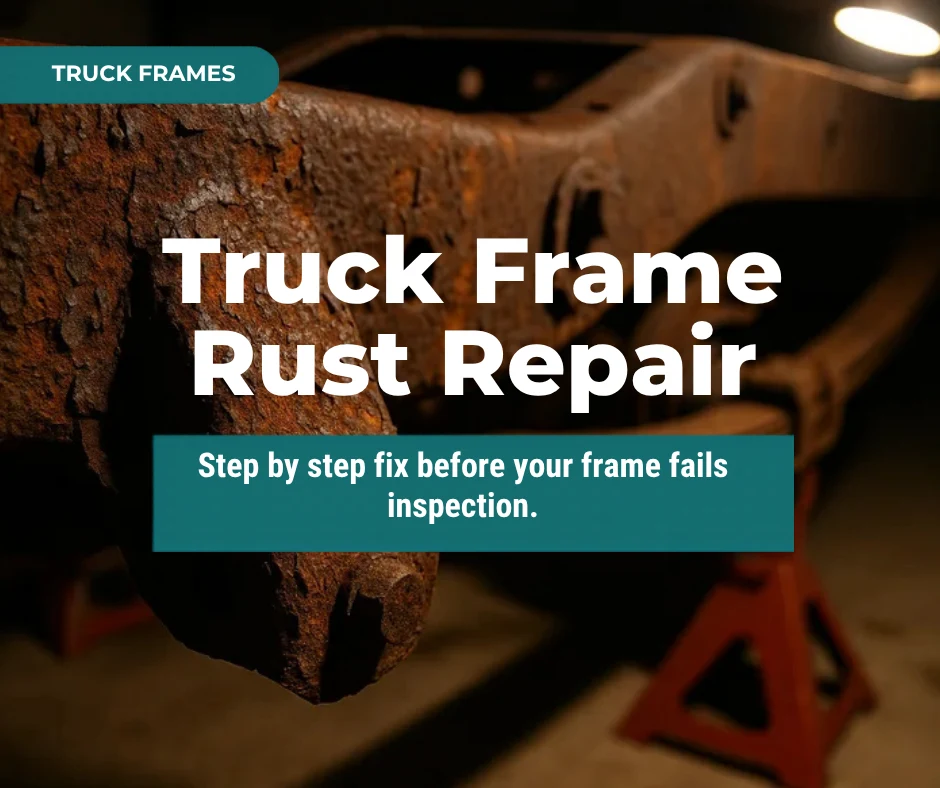
Quick answer — Most truck frame rust starts as surface corrosion you can treat yourself with a wire wheel, a rust converter, and a rubberized undercoating, usually for under $150 in materials. Scale rust needs more aggressive prep, and once rust has eaten through the metal and left pitting or holes, you’re looking at a welded patch or a trip to a frame shop. Catch it early and a Saturday afternoon is often all it takes.
The Basics
Why Truck Frames Rust in the First Place
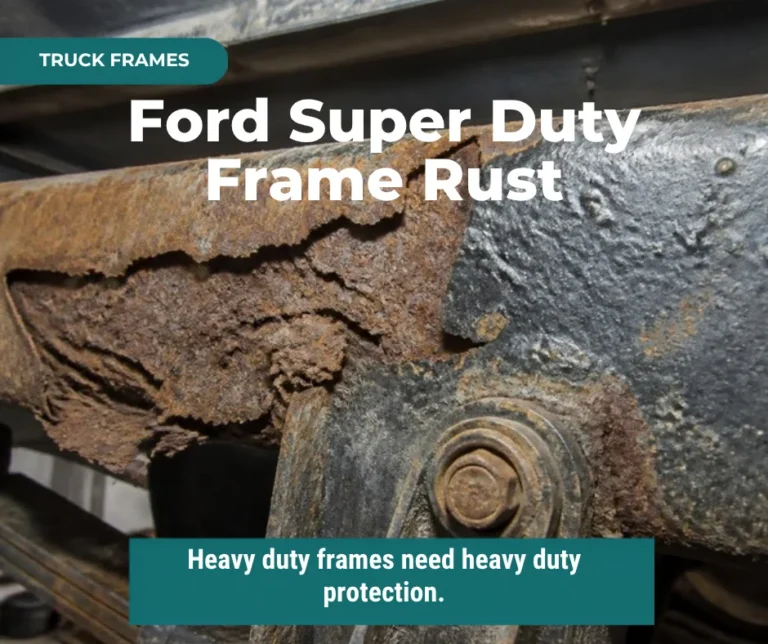
Steel wants to rust. That isn’t a design flaw, it’s chemistry at work — iron reacts with oxygen and water and slowly turns itself back into iron oxide, the technical name for rust. Your truck frame is a boxed or C channel steel structure sitting a foot off the ground, catching every splash of water, slush, and road grime your tires kick up. It’s basically built to collect the one thing set on wrecking it.
Factory undercoating and e coat primer buy you time, not immunity. The coating chips on gravel roads, cracks with age, and gets scraped off by curbs and speed bumps. Once bare metal shows through, moisture gets in and rust starts working. And frames trap water in ways door panels never do, inside boxed sections, around weld seams, behind crossmembers where nothing ever fully dries out.
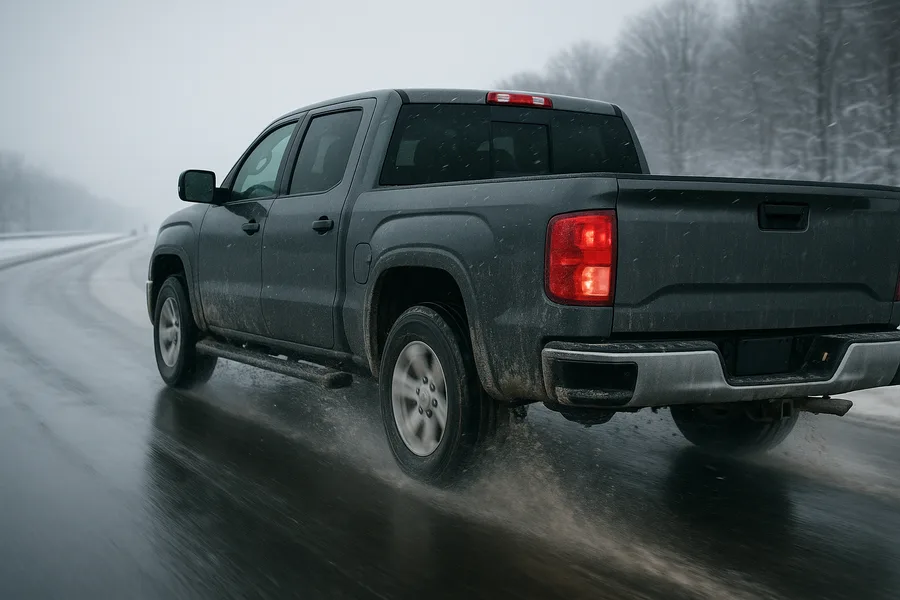
Add road salt and things get ugly fast. Salt lowers the freezing point of water so it stays liquid longer on your frame, and it speeds up the electrochemical reaction behind corrosion. That’s why a five year old truck in Phoenix can look brand new underneath while the same truck sold in Cleveland already has flaking rust on every crossmember.
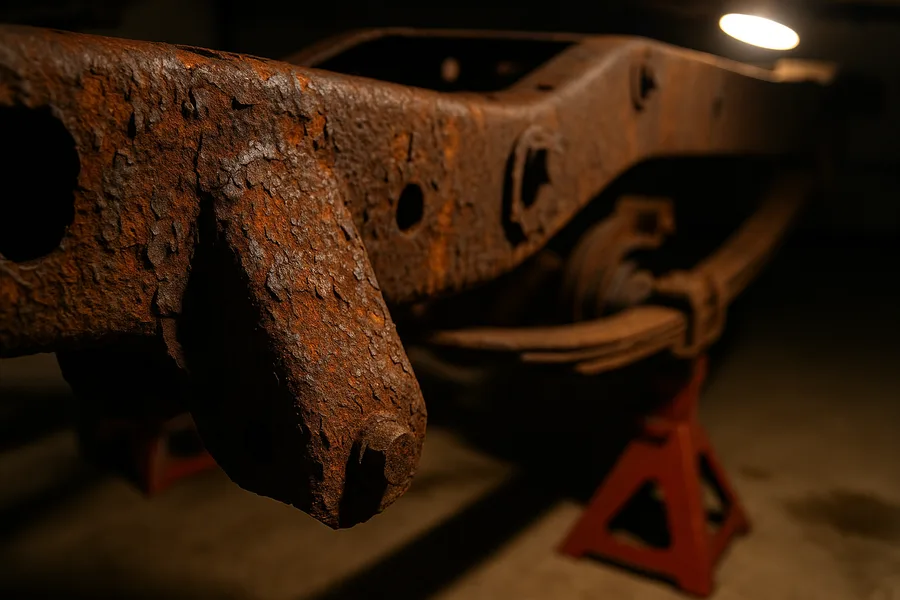
The Usual Trouble Spots
- Rear frame rails behind the cab, where mud and slush collect and rarely dry
- Crossmembers near the fuel tank and spare tire mount
- Control arm and leaf spring mounts, where flex cracks the coating over time
- Boxed frame sections with drain holes prone to clogging with debris and holding standing water
Assessment
How Bad Is It? Inspecting and Grading Frame Rust
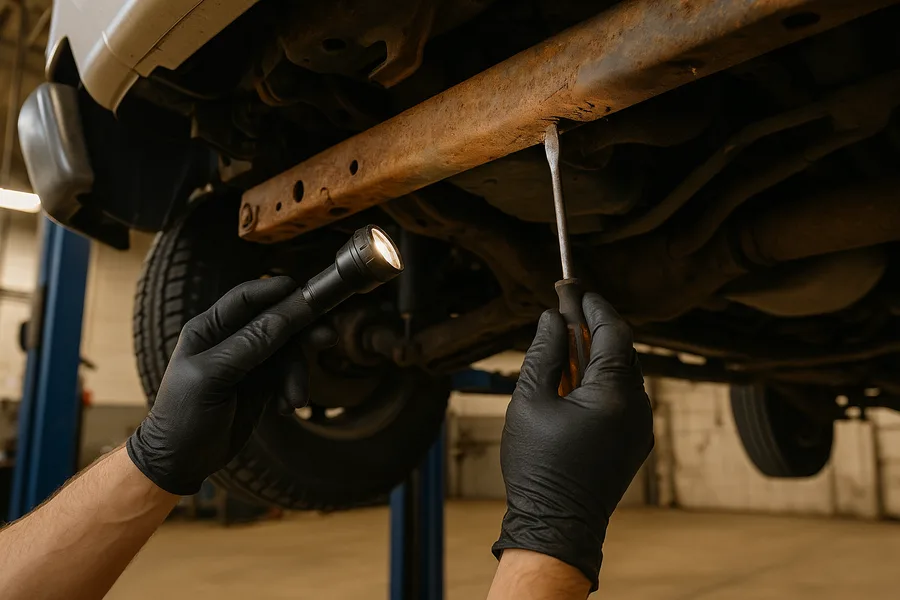
Before you buy a single product, get under the truck and look. A flashlight, a screwdriver, and twenty minutes on a creeper tell you more than any forum thread ever will. Mechanics call this the scrape and tap test, and it’s exactly what it sounds like.
Run the flat end of a screwdriver across suspicious areas. Does surface rust brush off and leave solid metal underneath? Good sign. Does the tip sink in, or does a chunk flake away and expose a hole clean through? That’s a different conversation.
The Three Stages of Frame Rust
| Stage | What It Looks Like | Structural Risk | Typical Fix |
|---|---|---|---|
| Surface Rust | Orange discoloration, no flaking, smooth metal underneath | None yet | Wire brush plus rust converter |
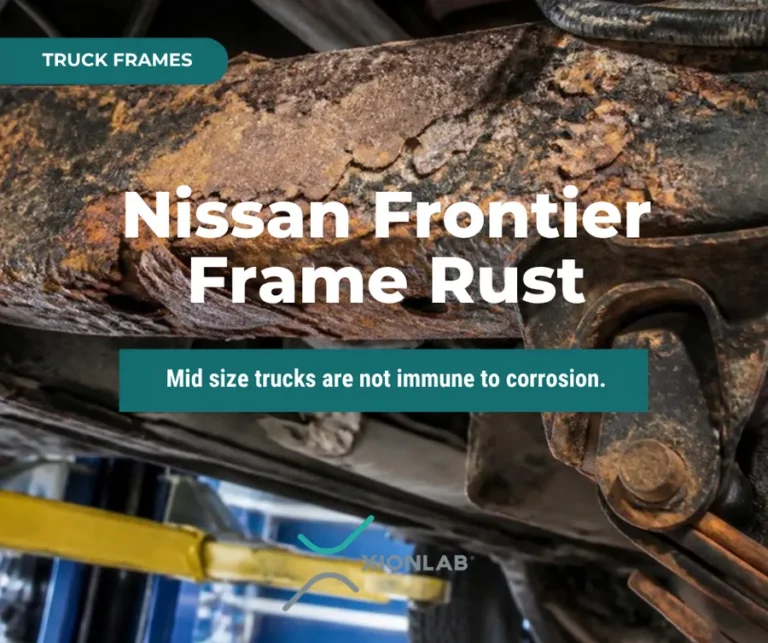
| Scale Rust | Flaking, bubbling paint, rough pitted texture | Minor, thickness loss begins | Grinding, converter, and undercoating |
| Penetrating Rust | Holes, crumbling metal, screwdriver punches through | Severe, frame integrity compromised | Welded patch panel or shop repair |
Most trucks on the road sit somewhere between stage one and stage two, which is good news. That’s the window where a weekend of DIY work saves thousands down the line. Wait until stage three and you’re no longer treating rust. You’re rebuilding structure.
The Process
The DIY Treatment Process, Step by Step
So you’ve decided this is a project you can handle. Good. Here’s the process built to actually hold up, not the shortcut version floating around some forum from 2011.
Step 1 — Clean and Strip
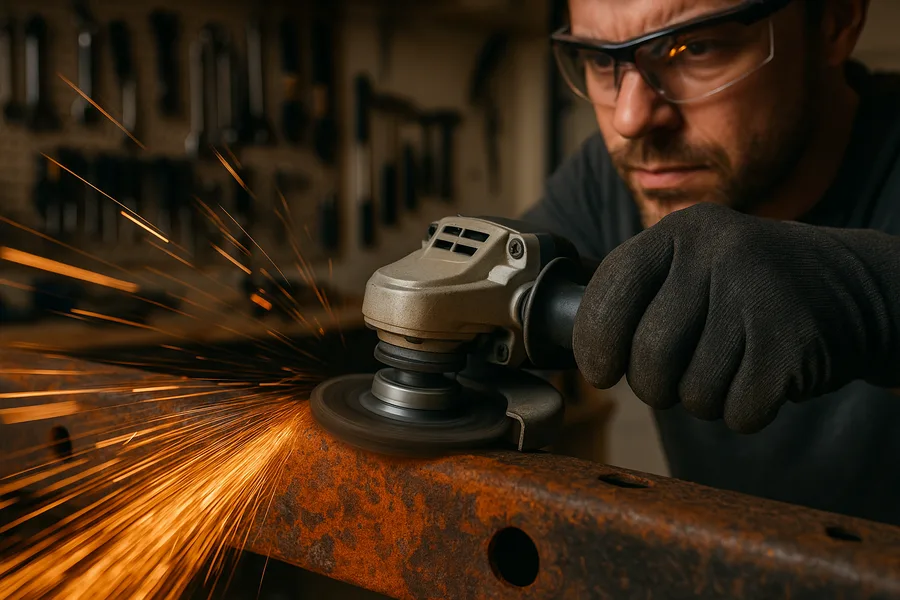
Wash the frame first. A pressure washer with a degreaser strips years of road grime off before a wire wheel ever touches the metal. Let it dry completely, ideally overnight. Then hit every rusted section with a wire wheel on an angle grinder or a drill attachment until you reach bare metal or tight, adherent rust. Loose scale has to go. Our complete guide to removing rust from metal breaks down grinding, blasting, and chemical stripping in more depth than fits here.
Step 2 — Treat What’s Left
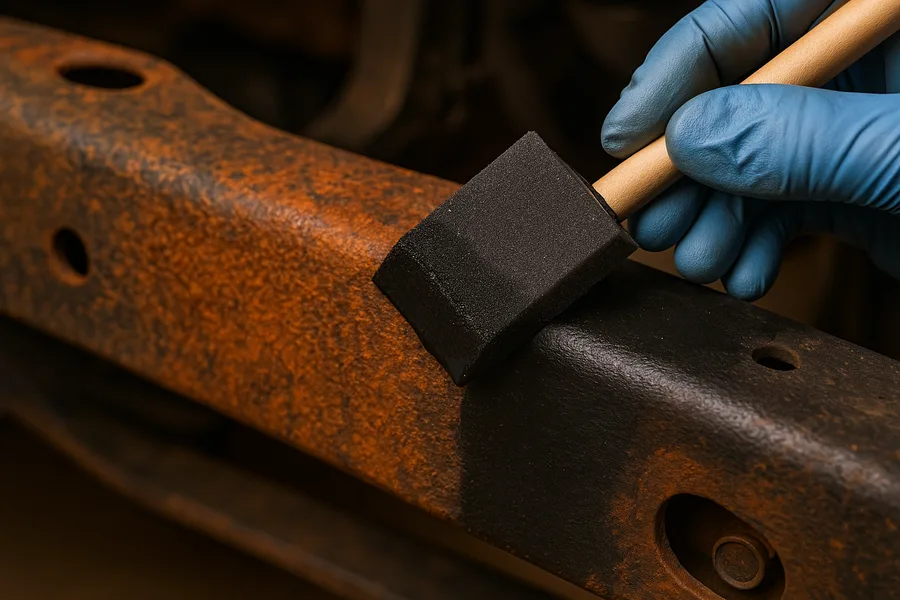
Here’s the part people skip, and it’s the part carrying the most weight. A rust converter reacts chemically with any remaining iron oxide and turns it into a stable, paintable compound instead of leaving it to keep corroding under your primer. Brush or spray it across the entire treated area, not just the worst spots. Give it a full 24 to 48 hours to cure, longer in cold or humid garages.
Skip this step and paint straight over bare, freshly ground steel instead, and you’re setting a trap. Moisture works its way back in behind the topcoat within a season or two, and you’ll be back under the truck sooner than you’d like. Our guide to painting over rusty metal the right way goes deeper on primer selection and layering order.
Step 3 — Seal It
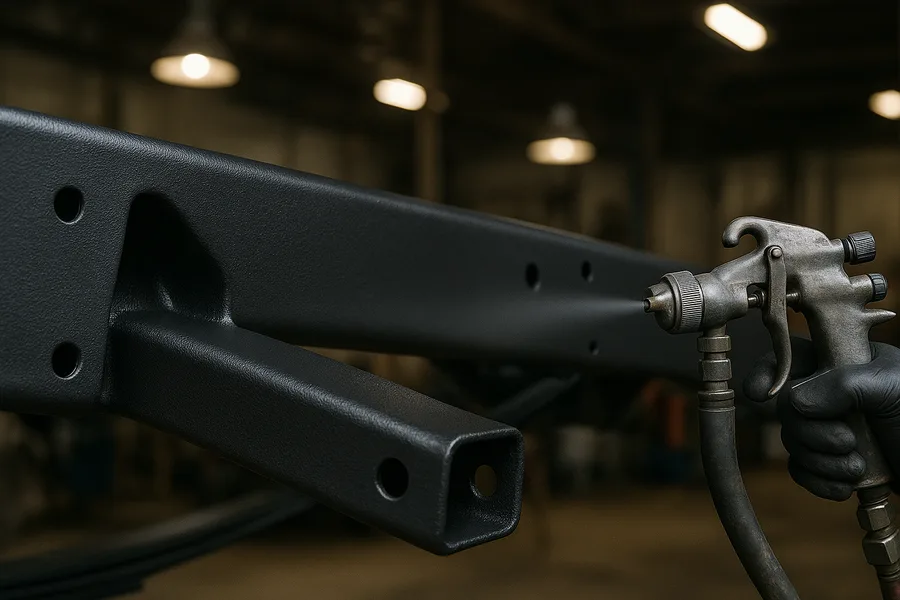
Once the converter cures, apply a rubberized undercoating or rust inhibiting paint over the whole frame, not just the spots you treated. Undercoating adds a flexible, waterproof barrier and quiets road noise as a bonus. Two coats, letting each flash off before the next, with extra attention to seams and crossmember joints where water pools.
Give the whole system a full cure before driving through rain or a car wash — most labels call for 48 to 72 hours. Rushing this step is the single most common reason a DIY frame job fails early.
Budget
What It Costs — DIY vs Shop vs Replacement
Money talks, so let’s talk money. Here’s roughly what you’re looking at depending on how bad the damage is and who does the work.
| Option | Typical Cost | Time Required | Best For |
|---|---|---|---|
| DIY Treatment | $60 to $150 | A weekend | Surface to early scale rust |
| Shop Patch or Weld | $800 to $3,500 | 1 to 3 days | Localized penetrating rust |
| Full Frame Replacement | $4,000 to $12,000+ | 1 to 3 weeks | Widespread structural failure |
Those shop numbers move around a lot depending on your region, the truck, and how much disassembly the repair needs. A single crossmember patch on a common half ton truck costs far less than pulling a bed and fuel tank to reach a rusted rail underneath. Get more than one quote if that’s the route you’re headed down.
Here’s the honest tradeoff nobody likes to hear — DIY rust converter treatment doesn’t rebuild lost metal. If a section has already thinned out or perforated, converting the surrounding rust won’t restore structural strength. That’s a welder’s job, not a bottle of primer. Treating early is what keeps you out of the expensive rows up above.
Geography
Why Salt Belt and Coastal Trucks Rust Faster
Where you live matters more than what you drive. A lot more, actually. Trucks registered in salt belt states, Michigan, Ohio, Pennsylvania, upstate New York, and anywhere else with a real winter, show frame rust years earlier than the same model sold in Arizona or Nevada.
Coastal areas bring a different flavor of the same problem. Gulf Coast and Pacific Northwest trucks deal with salt air and near constant humidity instead of road salt, corroding steel through a slower but steady process. Ever notice how a truck parked two blocks from the beach in Texas or Florida rusts out underneath even though it’s never once seen a snowplow? That’s why.
The National Highway Traffic Safety Administration has tracked frame corrosion patterns tied closely to these regional exposure differences, which is part of why certain recalls and service campaigns for older truck frames targeted specific states rather than going nationwide.
The estimated global annual cost of metal corrosion, according to AMPP (formerly NACE International), roughly 3.4 percent of world GDP.
Bought a used truck with its early years spent up north, only recently moved south? Don’t assume the warmer climate solved anything. Rust starting years ago keeps progressing inside boxed frame sections even after the truck leaves the salt behind for good.
Long Term Care
Keeping Rust From Coming Back
Treating rust once is only half the job. Or maybe a third of it. The real win is not having to do this again in three years. It comes down to a handful of habits taking almost no time at all.
- Rinse the undercarriage after driving on salted roads, ideally within a day or two
- Reapply undercoating every one to two years depending on climate and mileage
- Check drain holes in boxed frame sections each fall so they aren’t clogged before winter
- Inspect after off road trips, since trapped mud holds moisture against bare spots for weeks
Some owners go a step further with an undercarriage wash before winter and another come spring. Overkill for a daily commuter, maybe. For a work truck living on salted job sites, it’s cheap insurance against a five figure frame replacement down the road.
Want the bigger picture on stopping corrosion before it starts anywhere on the vehicle? Our guide on rust prevention spray and proactive protection covers products and timing for the whole undercarriage, and our guide to stopping rust on a car before it spreads walks through the same four stage scale in more detail.
One honest caveat — none of this works on a frame already lacking structural thickness. Rust converter and undercoating protect sound metal and slow down surface corrosion, but they can’t put steel back where it used to be. If your mechanic finds pitting deeper than a coin is thick, get a second opinion before you spend a weekend on cosmetic fixes for a structural problem.
Frequently Asked Questions
How do I know if my truck’s frame rust is serious?
Run a screwdriver over the rusted area. If it scrapes off loose flakes and leaves solid metal, you’re dealing with surface or scale rust. If the tip sinks in or breaks through, that’s penetrating rust, and it needs a mechanic’s eyes rather than a wire brush.
Can you still drive a truck with frame rust?
Usually, if the rust is surface level or early scale. Once rust eats through a load bearing section, you’re driving on compromised structure. A shop can tell you in about twenty minutes whether it’s safe.
Does rust converter actually work on truck frames?
Yes, when the surface is prepped first and the converter gets a full cure. It reacts with remaining iron oxide and turns it into a stable black compound ready for paint and undercoating to grip. Not magic, just chemistry.
How much does it cost to fix a rusted truck frame?
DIY treatment for surface to moderate rust usually runs $60 to $150 in materials. Shop patch repairs land between $800 and $3,500. A full frame swap can run anywhere from $4,000 to well over $12,000 depending on the truck.
Will insurance cover frame rust repair?
Rarely. Insurers treat rust as gradual wear rather than sudden damage, so standard policies exclude it. A handful of manufacturer recalls have covered frame replacement on specific trucks and years, worth checking directly with your dealer.
How often should I treat my frame to prevent rust?
Rinse the undercarriage after salted roads and plan on reapplying undercoating every one to two years. Salt belt and coastal trucks lean toward the shorter end of the range. Dry climate trucks can usually stretch it out.
Want More Guides Like This?
From fence posts to fuel tanks, we’ve covered rust treatment for just about every kind of metal out there. Browse the full library for the exact fix you need.
Safer For You, Safer For The Environment — XionLab, founded 2015.