Rust converter
RAM 1500 Frame Rust Treatment: Protect Your Truck Before It’s Too Late
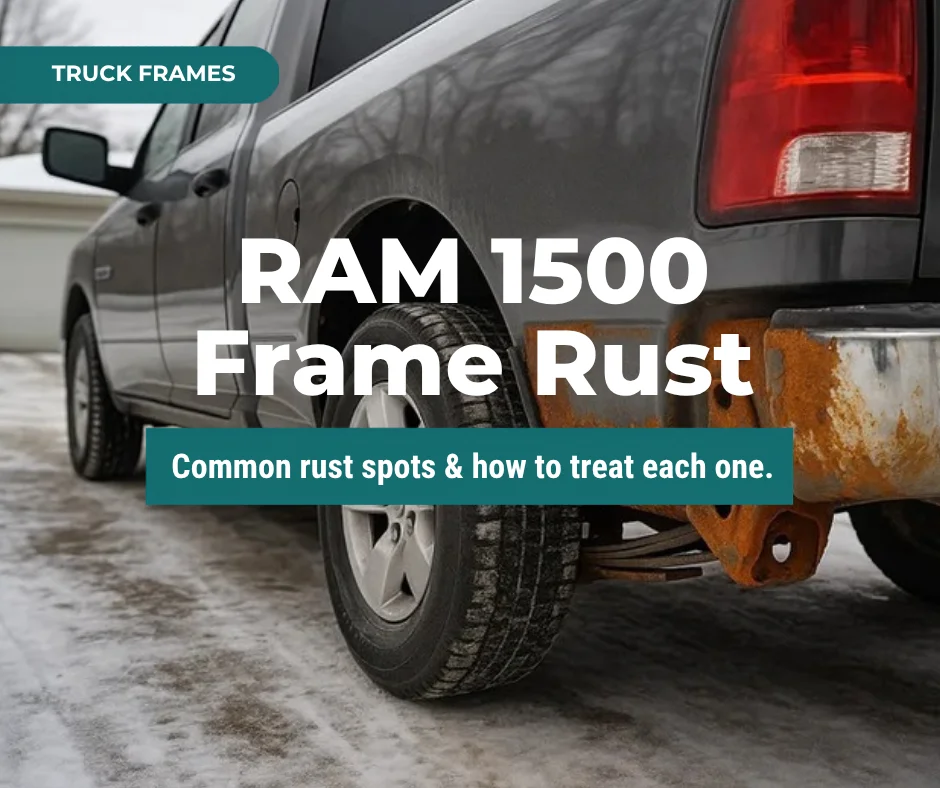
Quick Answer: RAM 1500 frame rust usually starts at the rear spring hangers, crossmembers, and fuel tank straps, then creeps outward. Catch it early, wire brush the loose scale, convert what’s left, and seal the steel with a primer. If a screwdriver pokes through the metal, you’re in patch panel or welding territory.
The Trouble Spots
Where RAM 1500s Actually Rust
Pull a RAM 1500 out of a Michigan driveway in March and the story is right there before you touch a wrench. Salt film on the rocker panels. Orange blooms around the rear wheel arches. A crusty fuel tank strap hanging on like it’s got something to prove.
It isn’t only a northern problem, either. Gulf Coast humidity keeps frames damp most of the year, and a truck that lives near saltwater — a boat ramp regular, say — can rust faster than one plowing through Minnesota winters.
Owners report the same short list of problem areas again and again. On the frame side, think rails near the rear spring hangers, crossmembers, sway bar mounts, and the little brackets for the parking brake cable. On the sheet metal side, it’s cab corners, rocker panels, and the upper lip of the rear wheel arches, where mud packs in and stays wet for weeks. Complaint logs on sites like CarComplaints and CarProblemZoo cluster around the early 2000s trucks and the 2009 model year, although a newer truck parked on the Gulf Coast isn’t exactly safe either.
Why those spots? Because water gets in and can’t get out. Boxed sections, folded seams, and hems all trap moisture, and road salt turns that moisture into a conductive soup. Once a seam starts to swell, it pries the paint open and lets in even more. Corrosion folks call it crevice corrosion, and it’s sneaky because the outside can look fine while the inside quietly eats away.
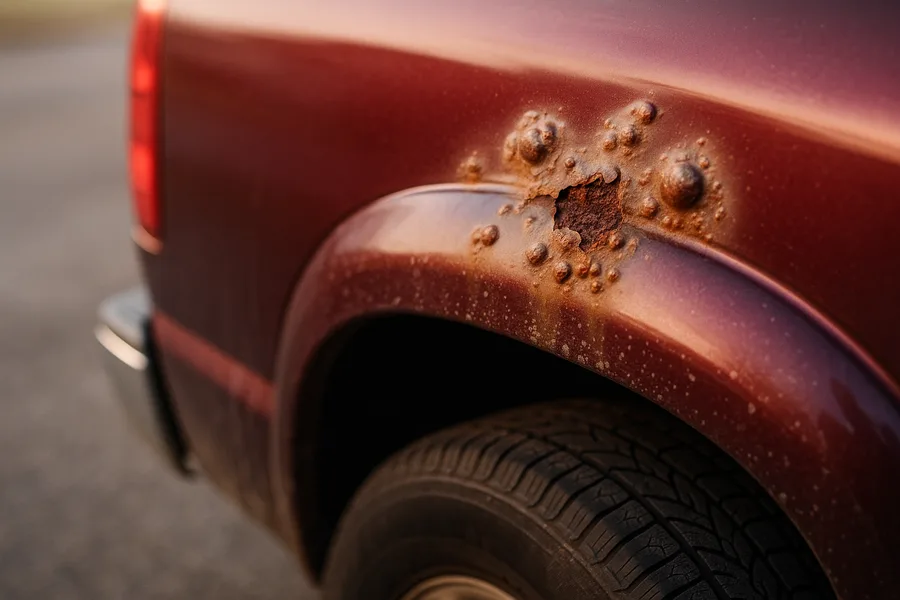
Dodge and Ram 1500 pickups from model years 2009 to 2012 were recalled for fuel tank straps corroding in road salt states, as reported from the NHTSA filing.
Safety First
The Fuel Tank Strap Recall
The recall covered 2009 through 2012 trucks in salt belt states, from Maine and New Jersey across to Minnesota and Montana, plus Washington DC. Dealers inspect the metal straps holding the fuel tank and replace them when they’re corroded. No fires, leaks, or injuries had been reported when the recall went out. Still, eligibility depends on your VIN, so punch yours into the NHTSA recall lookup before spending a dime.
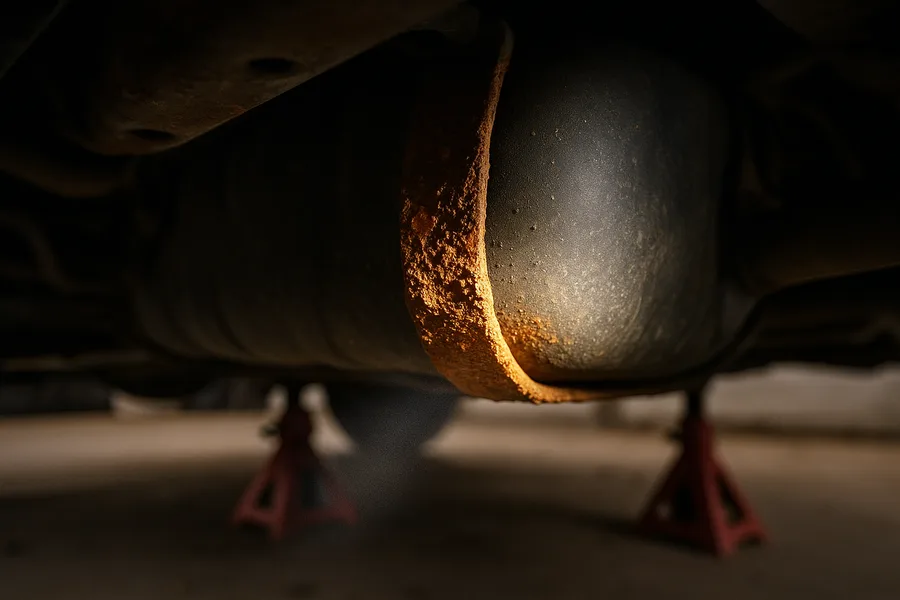
Here’s the part most owners skip. Even outside the recall window, straps on any RAM of that era deserve a flashlight check. A strap thinned down to the thickness of a soda can won’t hold a full tank over a pothole. So replace it. Don’t try to convert it. Rust treatment is for steel with meat left on the bone, and a strap this far gone has none.
The frame itself wasn’t part of that recall, which is a common mix up. The recall fixed straps. It did nothing for the rails, crossmembers, or brackets sitting right next to them.
Know What You’re Fighting
Reading the Frame: Three Stages
Before you buy anything, figure out which stage you’re in. Slide under the truck with a flashlight, a flat screwdriver, and a small hammer. Tap along the rails. A solid ring means healthy steel. A dull thud means something’s hollow or flaking underneath.
| Stage | What It Looks Like | What It Means | Typical Fix |
|---|---|---|---|
| Surface rust | Orange dusting, paint mostly intact | Steel is still full thickness | Wire brush, convert, prime |
| Scale rust | Flaking layers up to about a quarter inch thick | Steel is thinning, moisture is trapped | Chip loose scale, convert, prime, topcoat |
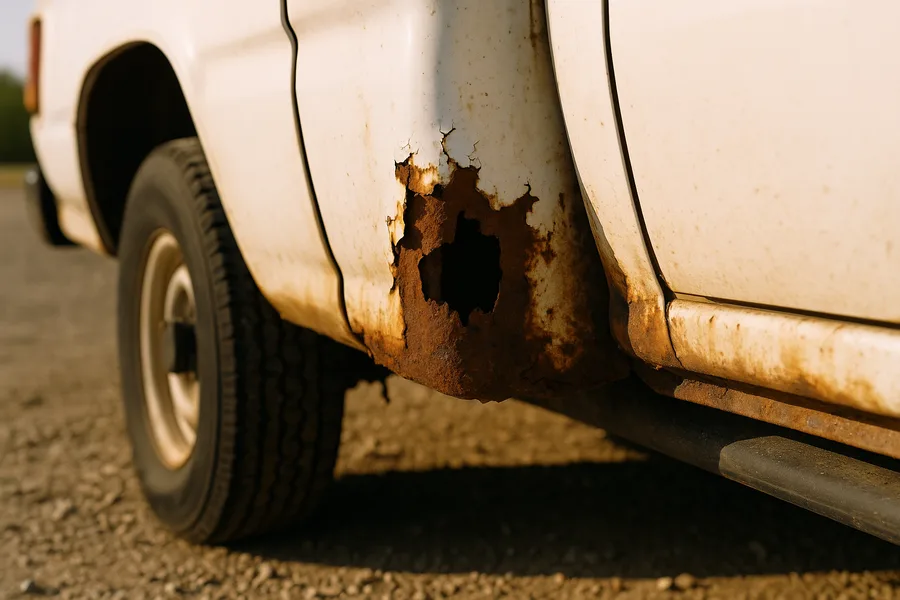
| Penetrating rust | Holes, soft spots, screwdriver goes through | Structure is compromised | Cut and weld, patch panel, or replace the section |
Most trucks fall somewhere between the first two stages, which is good news. Surface and scale rust respond well to chemistry. Penetrating rust doesn’t, no matter what the bottle claims.
If you want a deeper frame walkthrough, our truck frame rust repair guide covers inspection in detail. And fellow half ton owners deal with the same pattern, so the F-150 frame rust and Silverado frame rust breakdowns are worth a skim for comparison.
Cutting vs Coating
Patch Panels vs Treating the Metal
Search for dodge ram 1500 rust repair panels and you’ll find a long menu — cab corners, rocker panels, upper wheel arch patches, floor pans. Aftermarket shops cover many generations, so there’s usually something shaped close to your truck. Panels make sense when the metal is simply gone. They do nothing about rust still alive on the edges around the hole.
| Approach | Best For | Skill Level | Tradeoff |
|---|---|---|---|
| Convert and prime | Surface and scale rust on frames and underbody | Beginner | Can’t replace missing metal |
| Patch panel | Cab corners, rockers, wheel arches with holes | Intermediate | New seams trap moisture if the edges aren’t treated |
| Section replacement | Rotted crossmembers or perforated frame sections | Professional | Highest cost, longest downtime |
Fair warning: a patch panel is only as good as the prep behind it. Weld or bond one over untreated edges and you’ve just built a fresh rust pocket with a shiny lid. Treat the back side. Treat the cut edges. Then seal everything.
The Method
Treating Frame Rust Step by Step
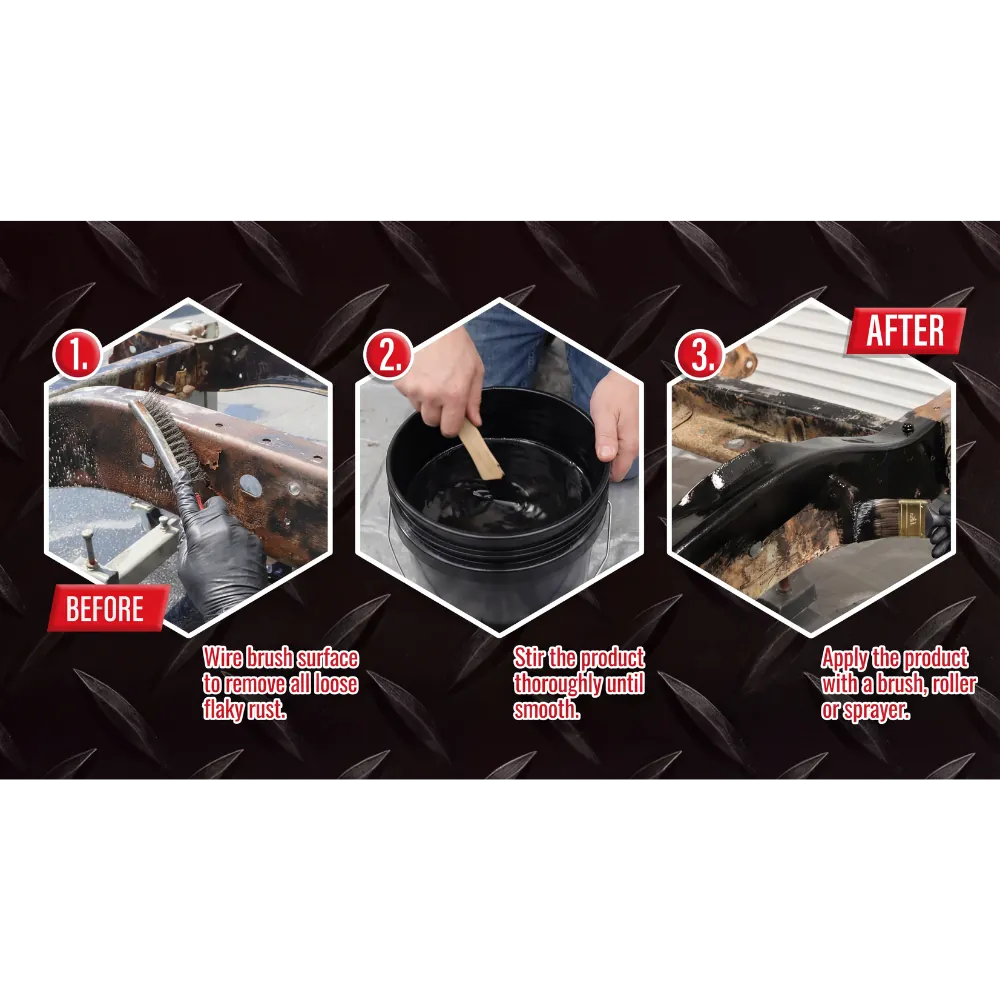
1. Degrease and wash
Road grime and oil block any rust treatment from touching steel. Hit the area with a degreaser, rinse with a pressure washer, and let it dry. In the Pacific Northwest, where everything stays damp, give it a full day. Down in Florida or Texas, a few hours in the sun does it.
2. Knock off the loose stuff
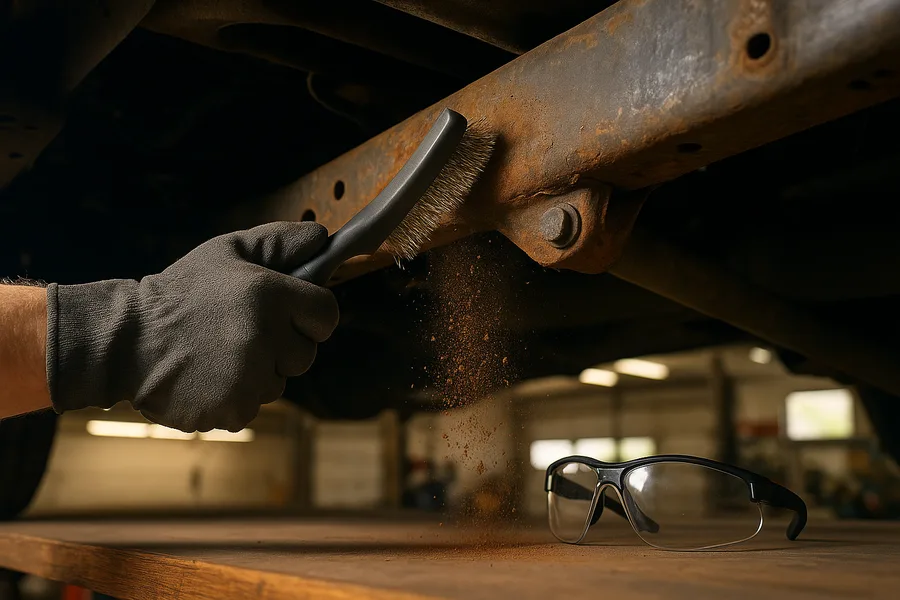
A wire brush handles most surface rust. For scale, bring a chipping hammer or scraper first, then the brush. Goggles on. A dust mask too, because rust dust gets everywhere. You aren’t chasing bare shiny metal here. You’re removing anything loose enough to flake off on its own.
3. Convert what remains
A rust converter reacts with the iron oxide left behind and turns it into a stable, paintable layer. Brush it on in thin, even coats. Don’t flood it. Extra product just pools in the seams and stays tacky. Cure times swing with temperature and humidity, so read the label for your climate.
4. Prime and topcoat
Converted rust still wants a sealing layer, because bare converter film isn’t built for years of salt spray and gravel. A good primer comes next, then a durable chassis paint or undercoating. Wondering whether paint alone could skip the middle steps? Our guide on painting over rusted metal explains why it usually peels, and the piece on stopping rust from spreading covers the early warning signs.
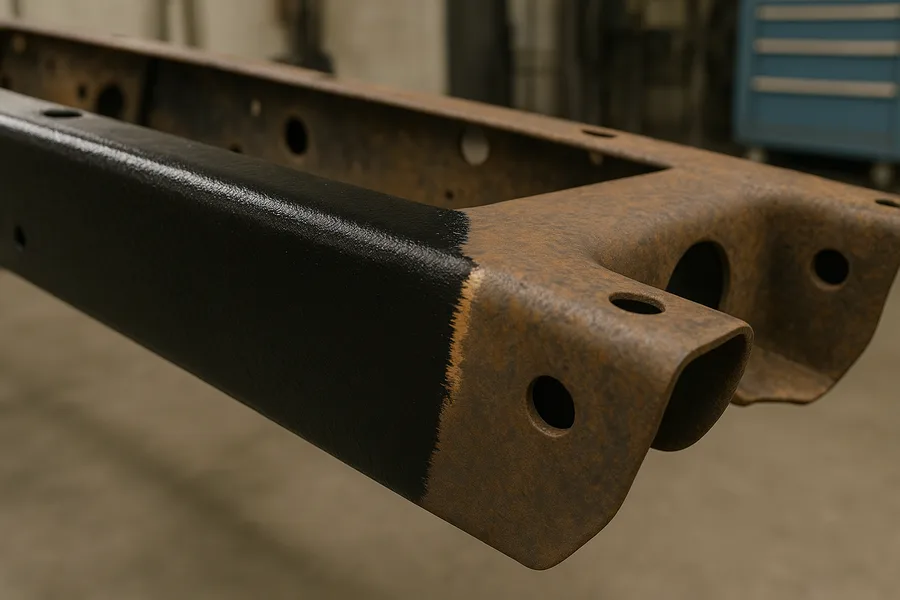
One honest limitation. Chemistry works on the surface, and it only goes so deep. If rust has chewed through the wall of a rail, no coating brings the steel back. Skip that repair and the truck stays unsafe no matter how pretty the black paint looks.
The Long Game
Keeping the Frame Protected
Treatment buys time. Maintenance keeps it. In salt belt states, rinse the underside every couple of weeks through winter, with extra attention to the spring hangers and crossmembers where slush sits. Then inspect twice a year, once in spring after the salt season and once in fall before it starts again.
For the treatment itself, a single product can handle two jobs. The XionLab 2 in 1 Rust Converter and Metal Primer converts surface rust and primes the steel in one coat, which is handy when you’re working upside down on your back and don’t want to juggle three cans. Yet it’s water based, so cleanup stays easy.
Already planning to coat more than the frame? Our underbody rust protection guide walks through the whole undercarriage. And for the science side, the Association for Materials Protection and Performance publishes standards behind most professional coating work, while Corrosionpedia is a solid free reference for terms like galvanic and crevice corrosion.
The Hard Truth
When to Walk Away
Some trucks are past saving at a reasonable price. Frame rails with daylight showing through. Kinked or sagging sections near the rear axle. Cracked welds at spring hangers. A body mount you can twist off with your fingers. Any of these means a shop visit, and possibly a conversation about whether the repair costs more than the truck is worth.
Buying used? Run the screwdriver test on every rail before handing over cash. Sellers rarely volunteer what’s hiding behind fresh undercoating, and thick black spray can mask a rotten frame for a season or two. Tap, poke, and look for flaking at the seams. Ask for the truck on a lift if the seller allows it. A seller who refuses tells you plenty.
Think about timing too. Rust doesn’t wait for a convenient weekend. A frame that shows mild scale in October can look noticeably worse by April after a winter of brine, so a repair done now costs a fraction of one done next spring. And that’s the whole argument for acting early.
Sound grim? It shouldn’t be. Most RAM 1500s in the field are sitting at surface or scale stage, and a weekend of prep plus a quality treatment keeps them there for years.
Quick Answers
Frequently Asked Questions
Do RAM 1500s rust more than other trucks?
Owner complaints do cluster around certain years, but Ford, Chevy, and Toyota trucks have faced rust problems too. Climate and maintenance matter as much as the badge. A salt belt truck rinsed regularly can outlast a neglected one in a mild state.
Is RAM 1500 frame rust covered by a recall?
Not generally. The big recall covered corroding fuel tank straps on 2009 to 2012 trucks in salt belt states, not the frame. Check your VIN on the NHTSA recall lookup, since eligibility depends on the specific truck.
Can I treat frame rust and keep driving the truck?
For surface and scale rust, yes, after proper prep and a full cure. For rust with holes or soft spots in structural steel, no. Get it inspected first.
How much rust is too much on a frame rail?
If a screwdriver goes through the steel or a hammer leaves a dent in the rail wall, it’s too far gone for coatings alone. Flaking scale about a quarter inch thick is still treatable after the loose layers come off.
Are rust repair panels worth buying?
They’re worth it for cab corners, rockers, and wheel arches where metal is missing. Budget for welding or bonding skill, plus rust treatment on every cut edge and the back side of the panel.
How often should I inspect my RAM’s frame?
Twice a year works for most owners. Once in spring after salt season, once in fall before it returns. Coastal and salt belt drivers might add a quick check after any winter road trip.
Treat the Rust Before It Treats Your Frame
One coat converts the rust and primes the metal. Safer for you, safer for the environment.