Rust converter
Ford Super Duty F-250/F-350 Frame Rust Prevention & Repair
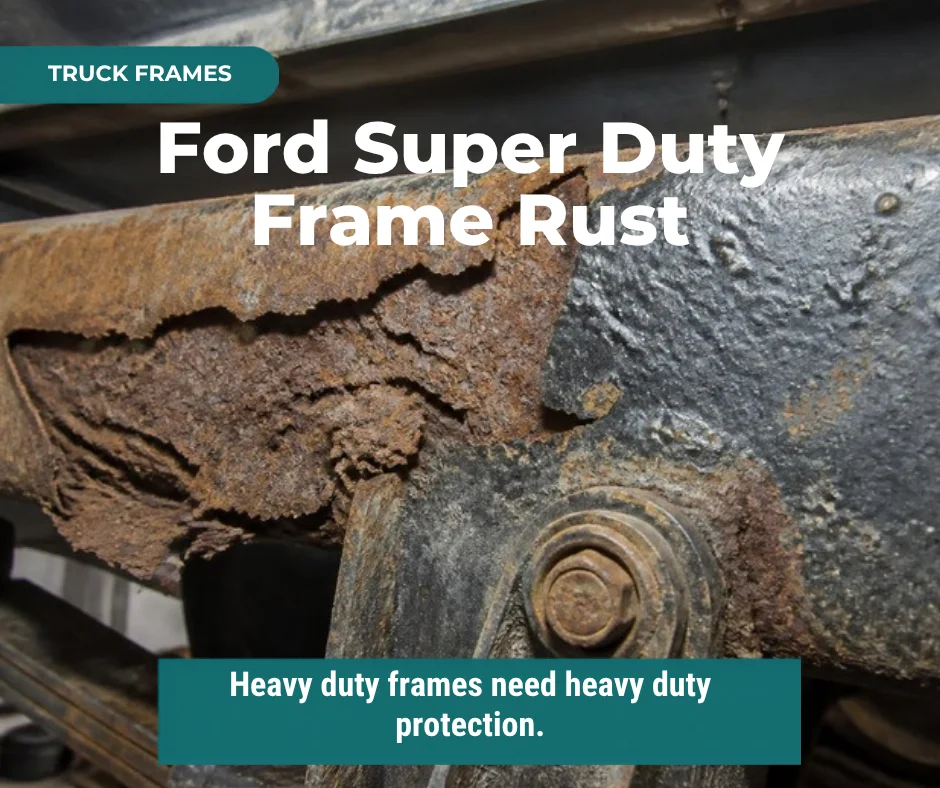
Quick Answer: Super Duty frames rust from the inside out, usually at the rear spring hangers, the crossmembers, and the boxed sections above the axle. Wire brush the loose scale, treat what’s left with a rust converter, then coat the rails and flush the cavities with a wax barrier every fall. Steel you can poke through needs a welder, not paint.
The Root Cause
Why Super Duty Frames Rust From the Inside Out
Nobody buys a three quarter ton truck to baby it. You haul a gooseneck in January, plow through brine slush on the interstate, and park in a driveway where the snow melts under the wheel wells for weeks. Steel doesn’t care about your schedule.
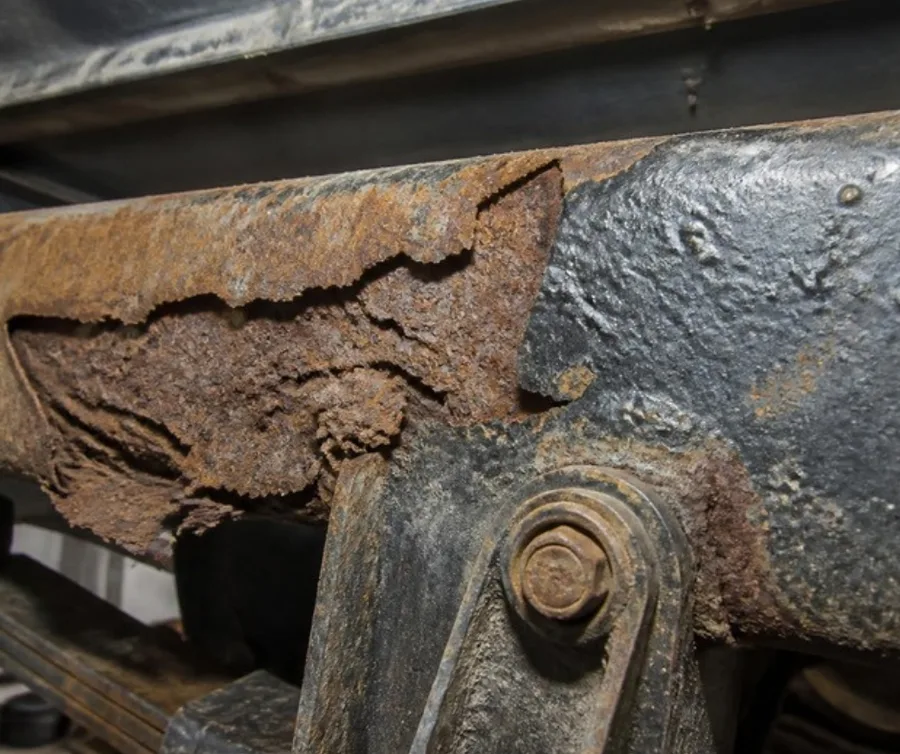
Here’s the sneaky part. A Super Duty ladder frame is built from boxed sections, basically long steel tubes welded to crossmembers. Water and road salt creep in through seams, drain holes, and the gaps around each bracket — then it sits. The outside of the rail can look decent while the inside quietly flakes away, which is why so many owners get ambushed at inspection time.
Salt makes everything worse. Brine conducts electricity far better than plain rainwater, so the tiny corrosion cells on bare steel run faster. Michigan, Ohio, upstate New York, and the rest of the salt belt are brutal. But the Gulf Coast isn’t off the hook, because salt air and 90 percent humidity keep a frame damp nearly year round. And the Pacific Northwest? Constant drizzle does the same job at a slower pace.
Estimated annual global cost of corrosion, roughly 3.4% of world GDP, according to the NACE IMPACT study published through AMPP.
Ford switched to an aluminum body in 2017, and plenty of owners figure the whole truck stopped rusting. Nope. The frame underneath is still steel — and so are the brake lines, fuel tank straps, and mounting brackets. Aluminum up top just means the cab stays pretty while the chassis does the rusting.
Know the Hot Spots
Where Super Duty Frames Rust First
Owner reports and shop experience point to the same handful of spots, over and over. Check these first and you’ll catch most problems before they get expensive.
| Location | Why It Rots | Early Warning Sign |
|---|---|---|
| Rear spring hangers and shackle mounts | Mud and brine pack into the pockets and stay wet | Orange bleed lines below the bracket |
| Rails above the rear axle | Tire spray hits the boxed section head on | Bubbling paint along the weld seam |
| Crossmembers and fuel strap mounts | Flat surfaces collect wet debris | Flaking layers and weeping strap bolts |
| Front track bar and radius arm brackets | Constant flex cracks the coating | Rust streaks on the axle side |
| Cab corners, rockers, and bed edges | Seams hold moisture against thin sheet metal | Paint bubbles and soft edges |
Older trucks versus newer ones
A truck from the early 2000s has been sitting outside through twenty winters, a few hundred thousand miles of salt spray, and countless car wash visits that never touched the frame rails, so the factory coating gave up a long time ago and the steel underneath is basically on its own. If it spent winters in the salt belt, assume some rail rust exists and go find it. Newer trucks hold up better for the first seven or eight years. Gravel chips and hitch work still open the door, though, and rust starts under the paint where you’ll never see it.
The same patterns show up on half ton trucks. Our Ford F150 frame rust guide covers the lighter platform, and the Chevy Silverado frame rust guide shows how the GM side holds up. Different steel, same enemy.
Before You Touch Anything
How to Inspect a Frame Without Fooling Yourself
Grab a flashlight, a small ball peen hammer, and a flat screwdriver. Tap along the rail every few inches. Solid steel rings. Rotten steel thuds.
Look at the inside faces of the rail, the top edge hidden by the bed, and the area around every crossmember. A cheap inspection mirror helps. So does an old chisel for scraping a test patch down to bare metal. Then sort what you find into three buckets.
- Surface rust is orange dust and light staining. The steel underneath still has full thickness. Easy fix.
- Scale rust builds in layers, sometimes about a quarter inch thick, and flakes off in sheets when you hit it. Fixable, but it takes elbow grease.
- Perforation means daylight, soft spots, or a screwdriver tip that sinks right in. This one belongs to a welder.
Run your VIN through the NHTSA recall lookup while you’re at it. Frame rust itself isn’t a recall item, but a 2016 recall covered some 2017 F250 and F350 trucks missing a frame reinforcement bracket at the fuel tank strap. You’d want to know about something like that before crawling under a loaded truck.
Take photos of everything. Mark the worst spots with a paint pen. Next spring, you’ll be able to tell whether the rust moved or stayed put.
The Driveway Fix
Treating Super Duty Frame Rust Step by Step
Budget a full weekend. The work itself isn’t hard, but cure times will eat your Saturday and Sunday. For general prep on any pickup, our truck frame rust repair guide goes deeper on tools and sequencing.
Start by cleaning and drying the rails
Pressure wash the rails to blast off mud and salt, then let everything dry completely. A leaf blower speeds this up. Dry means dry. Moisture trapped under a coating is how repairs fail by spring.
Take off the loose scale
Chip the heavy flakes with a scraper or chisel, then work the area with a cup wire wheel on an angle grinder. Wear a respirator, eye protection, and long sleeves, because rust dust and old undercoating dust are nasty stuff. The coatings industry calls this power tool cleaning, and Corrosionpedia has a decent primer on how oxide layers form and why loose ones have to go.
You aren’t chasing bare shiny steel. Pitted areas will keep some oxide in the bottoms, and the wire wheel can’t reach it. Leave that for the next stage.
Convert what’s left
A rust converter reacts with the remaining iron oxide and turns it into a stable, dark layer you can coat over. Brush on two thin coats, roughly 4 to 6 mils wet in total, about the thickness of a business card. Thicker doesn’t penetrate better. It just stays tacky. Give it a full day before moving on, longer in cold or damp weather.
The tradeoff is simple. Converters want a dry, oil free surface, so wipe greasy spots with solvent first, and no converter works through heavy undercoating.
Topcoat the frame
Once cured, cover the converted steel with a tough chassis paint or a quality rust inhibiting coating. Not sure if converting or sealing fits your frame? Our rust converter versus encapsulator breakdown lays out when each one makes sense. Oh, and wait for a dry week, because rain on a fresh topcoat is a headache nobody needs.
Long Term Protection
Keeping the Frame Protected Year After Year
Fixing a frame once is satisfying. Keeping it fixed is where most owners slip. The factory coating won’t do it for you, and a single treatment won’t last forever.
| Coating Type | Strengths | Watch Out For |
|---|---|---|
| Wax or paraffin spray | Creeps into seams and boxed sections | Plan on annual touch ups |
| Oil or lanolin film | Easy to apply with a wand and stays flexible | Drips, collects dirt, needs frequent reapplication |
| Hard chassis paint | Tough and long lasting over treated steel | Chips let moisture creep underneath |
| Rubberized undercoating | Thick layer that also quiets road noise | Traps water if sprayed over damp or rusty steel |
The best habit is a boring one. Rinse the underside after every salty drive, flush the rail cavities with a low pressure wand, and clear the factory drain holes with a pick so they don’t clog. Every fall, before the first brine truck rolls out, spray the inside of the rails with a wax based product through the existing access points.
Want the full playbook for the rest of the chassis? The underbody rust protection guide covers floor pans, suspension parts, and lines. And if a fresh orange patch shows up between yearly sprays, read how to stop rust from spreading before it gets a foothold.
Honest Limits
When Repair Isn’t Enough
Fair warning. Chemistry can’t rebuild steel that’s gone. If a screwdriver punches through the rail, if cracks start at a spring hanger, or if the metal near a crossmember flexes when you push on it, you’re past the point where coatings help.
A truck pulling a fifth wheel puts real load through the rear crossmember and the hanger mounts, and since a weak spot there can let a trailer shift or a rail fold under hard braking, it stops being a cosmetic worry and becomes a safety problem you can’t talk yourself out of. A certified welder can add reinforcing plates or replace damaged sections, and plenty of shops will quote the job after a quick look. Get the quote before you buy more spray cans.
Inspectors in a number of states can fail a truck for a perforated frame, so check your local rules. Resale value takes a hit when a buyer finds flaking rails, too. Documented treatment tells a different story, one where the owner cared.
Rule of thumb. Surface and scale rust are yours to treat. Perforation or cracking is a job for a welder.
Quick Answers
Frequently Asked Questions
Do Super Duty trucks really have frame rust problems?
Trucks driven in the salt belt or along the coast often do, especially older ones. The boxed frame traps moisture and salt inside the rails, so damage can build quietly. Regular inspection catches it early.
Can I use a rust converter on a Super Duty frame?
Yes, on surface and scale rust once the loose flakes are gone. It won’t repair holes, and it needs a dry, clean surface to react properly. Topcoat it afterward.
How often should I spray the inside of the frame rails?
Once a year, ideally in early fall before road salt goes down. Trucks in harsh areas may benefit from a midwinter touch up.
Is it safe to weld on a rusty truck frame?
Only after the rust is cut back to solid steel, and only by someone who knows frame work. Welding onto thin, rotten metal just burns more holes, and a bad repair can weaken the rail.
Does rubberized undercoating stop frame rust?
Not by itself. Over clean, treated steel it can help. Over damp or rusty metal it traps moisture and speeds up damage. Many owners prefer wax or oil films for the inside of boxed rails.
How long will a DIY frame rust repair last?
A well prepped job with a good topcoat can hold up for several years, as long as you keep up with yearly barrier sprays and fix chips quickly. Harsh climates shorten that window.
Keep Learning About Rust Protection
Browse our library of practical guides on treating, preventing, and protecting metal from corrosion.