Rust converter
Chevy Silverado Frame Rust: Repair Guide, Recall History & Prevention
Quick Answer: Silverado frame rust shows up most on 1999 through 2007 trucks and again on 2011 through 2015 models, usually starting where a factory wax coating peeled during shipping. GM addressed it with Technical Service Bulletin 19-NA-255 rather than a formal recall, so owners largely handle it themselves. Catch it at the surface stage and a converter plus a protective topcoat can hold the line for a fraction of what a frame replacement costs.
The Root Cause
Why Silverado Frames Rust in the First Place
Here’s the part most owners never hear from their dealer. A truck frame doesn’t rust because GM used bad steel. It rusts because the wax based coating meant to seal the steel sometimes never bonded right to begin with. A third party supplier prepped the metal incorrectly before spraying it, and the wax peeled away in sheets during shipping and early driving. Bare steel does the rest on its own.
Once the coating is gone, road salt, humidity, and plain old rain have a direct line to raw metal. Boxed frame rails trap moisture inside their own structure. Water gets in through drain holes, welds, and body mounts, then it just sits there. It can’t evaporate the way it would off an open surface, so a frame can look fine from the driveway while rotting from the inside.
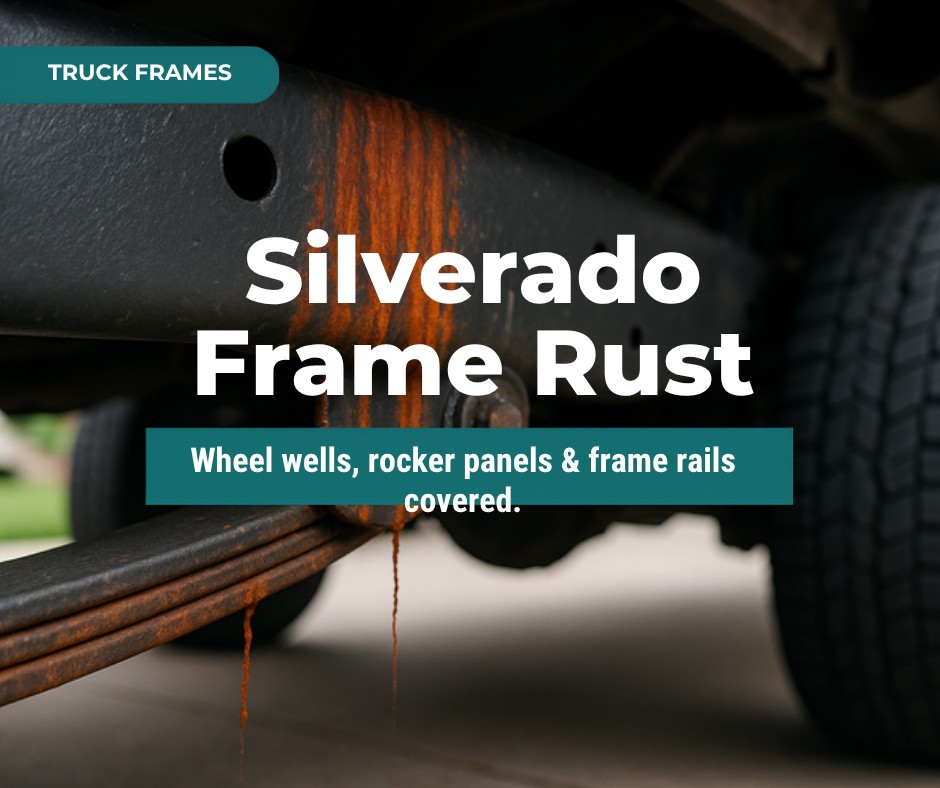
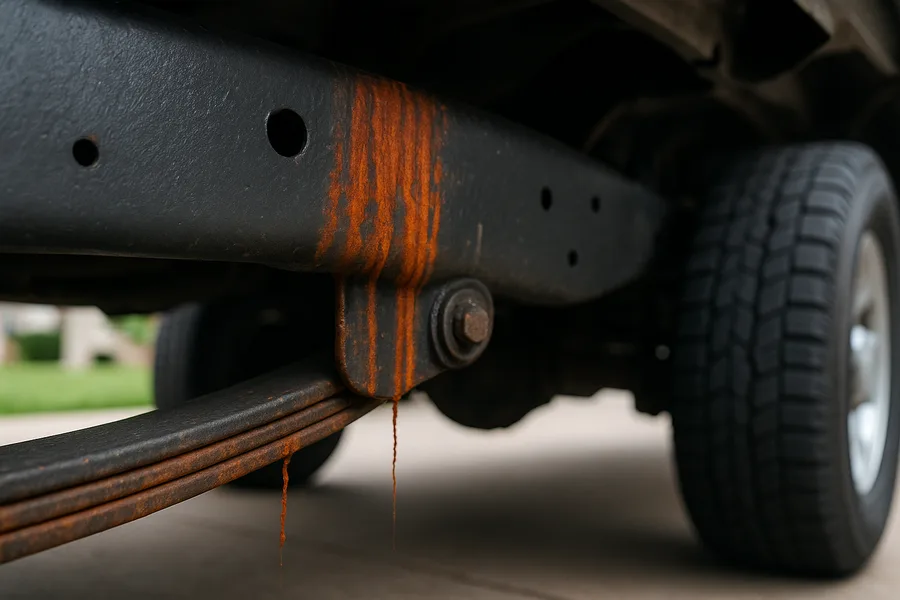
Where does it hit first? Rear leaf spring hangers, the area around the rear axle, and the crossmembers under the cab tend to go first, especially on trucks running heavy winter roads. If you’ve ever seen a Silverado up on a lift with rust bleeding down the rail in long orange streaks, that’s usually the frame telling you the coating failed years before anyone noticed. Ford and Toyota trucks aren’t immune either — our F-150 frame rust guide and Tacoma frame rust recall breakdown cover the same fight on other platforms.
Model Year Breakdown
Which Model Years Get Hit Hardest
Owner complaints cluster around two distinct eras. The first runs from roughly 1999 through 2007, the GMT800 generation, where forum threads describe frames “completely rusted out” on trucks parked for years across the northern states. The second cluster is 2011 through 2015, tied directly to the wax adhesion problem GM later acknowledged.
Mileage is the surprising part. This isn’t a 200,000 mile, worn out truck problem. Complaint data shows rust appearing under 36,000 miles on some 2011 through 2015 trucks, and one owner reported visible frame rust on a garage kept 2013 model at just 9,000 to 16,000 miles. This is a truck barely out of its first oil change window, already showing corrosion a ten year old vehicle shouldn’t have.
So is every Silverado from these years doomed? No. Plenty of trucks from the same build years show nothing more than light surface staining. Climate, road salt exposure, and whether the truck sat on a dealer lot near the coast all play a role. But if your truck falls in either window, it’s worth a look underneath sooner rather than later. The distinction between surface rust and the deeper scale and penetrating stages matters here — Corrosionpedia’s breakdown of rust stages is a decent primer if you want the underlying chemistry.
Frame rust complaints logged against the Silverado 1500 in federal complaint databases, spanning model years from the late 1990s through the mid 2010s.
Recall Status
Is There Actually a Recall?
Short answer? No, not a formal one. What exists instead is Technical Service Bulletin 19-NA-255, updated in March 2024, which tells dealers how to handle frame wax failure when a customer brings a truck in. GM traced the root cause to a third party frame supplier and metal that wasn’t properly prepped before the wax went on.
Under the TSB, a dealer inspects the frame, strips remaining wax and any surface rust, then reapplies a protective coating. If the technician finds the rust has gone past surface level and compromised structural integrity, the affected section gets replaced instead of just recoated. You can look up open bulletins and any related investigations through NHTSA’s recall and complaint database, which is worth bookmarking if you own one of these trucks.
Here’s the honest limitation, though. A TSB isn’t a recall. Dealers aren’t required to proactively contact owners about it the way they would for a true safety recall, and coverage often comes down to whether your truck is still inside its corrosion warranty window. Outside it, you’re paying out of pocket, or you’re doing the work yourself.
Spotting Trouble Early
Warning Signs You’re Losing the Fight
What does frame rust actually look like before it becomes a five figure problem? A few things to check next time the truck’s on ramps or a lift.
- Orange streaking below the rail: Water is draining out through a rust hole higher up and staining the paint on its way down.
- Flaking or bubbling wax coating: The original factory coat should be smooth and matte black. Bubbles or peeling mean moisture is already underneath it.
- Soft spots when you tap with a hammer: A solid frame rings. A rusted one gives a dull thud, sometimes with flakes falling away.
- Rust colored dust in wheel wells: Scale rust flaking off the frame collects in low spots and on brake components nearby.
- Visible holes near the rear leaf spring hangers: This is one of the first places boxed rail sections give out, and it’s a safety issue, not cosmetic.
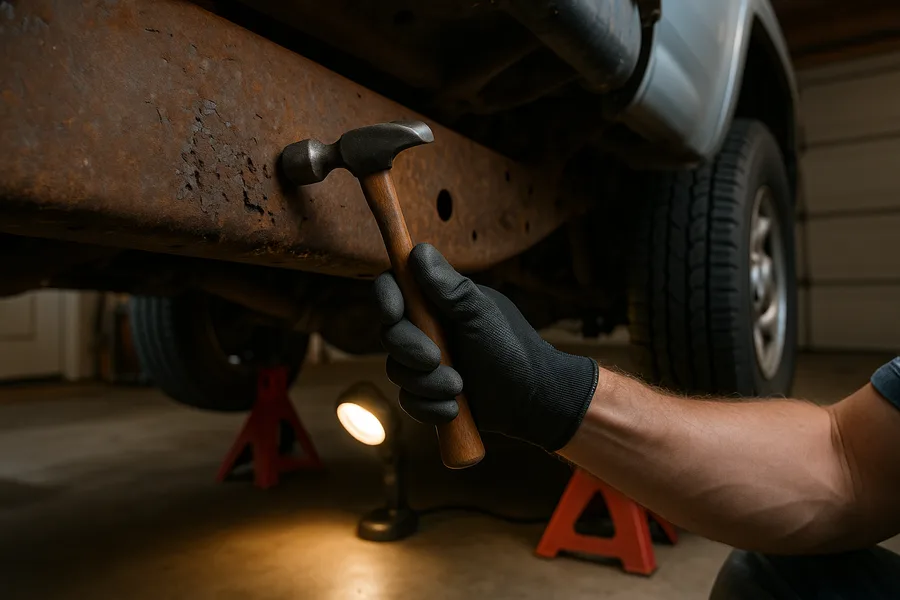
Fair warning, a hammer test tells you a lot, but it won’t catch everything. Rust hiding inside a boxed rail can be further along than the outside suggests. If you’re not confident reading what you’re looking at, a shop with a lift and a flashlight beats guessing.
The DIY Route
Treating Frame Rust Yourself, Step by Step
Most surface and moderate scale rust on a Silverado frame is very treatable in a driveway or garage over a weekend. You don’t need a body shop for this. Here’s roughly how it goes.
1. Get the truck up and get it clean
Jack stands, not just a jack. You need real clearance to work along the full length of the rail. Once it’s up, blast the frame with a pressure washer or degreaser to strip years of road grime, oil, and loose debris. You can’t treat rust you can’t see.
2. Knock off loose scale
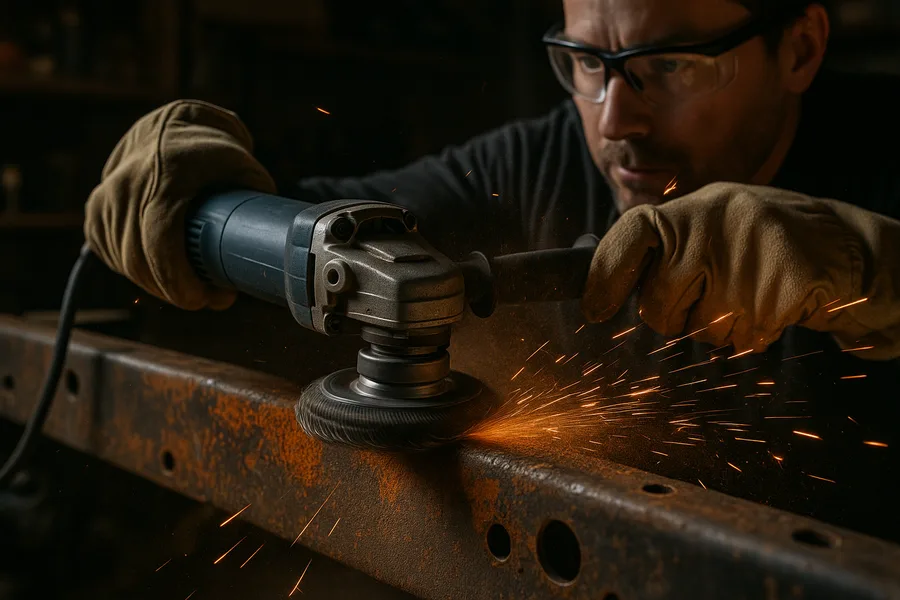
A wire wheel on a drill or angle grinder handles this fast. You’re not trying to get back to bright shiny steel, which isn’t realistic on a frame or necessary. You’re removing the loose, flaking layer so a converter has clean rust to bond to underneath.
3. Apply a rust converter
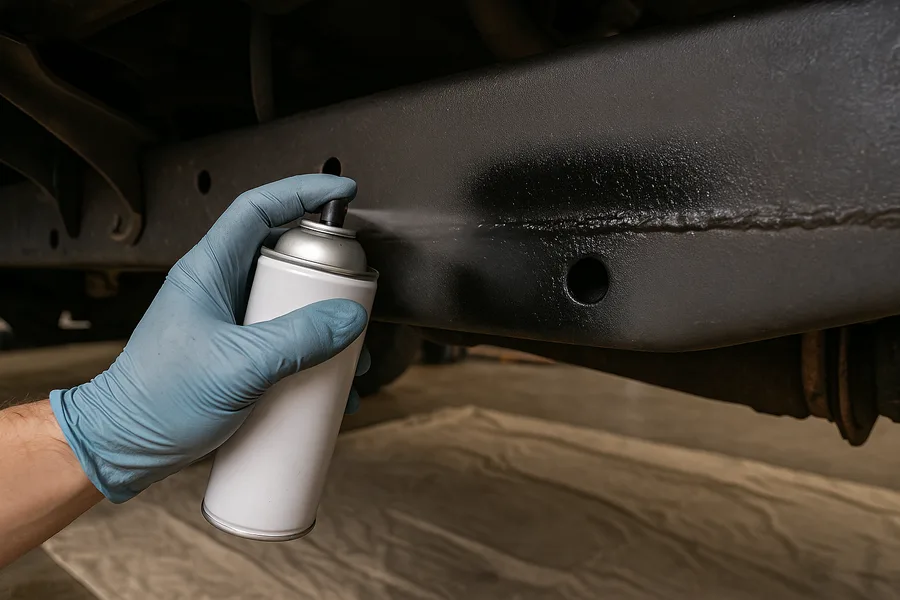
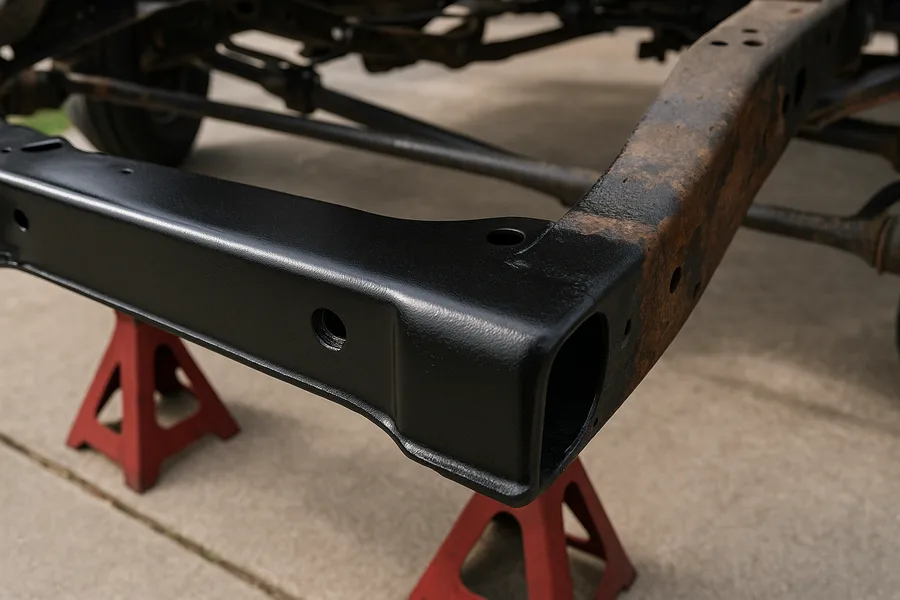
Brush or spray a converter across the treated area, working it into pits and seams where scale used to sit. The chemistry turns reddish iron oxide into a stable, dark, paintable surface. Give it the full cure window on the label before moving to the next step. Rushing this part is the single most common reason people redo the job a year later.
4. Prime and topcoat
Once cured, a rust converter doubling as primer is ready for a topcoat. If yours doesn’t, apply a compatible primer first. Then finish with a flexible, chip resistant paint or undercoating rated for chassis use — the frame flexes over bumps, and a brittle finish will crack right along with any tiny movement.
5. Seal the seams
Drain holes, weld seams, and body mount points are where water gets back in. A rubberized undercoating or seam sealer over these spots does more for long term protection than another coat of paint ever will.
Money Talk
What You’ll Actually Spend
Cost is where the DIY argument really wins, assuming the rust hasn’t gone structural yet.
| Approach | Typical Cost | Time Required | Best For |
|---|---|---|---|
| DIY converter treatment | $40 to $120 | A weekend | Surface and moderate scale rust |
| Dealer TSB recoat | Often covered, or $300 to $600 out of warranty | 1 to 2 days | Trucks still under corrosion coverage |
| Independent shop sandblast and coat | $500 to $1,200 | 2 to 4 days | Heavier rust across multiple sections |
| Frame section replacement | $3,000 to $4,000+ | 1 to 2 weeks | Rust through, compromised structural rails |
That last row should motivate early action. A $60 bottle of converter and an afternoon on jack stands is a lot cheaper than a shop quote with four figures on it. The tradeoff, obviously, is your own time and a willingness to get dirty. Not everyone wants that hassle, and it’s a fair call. But for a lot of Silverado owners, it’s the difference between fixing this now or financing a frame swap later.
Long Term Protection
Keeping It From Coming Back
Treating existing rust only solves half the problem. So what keeps it from creeping back in next winter?
Wash the undercarriage regularly through fall and winter if you’re anywhere in the salt belt, Midwest, Northeast, or up into the Great Lakes region. A garden hose aimed up under the frame rails after a slushy drive does more good than people give it credit for. Salt sitting on metal for weeks between washes is what does the real damage, not one snowy commute.
Reapply a fresh coat of rust inhibiting spray or wax based undercoating once a year, ideally before winter sets in. Products built for chassis use penetrate seams better than a spray can from the hardware store, and they stay flexible instead of cracking off in cold weather. And don’t ignore small chips in the coating just because they look minor. Right there is exactly where the next failure starts. Industry corrosion standards from groups like AMPP exist for a reason — coating breaches, even tiny ones, are where every corrosion cell begins.
Check the frame every time you’re under the truck for an oil change. It takes two minutes with a flashlight and it catches problems while they’re still a $60 fix instead of a $3,000 one. For a broader walkthrough of protecting everything below the cab, our underbody rust protection guide covers the rest of the undercarriage in more depth, and our general truck frame rust repair guide walks through the same process for any make.
Common Questions
Frequently Asked Questions
Is Chevy Silverado frame rust covered under warranty?
It can be, but only if your truck is still inside its corrosion perforation warranty, which GM typically sets at six years with no mileage limit for rust through conditions. Surface rust and coating failure outside it generally fall on the owner.
What years of Silverado have the worst frame rust problems?
Complaint data points to two clusters — 1999 through 2007 trucks, and 2011 through 2015 trucks tied to a factory wax adhesion issue GM addressed through a technical service bulletin rather than a recall.
Can you drive a truck with a rusted frame?
Surface and moderate scale rust generally don’t affect safety and are fine to drive on while you plan a treatment. Rust eaten through a load bearing section is a different story and should get inspected by a professional before you put more miles on it.
Does a rust converter actually work on a truck frame?
Yes, for surface and moderate scale rust. It chemically converts the oxide into a stable compound rather than just covering it up, which is why it holds up longer than paint alone over untreated rust.
How much does it cost to fix Silverado frame rust yourself?
Most driveway jobs run between $40 and $120 for a wire wheel attachment, a bottle of rust converter, and a can of chassis rated undercoating, depending on how many sections of frame you’re covering.
How do I know if my frame rust has gone structural?
A hammer tap test is a decent first check — solid steel rings, rusted steel thuds or flakes. Visible holes, soft spots you can push a screwdriver through, or rust bleeding from inside a boxed rail all mean it’s time for a professional look before you rely on it.
Want More Guides Like This?
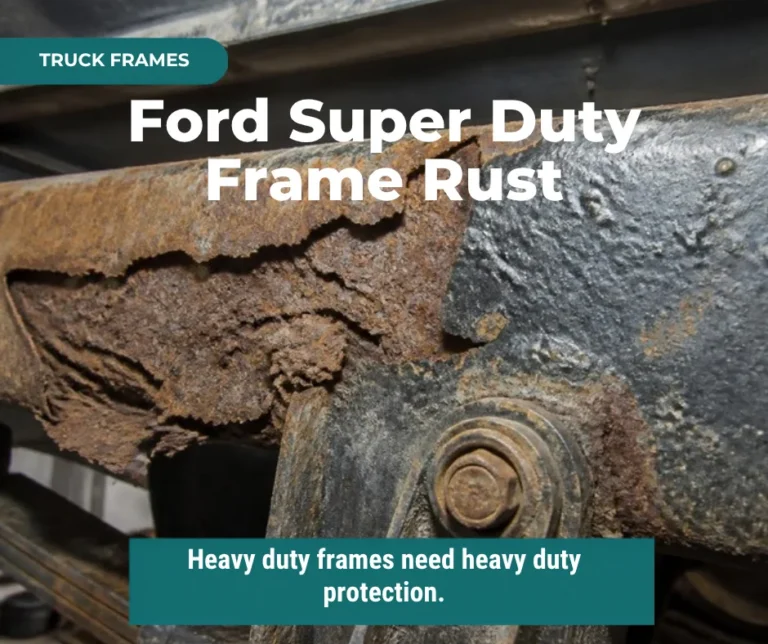
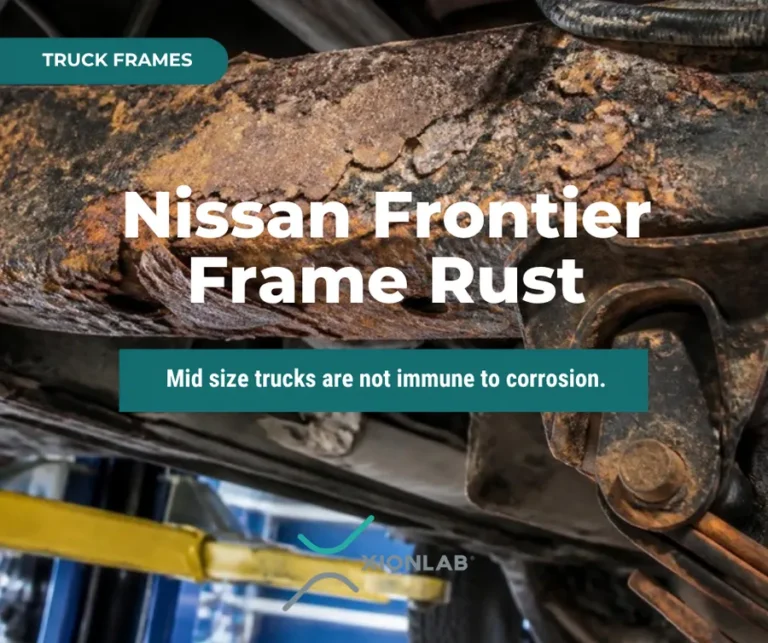
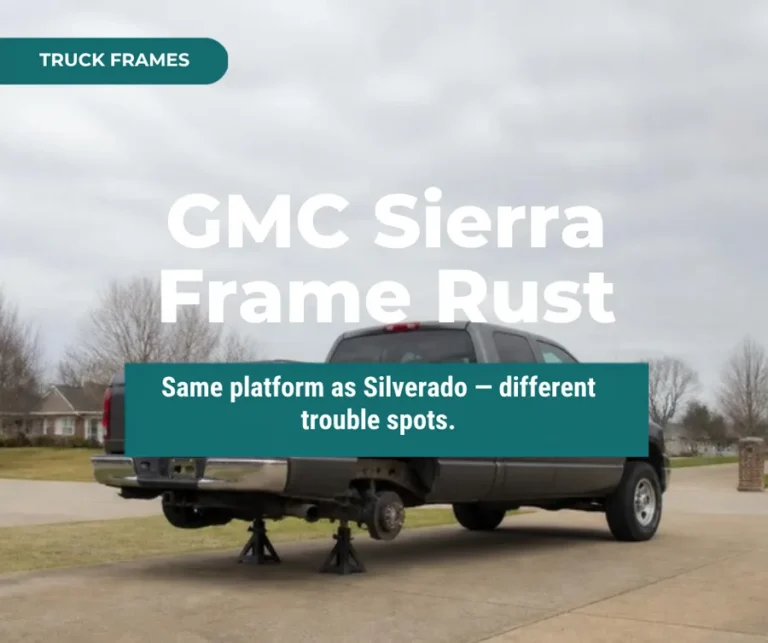
See how the same fight plays out on Ford and Toyota trucks, or browse every stage of treatment from surface staining to structural repair.
Free how to guides on rust treatment, prevention, and metal restoration.