Rust converter
Underbody Rust Protection: The Complete Undercarriage Guide
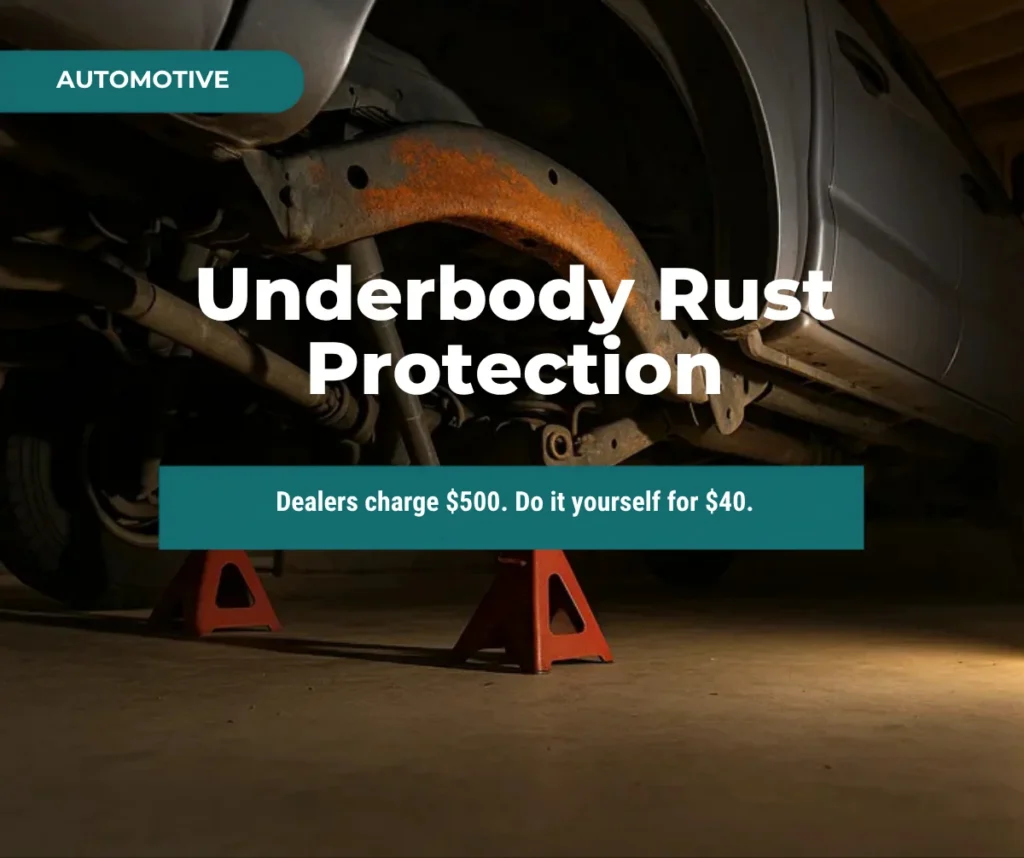
Quick answer: Underbody rust protection means sealing the bare steel under your vehicle away from road salt and standing moisture. Three parts to it. Clean the metal, convert any rust already sitting there, then seal with a coating matched to your climate. A driveway job runs $40 to $90 in materials. Shops quote $300 to $800 for the same weekend.
The Problem
Why the Underbody Rusts First
Every drop of water your tires throw has to land somewhere. Most of it lands directly underneath you.
The underbody wears thinner paint than any visible panel, and across wide stretches it wears none at all. Seam welds, the inside faces of frame rails, pinch welds running the length of a rocker, the lip where a floor pan meets a crossmember — bare or nearly bare steel straight from the factory, because no robot ever sprayed color where no customer will ever look. Add one winter of brine and the arithmetic turns ugly.
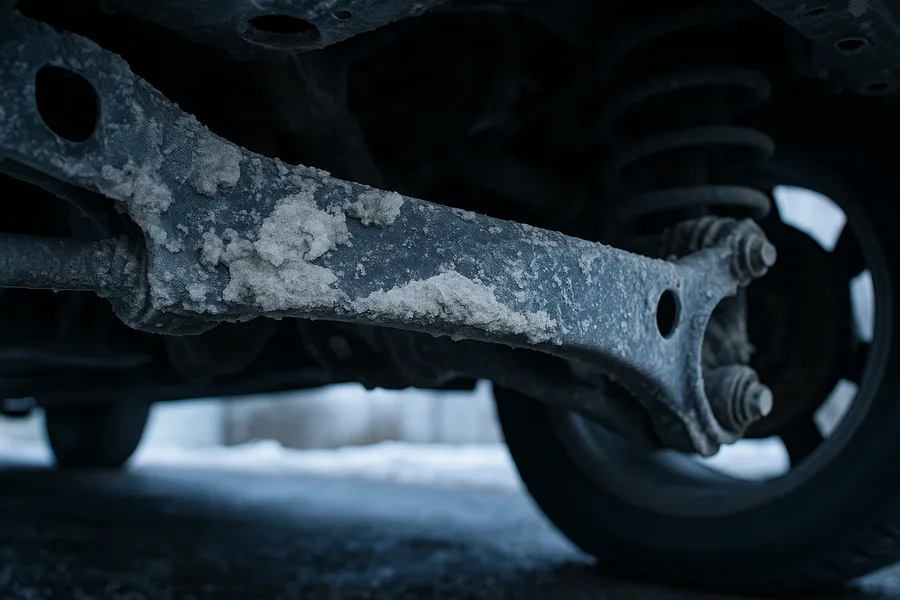
Salt does something nastier than simply getting metal wet. Chloride attracts water out of humid air and pins it against steel long after the pavement dried. So a film of brine on a rear frame rail keeps eating at 22 degrees in February and keeps eating through a muggy August afternoon. The wetting barely stops.
Average cost of a single salt related rust repair, according to AAA research on road deicers. Across five years, U.S. drivers paid an estimated $15.4 billion.
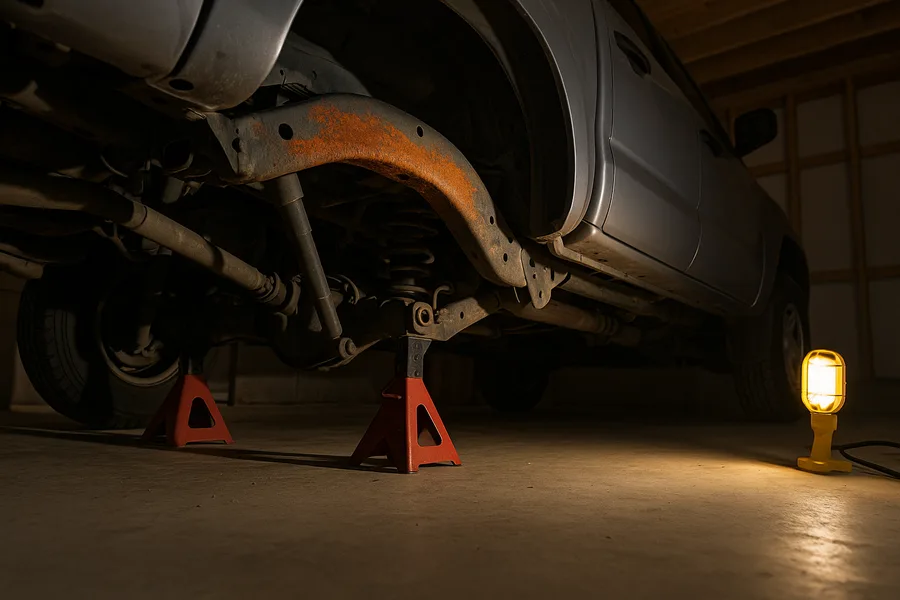
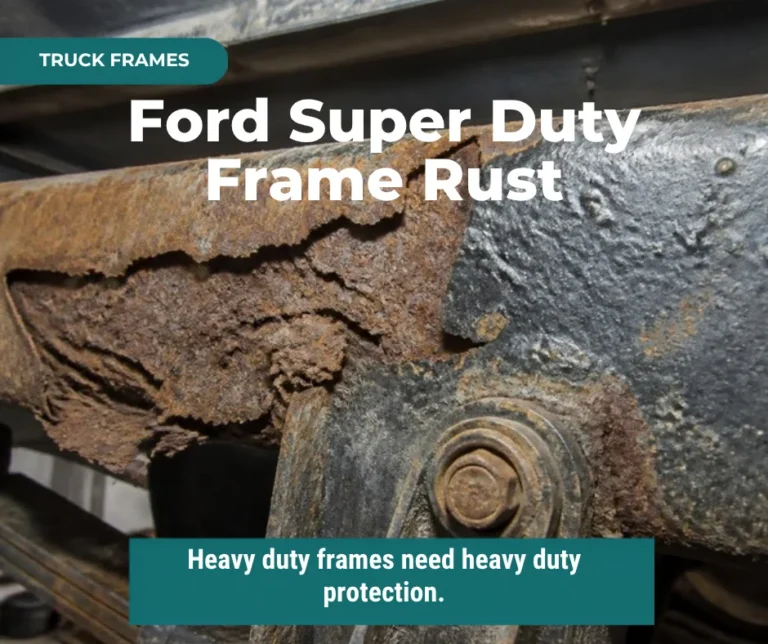
Heat cycling closes the trap. Exhaust warmth drives humid air deep into seams, metal cools overnight, and condensation forms where no rinse will ever reach. Corrosion then grows from the inside of a rail outward. Which explains the truck frames failing inspection every spring while looking perfectly respectable under a flashlight.
And debris makes the whole thing permanent. Pine needles, maple keys, road grit and sand pack into rail channels and behave like a wet sponge bolted to your structure. Kick the rocker on any ten year old commuter in Cleveland. Something falls out.
Inspection
What to Look For Underneath
Ramps or jack stands, a bright light, one blunt screwdriver. Whole toolkit.
Start at the back, because rear rails collect more salt than anything else on the vehicle. Rear tires fling spray straight upward into them, and nobody ever looks there. Work forward from that point through spring perches, shock mounts, the seam joining rocker to floor pan, seat mount reinforcements, the little brackets clamping brake and fuel lines, and the cups where subframe bushings sit.
Tap Before You Trust Your Eyes
Sound carries more information than sight does down here. Solid steel rings. Corroded steel thuds. Steel with nothing left behind it answers like a knock on a cardboard box, and once you have heard the difference a single time you will never mistake it again.
Poke anything suspicious — firm pressure, not a stab. A tip sinking in means penetrating rust, and no coating on earth repairs a hole. Our guide to the four stage rust scale walks through where each stage stops responding to chemistry and starts demanding a welder.
Fair warning: brake lines and fuel lines fall outside this job entirely. A corroded brake line is a failure waiting for the worst possible moment, and scaling on a line means replacement rather than paint. Coating a line hides the problem instead of fixing it.
Your Options
Five Coating Types, Compared
Five families of underbody coating compete for your money, and they disagree with each other about what protection even means. Some seal. Some creep. One family deliberately refuses to fully harden, and the reasoning behind that is better than it sounds.
| Coating Type | Typical Lifespan | DIY Cost | Best For | Main Drawback |
|---|---|---|---|---|
| Oil or lanolin | 12 to 18 months | $35 to $70 | Salt belt daily drivers | Drips for a week, annual reapplication |
| Wax or paraffin | 2 to 4 years | $50 to $110 | Mixed climates, moderate salt | Softens near hot exhaust routing |
| Rubberized | 3 to 6 years | $40 to $90 | Gravel roads, road noise | Cracks with age, traps water beneath |
| Asphalt based | 4 to 8 years | $45 to $100 | Work trucks, heavy debris | Almost impossible to inspect under |
| Polyurethane or ceramic | 6 to 10 years | $120 to $300 | Restorations, clean bare steel | Demands near perfect surface prep |
The Creeping Coatings
Oil and lanolin products never cure. They stay soft on purpose, migrating slowly into seams and pinch welds and the inside of box sections over the following weeks, chasing the exact voids a spray gun can never reach. Nothing else self heals a stone chip. Nothing else keeps working after a rock strike.
Yet the tradeoff is real. Your driveway collects drips for about a week, gravel sticks to the film all summer, and the whole treatment wants redoing every autumn. Farmers and rural mail carriers across Minnesota have run lanolin for decades anyway, because the frames survive.
The Barrier Coatings
Rubberized and asphalt products go the opposite direction. They build a thick hard shell, quiet the cabin noticeably, and shrug off gravel. Excellent protection — right up until the shell cracks.
Then water wicks into the crack, sits between coating and steel, and rusts in the dark with a waterproof lid over it. Barrier coatings over clean dry metal perform beautifully for years. Over damp or dirty metal they accelerate exactly the damage they were bought to prevent.
Application
The Weekend Job, Start to Finish
Clean It, Then Clean It Again
Pressure wash everything, working from the rear forward, paying attention to rail openings and the ledges above the axle. Let it dry completely. Not mostly. Completely, which in practice means a warm day plus several hours, or a fan pointed underneath overnight.
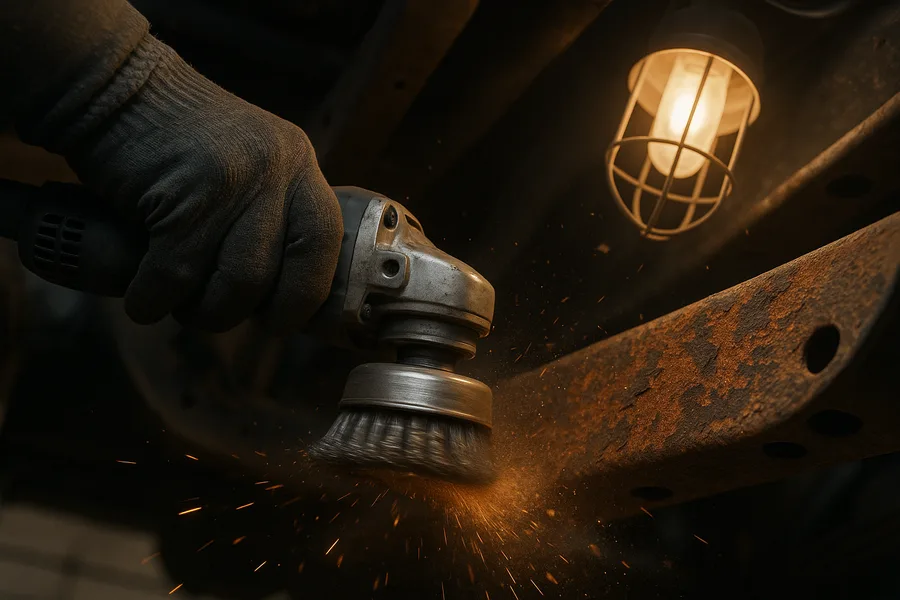
Loose scale comes off next with a wire wheel, a needle scaler or a stiff hand brush. You want the flaking gone, not the metal polished. Our notes on surface preparation for rust treatment cover how far to take this on pitted steel.
Convert What Is Already Rusted
Remaining rust gets treated before anything seals over it. A converter reacts with iron oxide and turns the orange layer into a stable dark film a coating can grip. Skip this and you are sealing active corrosion under a lid. Brush it into pits, give it the full cure window on the label, and resist the urge to rush a humid day. The chemistry behind how a converter actually works is worth ten minutes if you have never used one.
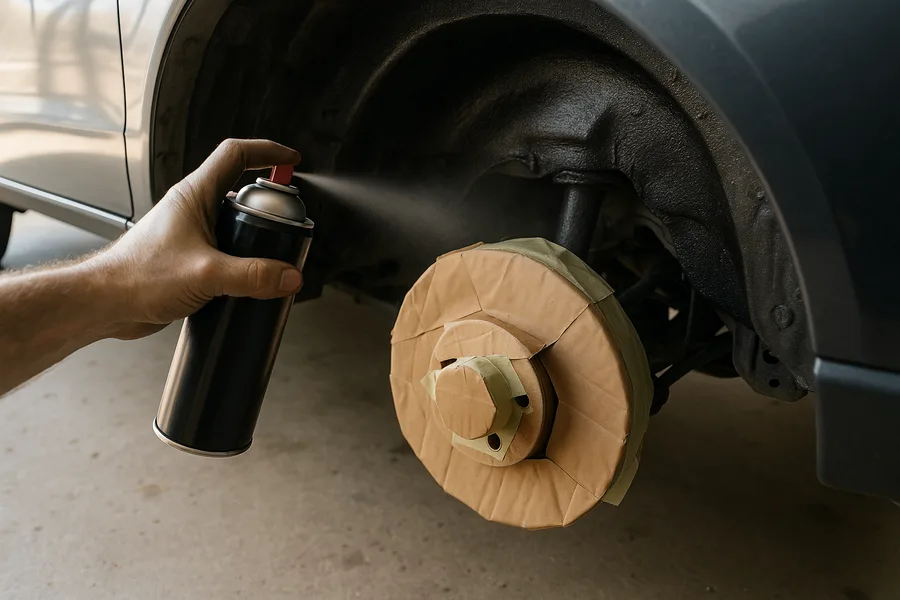
Mask What Should Never Be Sprayed
Plenty of hardware under there must stay bare. Exhaust components, catalytic converter shielding, oxygen sensors, driveshaft and U joints, brake rotors and calipers, every drain hole along the rocker, suspension bushings, and the airflow slots on any heat shield.
Cardboard and painter’s tape handle all of it in fifteen minutes. Rushing this step is how people end up with a smoking exhaust and a garage full of fumes.
Lay Down the Coating
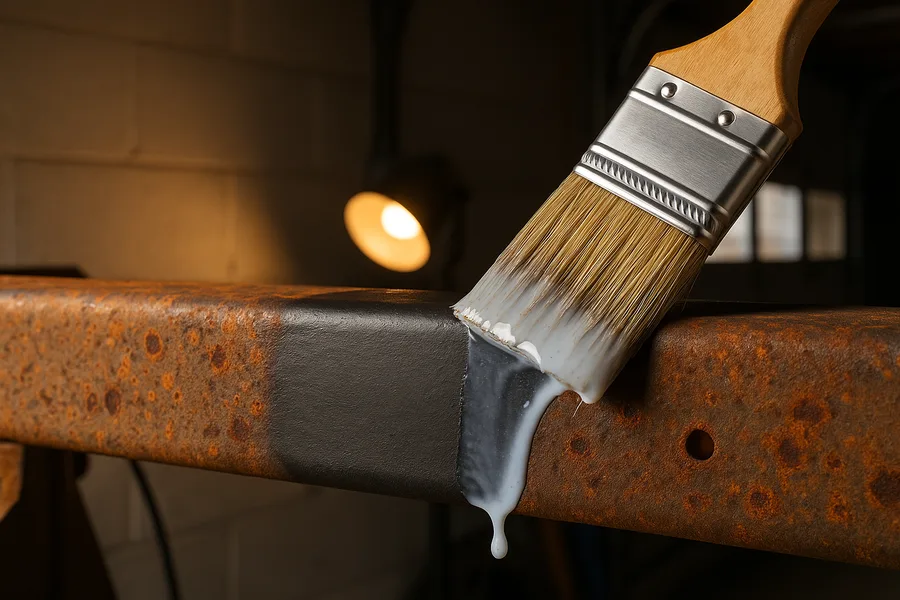
Two thin passes beat one thick pass every time, with flash time between them per the label. Hold the nozzle roughly eight inches off the surface and keep it moving. Heavy wet coats sag, trap solvent, and cure into a skin with soft mush underneath.
Overlap each pass by about a third. Work in sections rather than chasing the whole underbody at once.
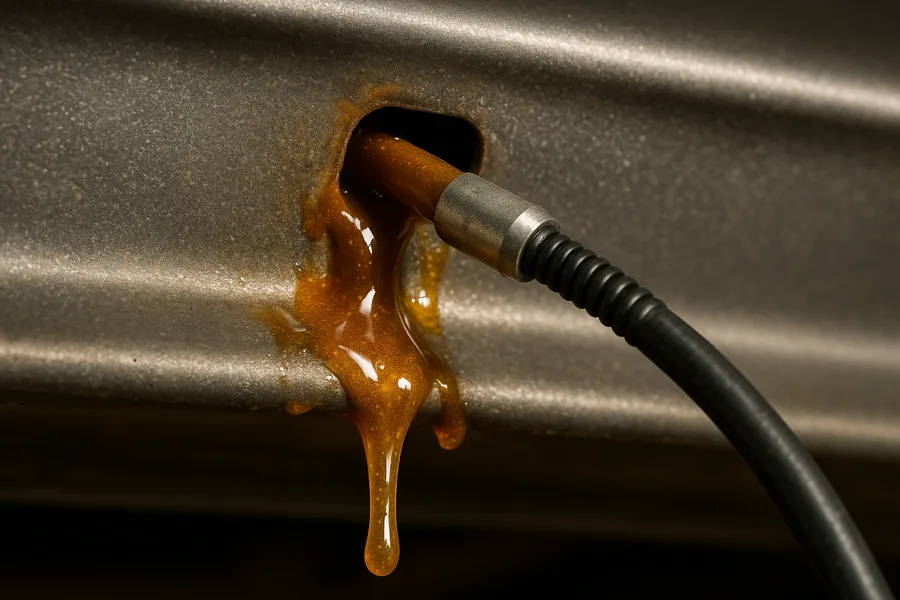
Get Inside the Cavities
Here is the step almost everyone skips, and it matters more than the visible spraying. Frame rails, rocker panels and box sections rust from within, so a wand extension fed through the factory drain holes puts cavity wax where corrosion actually starts. Twenty dollars of wand. Ten minutes of work. Years of difference on a truck frame that would otherwise rot from the inside.
Mistakes
Mistakes That Make Things Worse
Bad underbody work outperforms no work only occasionally. And most of the failures below actively shorten the life of the steel.
- Coating over damp metal. Moisture sealed against steel corrodes faster than moisture exposed to air, since nothing evaporates and nothing rinses away.
- Plugging the drain holes. Those holes exist to let water out of box sections. Fill them with rubberized spray and every rail becomes a bathtub.
- Spraying over caked grime. The coating bonds to dirt, dirt lets go of steel, and a sheet of protection peels off in one piece next spring.
- Treating a barrier coat as permanent. Asphalt and rubberized shells need inspecting yearly for cracks, and a cracked shell needs opening up rather than recoating.
- Covering a rusted brake line. Hiding a safety component is worse than leaving it visible. Replace the line.
- Skipping the converter on pitted steel. Rust left in pits keeps growing under any topcoat. Read more on stopping rust from spreading before you seal anything.
One more, and it costs people real money. Dealers and franchise shops often sell an annual undercoating package on vehicles already carrying factory corrosion warranties, sometimes on steel already showing scale. A fresh coat over existing scale buys cosmetics and very little else. Ask to see the underside first, and ask what prep they plan to do. A shop with no answer for the prep question has told you everything.
Maintenance
Keeping the Protection Alive
Coating is the start rather than the finish. Chloride works on a schedule, so your response needs one too.
Through the Salt Season
Rinse the underbody every two or three weeks once trucks start salting, and pick a warm day above freezing so the water actually drains instead of refreezing in the rails. Touchless washes with an undercarriage spray handle this fine. AAA specifically recommends washing the underside with automotive detergent rather than dish soap, which strips protective films.
The Spring Rinse Nobody Does
One thorough wash after the last salt truck runs matters more than any single winter rinse. Deposits left in seams through April keep corroding straight through summer, long past the weather that put them there. AMPP, the association formed from NACE and SSPC, has published on chloride retention in coated steel for years, and the pattern holds on vehicles exactly as it holds on bridges.
The Annual Look
Every autumn, get underneath with the same light and screwdriver. Oil coatings want refreshing. Barrier coatings want checking for cracks and edge lift. Anything gone soft since last year gets opened up, converted and resealed before the first storm.
Share of U.S. drivers in winter climate regions who needed at least one rust repair in five years, per AAA survey data.
FAQ
Questions Drivers Actually Ask
Is underbody rust protection worth it on a new vehicle?
On a new vehicle in a salted state, yes, and the earlier the better. Factory ecoat covers a lot of the underside but leaves seams and drilled edges thin. Treating clean steel takes an afternoon. Treating scaled steel takes a weekend and never works as well.
Can I apply undercoating over existing rust?
Over light surface rust, yes, provided a converter goes on first and cures fully. Over flaking scale, no. Remove the loose material mechanically, convert what remains in the pits, then coat. Spraying straight onto scale traps active corrosion under a sealed lid.
How much does a shop charge for undercoating?
Typical pricing runs $300 to $800 depending on vehicle size and coating choice, with annual oil sprays at the lower end and thick barrier systems higher. Materials for the same job in your own driveway come to roughly $40 to $90, and the labor is a weekend.
Does undercoating void a factory warranty?
Aftermarket coating rarely voids a corrosion warranty by itself, though a manufacturer can deny a claim if the coating caused the damage or hid it from inspection. Check the corrosion section of your warranty booklet, and keep the plugged drain holes issue in mind, since blocked drainage is a documented denial reason.
Rubberized or oil based, which should I pick?
Heavy salt exposure and an older vehicle point toward oil, because it creeps into seams already carrying rust. A newer vehicle with clean underside steel suits a rubberized or wax system, which lasts years instead of months. Gravel road drivers usually want the harder shell.
How often should undercoating be redone?
Oil and lanolin films need yearly reapplication before winter. Wax runs two to four years. Rubberized and asphalt shells last three to eight years, but only with an annual inspection, since a cracked shell fails quietly and nothing on the surface announces it.
Will a coating stop rust already inside a frame rail?
External spraying will not reach it. Cavity wax applied through the factory drain holes with a flexible wand does, coating the inner walls where corrosion begins. Rails almost always rot outward, so anyone treating only the visible surface has treated the second half of the problem.
Keep Reading
Rust treatment changes with the metal, the climate and the stage of corrosion. Our guide library covers frames, panels, fences, tanks and tools.
Safer For You, Safer For The Environment