Rust converter
Toyota Tacoma Frame Rust Recall: What Owners Need to Know
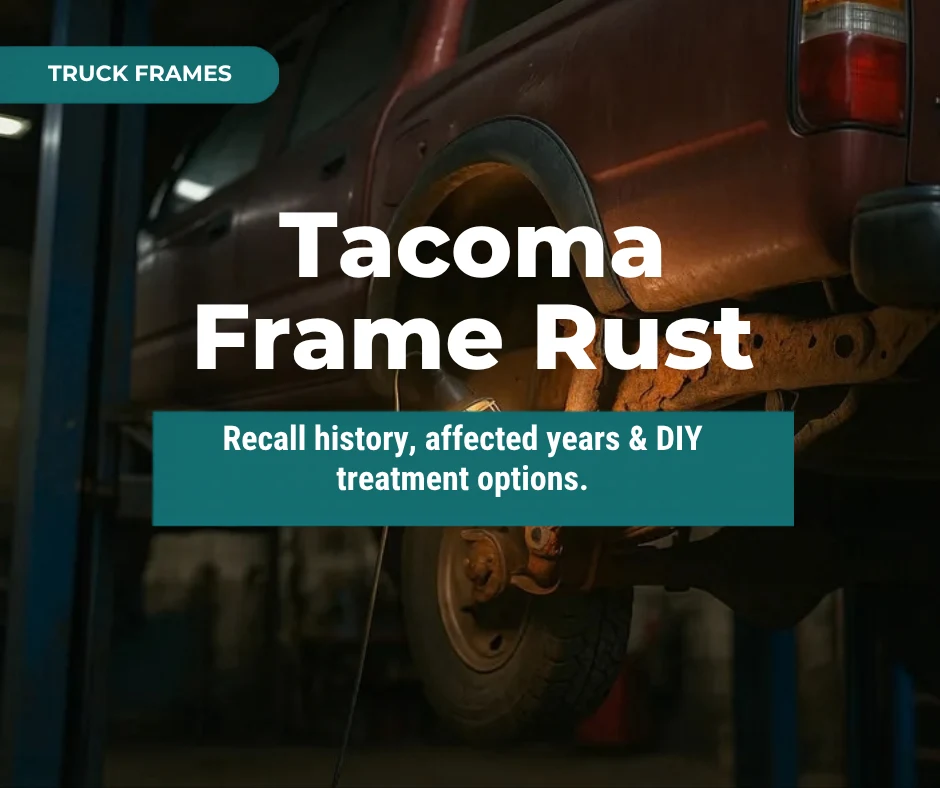
Quick answer: The Tacoma frame issue was never a single NHTSA recall. It was a 2008 warranty extension for 1995 to 2004 trucks, then a separate 2016 class action settlement covering 2005 to 2010 models plus related Tundra and Sequoia years. Both programs are closed now, so owners outside those years are on their own for inspection and treatment.
The Confusion
Two Programs, One Name Everyone Uses Wrong
Type “Tacoma frame recall” into a forum search bar and watch the arguments start. Half the replies say Toyota recalled the truck. The other half insist it never happened. Both sides are half right, and the mix up costs people money every year when they assume they missed a recall deadline instead of a settlement deadline.
Here’s the plain version. In 2008, Toyota rolled out a customer support program for 1995 through 2000 Tacomas, a fix aimed at frame corrosion so widespread it touched more than 800,000 trucks, later stretched to cover 2001 through 2004 models too. None of it ran through the National Highway Traffic Safety Administration as a formal safety recall. It was Toyota acting on its own, under pressure from owner complaints and a mountain of warranty claims.
Then in November 2016, a second and much larger action landed — a class action settlement, not a recall either, covering 2005 through 2010 Tacomas along with 2007 to 2008 Tundras and 2005 to 2008 Sequoias built on related frames. A federal court approved it in April 2017. So when someone says “the recall,” they usually mean one of these two civil programs. A real NHTSA recall did hit a batch of 2001 to 2004 Tacomas in 2012, but it involved a spare tire carrier cable snapping in cold weather, nothing to do with the frame rail underneath the truck.
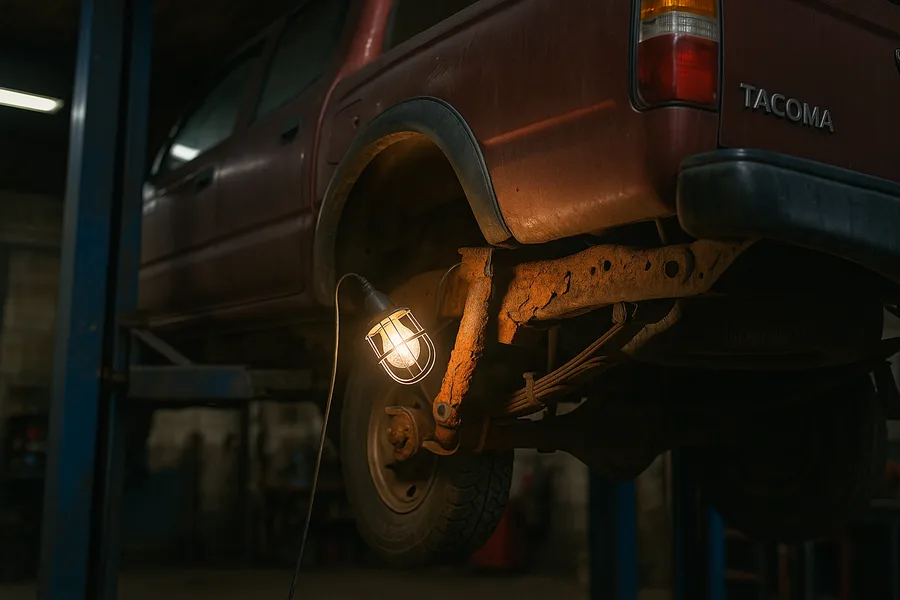
Why does the distinction matter beyond trivia? Because recalls under federal law carry no expiration and no strings attached. Settlement programs work differently. They come with claim windows, VIN eligibility lists and paperwork deadlines, and once those close, Toyota’s legal obligation closes with them — the trap a lot of owners fell into.
Eligibility
Which Tacoma Years Were Actually Covered
Two programs, two different sets of years, two different remedies. Worth laying them side by side before anyone goes digging through paperwork.
| Program | Model Years | Trucks Covered | Remedy Offered | Status Today |
|---|---|---|---|---|
| 2008 Customer Support Program | 1995 to 2000 | Roughly 800,000 | Frame repair or buyback at 1.5x KBB value | Closed |
| 2008 Program, extended | 2001 to 2004 | Included in the above expansion | Frame replacement instead of buyback | Closed |
| 2016 Class Action Settlement | 2005 to 2010 (plus related Tundra, Sequoia) | Roughly 1.5 million combined | Buyback, repair reimbursement, or free anti corrosion treatment | Closed, claims expired by 2022 |
| 2012 NHTSA Recall | 2001 to 2004 | About 150,000 | Spare tire carrier cable repair (not frame related) | Still open if unrepaired |
Notice what’s missing. Nothing built after 2010 shows up on either list. Third and fourth generation Tacomas switched away from the fully boxed rail design behind most of the trouble, and Toyota has not run a comparable program since, though a 2015 or 2020 truck can still rust plenty. It means nobody is buying that one back.
Root Cause
Why These Frames Rusted in the First Place
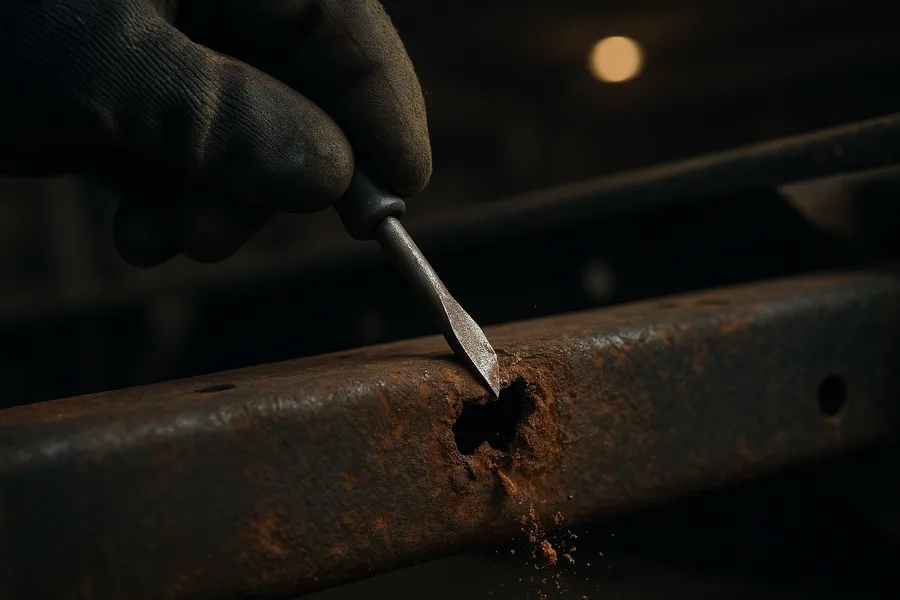
Blame the box. First and second generation Tacoma frames used a fully boxed rail, steel welded into a closed rectangular tube running the length of the truck. Great for stiffness. Terrible for drainage.
Water gets in anyway — through weep holes, weld seams, wherever a body mount bolts through — and once it’s inside a sealed box, it has nowhere to go. Road salt turns the trapped moisture into an electrolyte, and the chloride keeps pulling humidity out of the air long after the pavement dries. So a rail can look clean on the outside for years while the inside eats itself hollow. Owners in Ohio, Michigan and across New England reported this exact pattern — a truck passing inspection every spring until one year it didn’t, because the rot never showed until the shell gave way.
Estimated global cost of corrosion every year, or about 3.4 percent of global GDP, according to the AMPP (formerly NACE) IMPACT study. Automotive frame failures are a small slice of it, but it’s the slice landing in a driveway.
Second generation trucks, built from 2005 on, moved partway toward an open C section rail meant to drain better. It helped. It didn’t fix everything, which is exactly why 2005 through 2010 trucks still made the 2016 settlement list. Design changes rarely solve a corrosion problem outright. They just move where the problem shows up next.
Inspection
Warning Signs Worth Crawling Under For
Most owners find out the hard way, usually at an oil change when a technician calls them over to look at something. Here’s what usually turns up.
- Bubbling or flaking paint on the rail’s underside. Paint doesn’t bubble from clean steel. Something is working underneath it.
- Reddish brown streaks below the frame. Rust runoff after rain or a wash means active corrosion somewhere upstream of the stain.
- A soft or spongy feel when you press a rail with a screwdriver handle. Solid steel doesn’t give. If it does, the metal is thinner than it looks.
- Visible holes near crossmembers or spring perches. These carry real load. A hole here isn’t cosmetic.
- Uneven ride height or a knocking noise over bumps. Sometimes the first sign isn’t rust at all. It’s a mount with nothing left to bolt to.
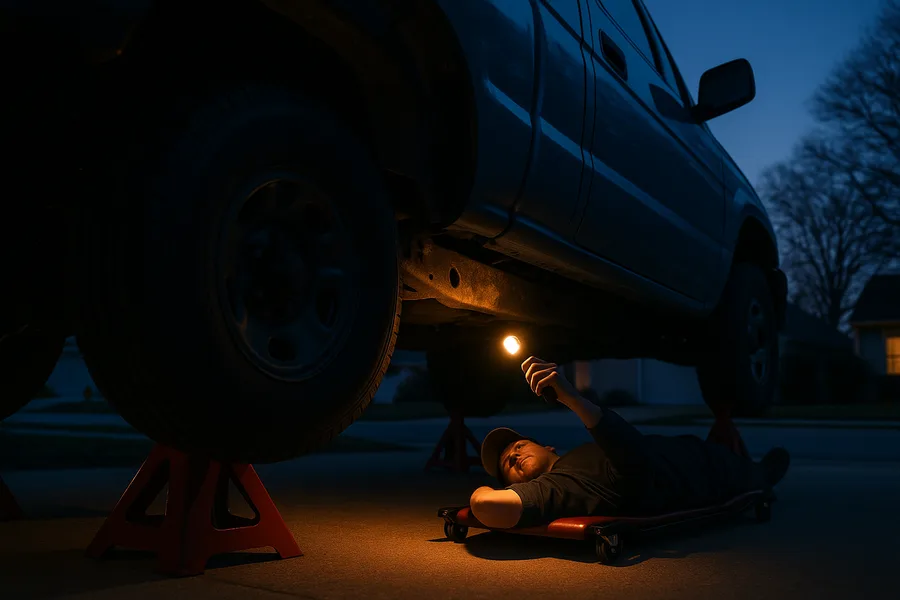
Fair warning on the last one — a knock can mean a dozen other things on a fifteen year old truck. Don’t assume frame failure from a noise alone. Get underneath with a light first.
Verification
How to Check What Your Truck Actually Qualifies For
Start with the VIN, not a forum thread. Toyota’s owner site and any dealer’s service desk can run it against the old settlement lists, and this takes about five minutes. A dealer visit costs nothing for this step alone.
Cross reference that against NHTSA’s public recall search too, since the database only tracks the real recall — the 2012 spare tire fix — and won’t show the settlement programs at all. Two different systems, two different answers, and you need both to get the full picture.
If your truck falls in the 2005 to 2010 window and the claims window already closed, don’t assume it’s the end of it. Toyota Customer Experience still fields corrosion complaints case by case outside the formal settlement, and a documented inspection history helps the conversation. It won’t guarantee anything. But a truck with five years of dated underbody photos argues its own case a lot better than one without.
Do It Yourself
Treating a Frame Once Toyota Stops Paying
Once a program closes, the truck is yours to maintain. Which, honestly, puts every affected Tacoma in the same boat as every other truck in a salt state.
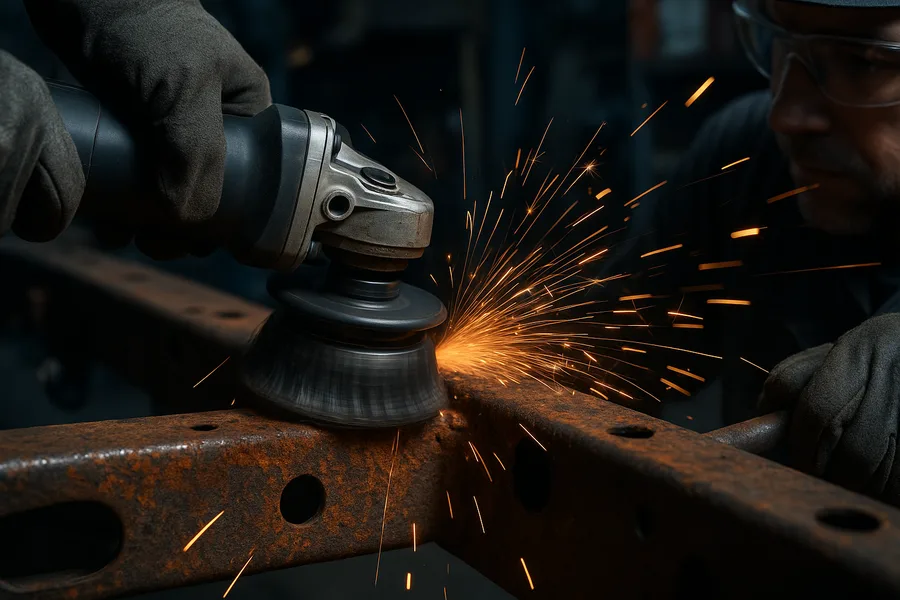
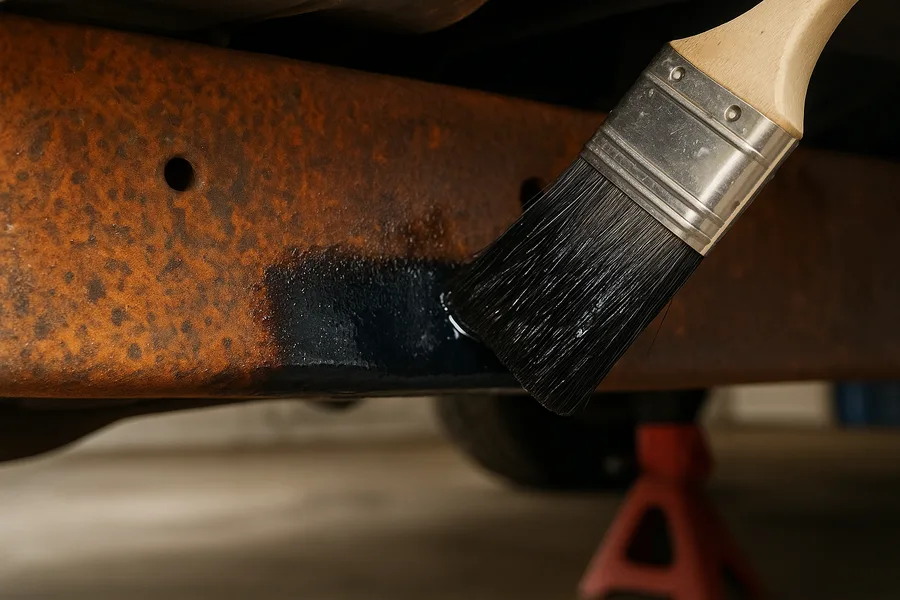
Surface rust on a rail responds well to a wire wheel followed by a converter, the kind of two step job covered in our guide to removing rust from metal. Knock the loose scale off first, then treat what’s left rather than just painting over it. Skipping the converter step is the single most common mistake we see, because a fresh coat over active rust just seals moisture in and speeds up the exact damage you’re trying to stop.
Prevention Beats Repair, Every Time
A frame not yet perforated is a frame worth protecting before it needs anything more aggressive. Our notes on rust prevention spray cover the seasonal routine, and it’s a short one. Rinse the underbody through salt season, inspect every autumn, reapply coating wherever it’s worn thin.
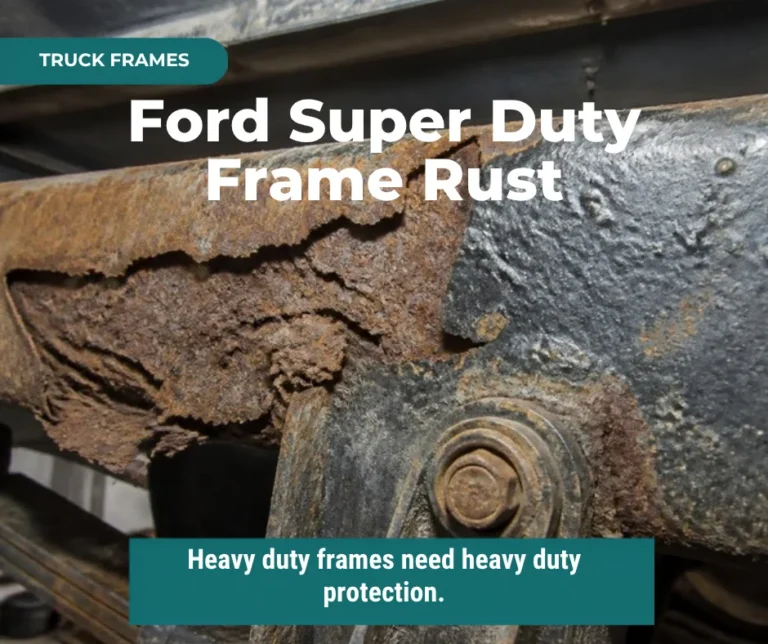
Owners of other trucks, not just Tacomas, run into nearly the same failure pattern. Ford’s own frame corrosion history on the F150 reads almost like a rerun, and our F150 frame rust guide walks through the parallel case in more detail. The chemistry doesn’t care what badge is on the tailgate.
The tradeoff worth saying out loud — none of this fixes a frame already perforated through a load bearing section. Coating and converting slow corrosion on metal that’s still structurally sound. They do not rebuild steel that’s gone. Past a certain point, welding in a new section or replacing the frame outright is the only honest answer, and it’s a job for a shop with a lift and a frame gauge, not a driveway on a Saturday.
Buying Used
Buying a Used Tacoma Without Buying Someone Else’s Problem
Shopping for a used first or second generation Tacoma in 2026? The truck is fifteen to thirty years old at this point, so treat the frame check as non negotiable, not optional.
Bring a flashlight to the lot. Sellers rarely mind, and the ones who do are telling you something. Crawl underneath, focus on the rear rails above the axle and the crossmembers near the cab mounts, and press anywhere the paint looks off. A truck spending its life in Arizona or Southern California can be nearly rust free at twenty years old. The identical truck out of a Pacific Northwest or Rust Belt driveway can be dangerously thin at twelve. Same model. Same year. Completely different truck underneath.

Carfax and similar reports occasionally show a settlement claim, though plenty of trucks changed hands with no paperwork trail at all. A clean report proves nothing by itself. Only your own eyes and a screwdriver under the truck settle the question.
FAQ
Questions Owners Actually Ask
Is the Toyota Tacoma frame recall still active in 2026?
No formal frame recall ever existed to begin with, and both civil programs addressing the issue, the 2008 warranty extension and the 2016 settlement, are closed. The only genuine open NHTSA recall tied to these trucks covers the 2001 to 2004 spare tire carrier, unrelated to the frame.
Which Tacoma years had the worst frame rust problems?
1995 through 2004 saw the most severe cases, which is why they got the earliest and most generous remedy, full replacement or a buyback. The 2005 to 2010 trucks rusted less catastrophically on average, but still badly enough to trigger the 2016 settlement.
Does Toyota still replace Tacoma frames for free?
Not under any active program. Owners outside the old eligibility windows pay out of pocket for repair, though contacting Toyota Customer Experience directly with documentation occasionally results in goodwill assistance on a case by case basis.
Can a Tacoma frame look fine and still be dangerously rusted?
Yes, and this is the part catching people off guard. Boxed frame rails rust from the inside out, so a rail with clean paint on the visible face can be hollow a few inches deeper. Sound testing with a screwdriver handle catches what a glance never will.
Should I avoid buying a used Tacoma from the affected years?
Not automatically. Climate history matters more than the model year alone. A well maintained truck from a dry, low salt region can outlast a newer truck from a coastal or Rust Belt state. Check the frame yourself rather than ruling out an entire generation on reputation.
What should I do if my frame is already perforated?
Stop driving it hard and get a shop opinion before anything else. Perforation in a load bearing section is a structural question, not a cosmetic one, and coatings or converters at this point only slow the clock. Frame replacement or a certified repair section is the realistic path forward.
Keep Reading
Frame corrosion doesn’t stop at one make or model. Our guide library covers trucks, cars, tanks, fences and everything in between.
Safer For You, Safer For The Environment