Rust converter
Jeep Wrangler Rust Repair: Frame, Body Tub & Fender Fix
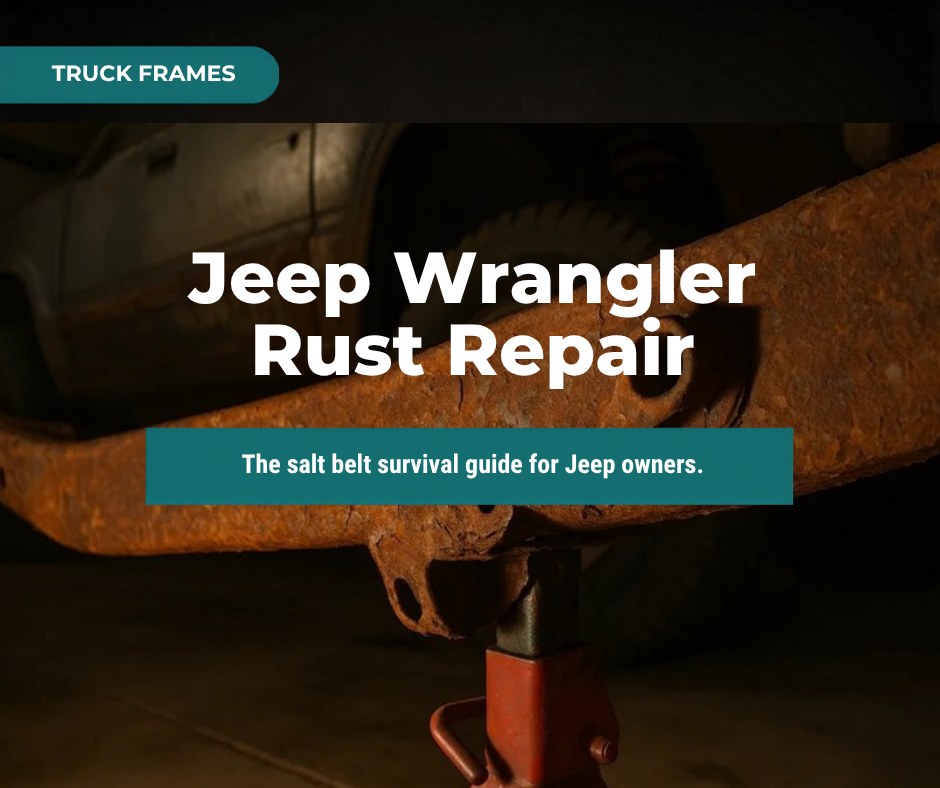
Quick Answer: A Wrangler rusts in three places that matter. Frame rails rust from the inside out, the body tub floor and seams hide moisture, and fender edges bubble first. Knock off the loose scale, convert what remains, prime it, and topcoat. Anything a screwdriver can poke through needs a welder instead of paint.
The Starting Point
Where Jeep Rust Really Starts
Jeeps don’t rust like sedans. A sedan rusts where you can see it, on a rocker panel or a trunk lip. A Wrangler rusts where the mud goes.
Think about how one actually gets used. You splash through a creek, crawl up a muddy trail, rinse off the top layer and call it done. Meanwhile a wet clump of dirt sits packed on a crossmember for six weeks, holding water against steel like a sponge on a countertop. Owners in Ohio, Michigan, New York and Pennsylvania add road brine to the mix from December through March. Gulf Coast owners swap the brine for humid salt air. Different weather. Same result.
The real culprit is the hollow steel. Frame rails are boxed sections, and on many older Wranglers the walls run roughly an eighth of an inch thick, give or take. Water sneaks in through seams and drain holes, then sits there. Rust works from the inside out, so the outside can look decent right up until a section goes soft and crumbles under a tap of a hammer. Fair warning, a solid looking frame with a rotten interior is a common surprise at inspection time.
Estimated yearly global cost of corrosion, about 3.4% of world GDP, according to the AMPP IMPACT study. Your Jeep is a tiny slice of the pie, but the chemistry is identical.
So where should you look first? Start with the frame, because it’s the part you can’t cheaply replace.
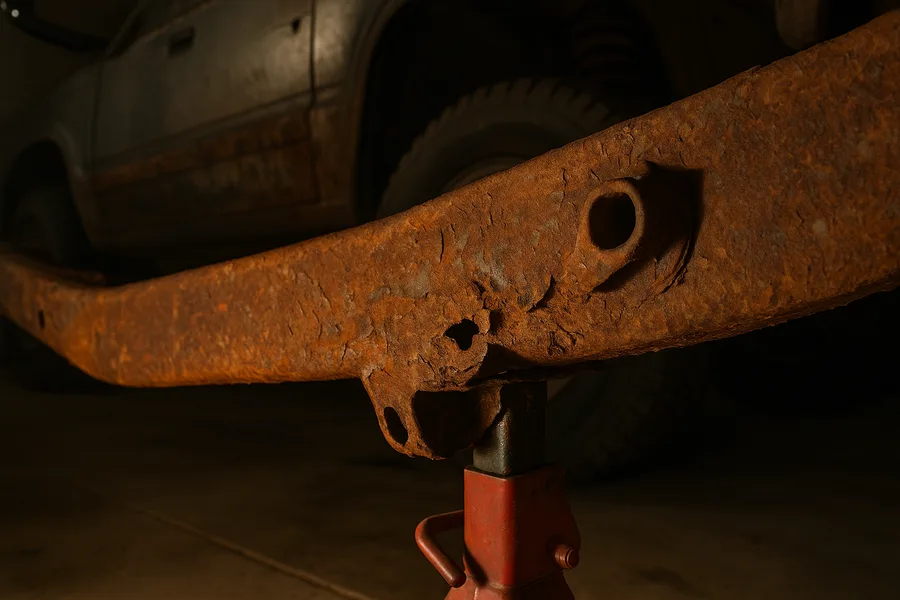
Frame Rails and Mounts
Frame Rust, and Why to Check It First
Grab a small hammer and a flashlight. Tap along every rail, crossmember and mounting point, listening as you go. Solid steel rings. Rusty steel thuds, or worse, sheds a shower of orange flakes onto your face.
If the hammer pokes through, stop right there. That’s a welding job, and no bottle of chemistry will change it. But if you find only flaking scale and surface pitting, you’re in good shape and can treat the metal yourself in a weekend.
Lie on a creeper with a headlamp and take your time. Most people spend ten minutes under the truck, see a few scabs, and move on. Spend an hour instead. Poke every suspicious bump with a pick, run a magnet along the rails to find thick body filler or old patches, and shine light through each access hole to look inside the box section. Old repairs hide plenty of surprises, especially on a Jeep that’s changed hands three or four times.
- Rear frame sections — the area around the trailing arm and control arm brackets collects mud and rots first on many TJ and JK models.
- Spring buckets and shackle mounts — small pockets that hold water and gritty sand for months.
- Skid plate and transmission crossmember mounts — trail damage chips the paint here, and bare steel starts oxidizing within days.
- Front bumper mounts and frame horns — road spray gets pushed straight into the open rail ends.
Our truck frame rust repair guide covers the full process on a full size pickup, and every step applies to Wrangler rails just the same. Owners of big trucks face a similar pattern, as we saw in the Silverado frame rust breakdown. It’s a family problem across ladder frames.
Floors, Seams and Drain Plugs
Body Tub Rust in Floors, Seams and Drain Plugs
The body tub gets less attention than the frame, and that’s a mistake. Water pools under the seats, behind the rear wheel wells and along the seam where the floor meets the sill. Rubber mats look tidy, but they trap moisture against the metal like a wet towel left in a gym bag.
Pull the carpet or the mat and check the drain plugs first. Those little rubber stoppers are supposed to let water out. Clogged with silt, they turn the floor pan into a shallow bathtub. Clear them, and you’ve already bought yourself a few extra years.
Under the carpet, look for paint bubbles, brown streaks and pinholes near seams. A pinhole in a floor is a small leak today and a rotted panel in three winters. Removable tops make it worse, since a leaky soft top drips right onto the floor.
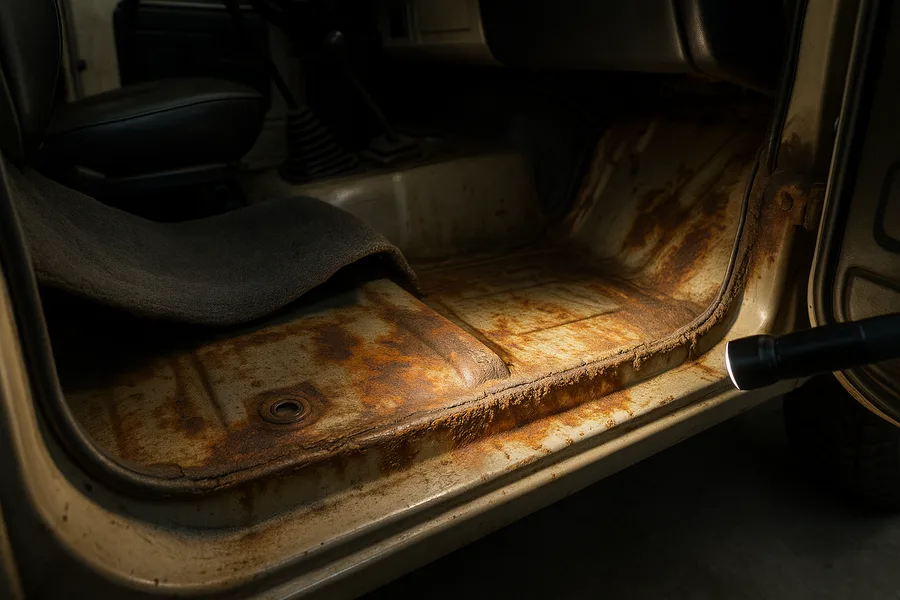
Fenders, Flares and Cowl Edges
Fender and Flare Rust
Fenders are the friendliest repair on the list. Rust shows up along the lower edge, behind the flares, near the hood hinge and along the cowl seam where leaves and water collect. It looks awful. But it’s often cosmetic, and cosmetic damage is forgiving.
The trap is body filler. Filler troweled over live rust looks smooth for one season, then bubbles right back through like a bad tattoo. Cut out the rot, sand to bright metal, treat the edges, prime, then paint. And if the panel is riddled with holes? A replacement steel fender for many Wrangler generations costs less than the hours you’d burn patching it.
Curious what happens when you skip the prep and just spray color on top? We broke it down in our post on painting over rusted metal. Spoiler alert. The rust wins.
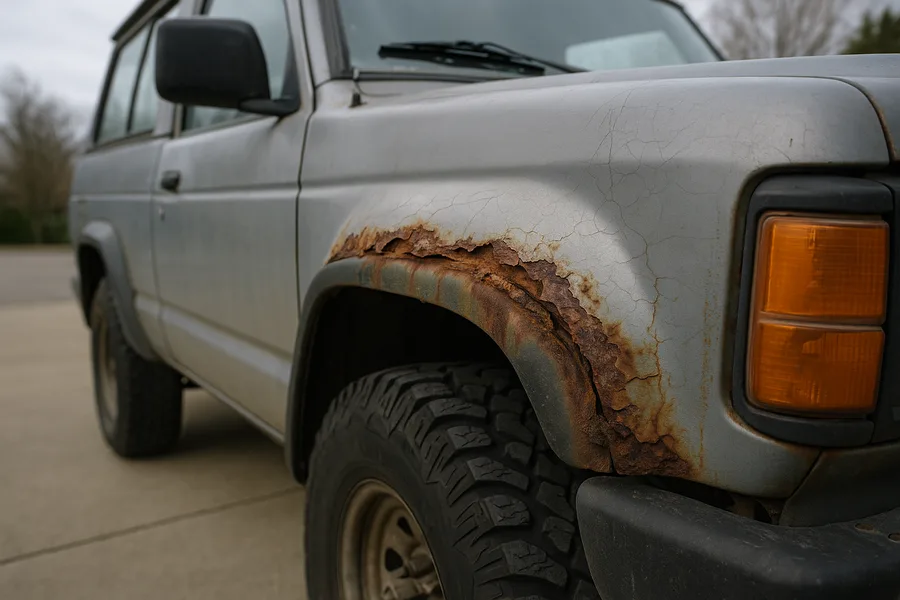
Step by Step
The Treatment Method, Start to Finish
Here’s the order that works on frames, tubs and fenders alike. Skipping a step usually costs you a repaint later.
Clean and Strip
Degrease first, then pressure wash mud out of every pocket and let the metal dry completely. Wire wheels, brushes and a needle scaler remove the loose stuff. Wear eye protection and a respirator, because old undercoating and scale make nasty dust. Tight seams need a small pick or a dental scraper. Budget about a full afternoon for a frame, since the underside of a rail is slow, awkward work. Rushing this stage is the single most common reason a treated frame flakes again within two winters.

Convert What You Can’t Reach
Bare steel takes primer directly. Pitted steel is different, since rust hides in the bottom of each pit where no wire brush reaches. A rust converter chemically changes the leftover oxide into a stable, paintable layer. Brush on a thin, even coat about as thick as a business card, and let it cure according to the label. Cold, damp garages slow the reaction, so aim for a dry day above 50 degrees Fahrenheit.
The tradeoff is real, though. A converter stops rust from spreading, but it can’t restore lost metal. Thin, weakened steel stays thin and weak no matter what you brush across it.

Prime, Topcoat, and Seal
Prime within a day of treating. Then apply a tough chassis paint or epoxy on frames, and body color plus clear on fenders. Work seam sealer into tub joints once the paint has cured. Finish the boxed rails with a cavity wax through the factory access holes. Wax creeps into hidden corners where a brush never goes.
Field tip: Photograph each area before and after treatment. When you sell the Jeep, or argue with a shop over a repair estimate, dated pictures beat any story you could tell.
Decision Table
Rust Stages and What Each One Needs
Not every patch deserves the same fix. This table sorts the usual stages by what you see and what to do about it.
| Rust Stage | What You See | Best Fix | DIY Friendly? |
|---|---|---|---|
| Surface rust | Light orange haze, paint intact underneath | Scuff, treat, prime, paint | Yes |
| Scale rust | Flaking layers, pits under the flakes | Needle scaler, converter, primer | Yes |
| Pinholes | Tiny holes through floors or fenders | Cut, patch panel, seal seams | With welding skill |
| Penetrating rot | Soft steel, screwdriver punches through | Weld in new frame section | Shop recommended |
| Structural failure | Rail bends, mount tears loose | Replace frame section or frame | No |
Curious how far surface rust spreads if you ignore it? Faster than most people expect, and our guide to stopping rust from spreading explains why an orange haze this month becomes scale by spring.
Keeping It Gone
A Salt Belt Prevention Routine
Treatment fixes yesterday’s damage. Prevention protects the next decade, and it costs pennies compared with a frame swap.
Rinse the underside after every salty commute, with a hose, warm water and a low angle wand. Aim into rail ends and behind the wheels. Pull the drain plugs after wet trail days and let the tub empty. Touch up chips the week they happen. A fifty cent paint pen beats a five hundred dollar weld.
Our underbody rust protection guide lays out coatings and schedules in more detail. Before you buy a used Wrangler, check safety recall status by VIN on the NHTSA recalls page, and read up on the basics at Corrosionpedia if you want the science behind salt and steel.
One last thing. Winter storage matters as much as washing. A dry garage with the tub drains open does more for a Jeep than any product you can buy. Park it nose up on a slight slope if you can, so water drains out of the rails instead of pooling in the low corners. Small habits. Big payoff over ten years of ownership.

Quick Answers
Frequently Asked Questions
Can I fix Jeep frame rust without welding?
Only if the steel is still solid. Surface rust and light scale respond well to wire brushing, a converter, primer and a tough topcoat. Once a rail flexes under your thumb or a screwdriver punches through, you’re looking at a cut and weld repair, and paint won’t rescue it.
How much rust is too much on a Wrangler frame?
Holes, soft spots, or layers of scale thick enough to peel off in flakes the size of a quarter usually mean trouble. Pay extra attention around the rear control arm mounts and spring buckets. When in doubt, have a welder look at it before you drive it loaded or towing.
Should I use a rust converter or a rust remover on the body tub?
Pick a converter for pitted areas you can’t fully sand, like seams and tight corners. Pick a remover or a sander where you can reach bare metal easily. Many owners do both on the same floor. Our guide on stopping rust from spreading walks through the split in detail.
Is undercoating a good idea for a Jeep?
A hard rubberized undercoat can trap moisture against steel if it cracks, so it’s a gamble on older frames. Wax or oil based cavity coatings stay soft and creep into seams, which suits a Wrangler far better. Clean and treat the metal first, always.
How often should I wash the underside in winter?
Rinse the frame and floor every week or two when roads are salted, more often after a slushy commute. A warm day is ideal because everything dries afterward. Skip the rinse in a freezing garage, since trapped water refreezes in the seams.
Can body filler fix a rusted fender?
Filler over live rust bubbles back within a season or two. Cut out the rot, treat the edges, then use filler only on the smooth patch. For heavy rot, a replacement fender often costs less than the hours you’d spend patching.
Keep Your Jeep on the Trail, Not in the Shop
Browse more step by step guides on frames, fenders, floors and every other metal surface that rust loves.
Safer For You, Safer For The Environment