Rust converter
Can You Paint Over Rusted Metal? Here’s What Happens If You Do
Quick answer: Yes, you can paint over rusted metal, but paint by itself never stops corrosion. Knock off every loose flake, degrease the surface, then neutralize whatever rust remains with a converter or a rusty metal primer before the topcoat goes on. Skip those steps and the finish blisters within a season.
Straight Talk
The Honest Answer, With Conditions
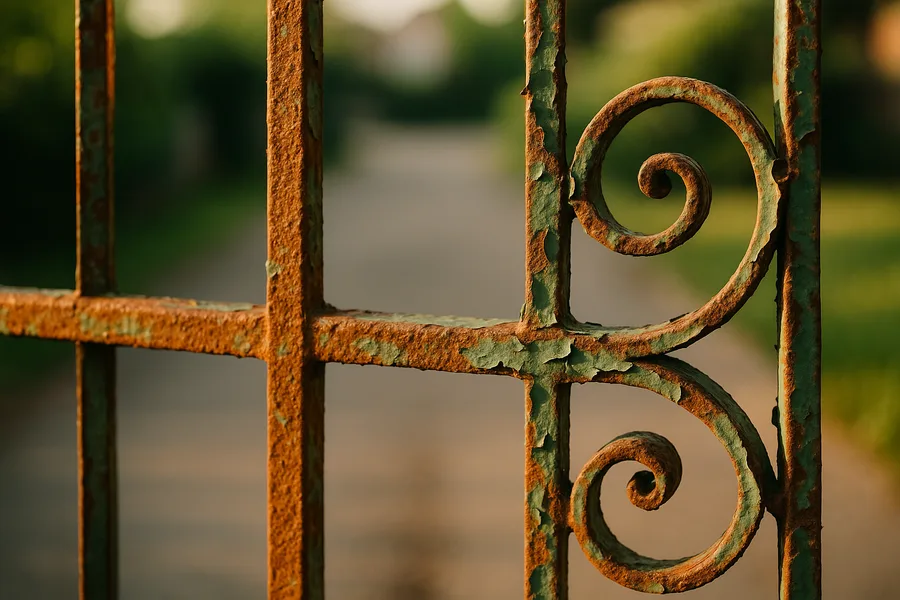
Yes. Paint sticks to rust. Nothing physically stops anyone from cracking open a can on a Saturday and rolling fresh color straight onto a corroded gate.
The real question is how long it lasts.
Coating active rust works about as well as taping a bandage over a wound nobody bothered to clean. Day one looks great. Six months on the surface starts to bubble, and a year in you’re flicking off chips the size of quarters, only to find the steel underneath in rougher shape than the day you painted it.
So the answer splits cleanly in two. Rolling enamel over loose, powdery, flaking corrosion? Wasted afternoon, wasted paint. Coating tight surface rust after real prep and a converter or a rust specific primer? Perfectly sound, and plenty of restored trucks, gates and trailers have the mileage to prove it.
Most guides stop at “remove the rust first” and leave it there. Useful, sure. But it dodges the part people actually want to know, which is what goes wrong underneath a fresh coat and how much rust is small enough to live with.
The Chemistry
What Actually Happens Under the Paint
Rust isn’t a stain sitting on steel. It’s iron oxide — a genuinely different material — and it swells to roughly six or seven times the volume of the metal it replaced. Picture a thin film stretched over something quietly expanding underneath and the ending writes itself.
The oxide keeps growing. The paint has nowhere to go. Up it comes.
Moisture accelerates all of it. Even a good topcoat breathes a little, and the porous corrosion below already carries trapped water plus, in salt belt states, chloride left over from winter road treatment. You’ve built a small greenhouse for corrosion and then sealed the door.
Adhesion is the other half of the problem, because coatings grip a sound substrate through a mix of mechanical bite and chemical attraction, and any paint film ends up only as strong as the weakest layer sitting underneath it. Loose oxide separates from parent metal under almost no load at all. Bond your finish to a flake and you’ve bonded it to nothing.
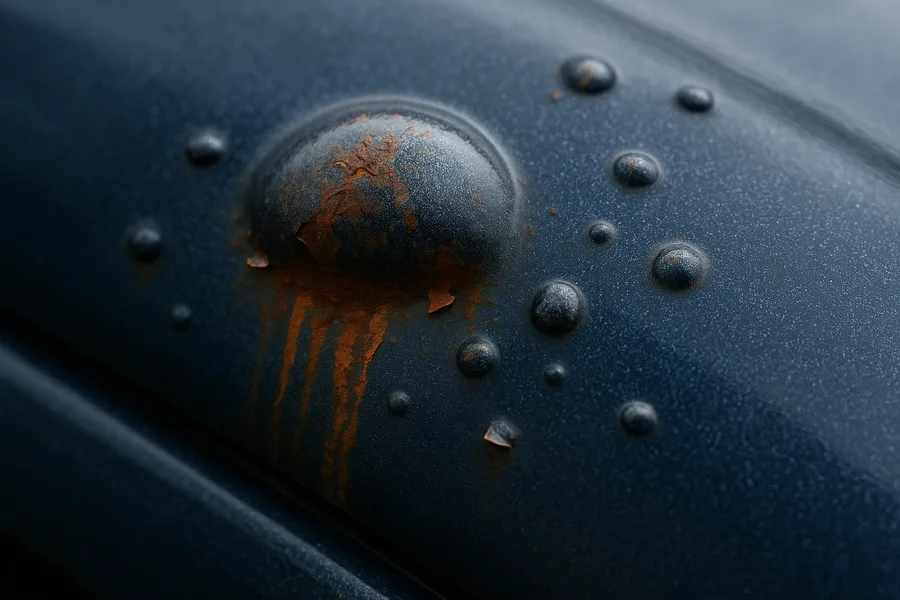
Fair warning, though. This particular failure mode is sneaky. Nothing dramatic shows up in week one, or week ten. It creeps along invisibly — for months, occasionally years — and then one humid August afternoon a whole panel lets go at once.
Estimated global annual cost of corrosion, about 3.4 percent of world GDP, per the NACE International IMPACT study now maintained by AMPP. A meaningful share of it traces back to coatings applied over surfaces nobody prepared properly.
And the same physics apply at any scale. A bridge girder and a mailbox post fail for identical reasons. Only the price tag changes. If corrosion has already started migrating across a panel, our guide on how to stop rust from spreading covers containment before any paint enters the picture.
Diagnosis First
Three Stages of Rust, Three Different Verdicts
Nobody should open a paint can before diagnosing what they’re looking at. Corrosion comes in three broad stages. Each one gets a different answer.
Stage one: surface rust
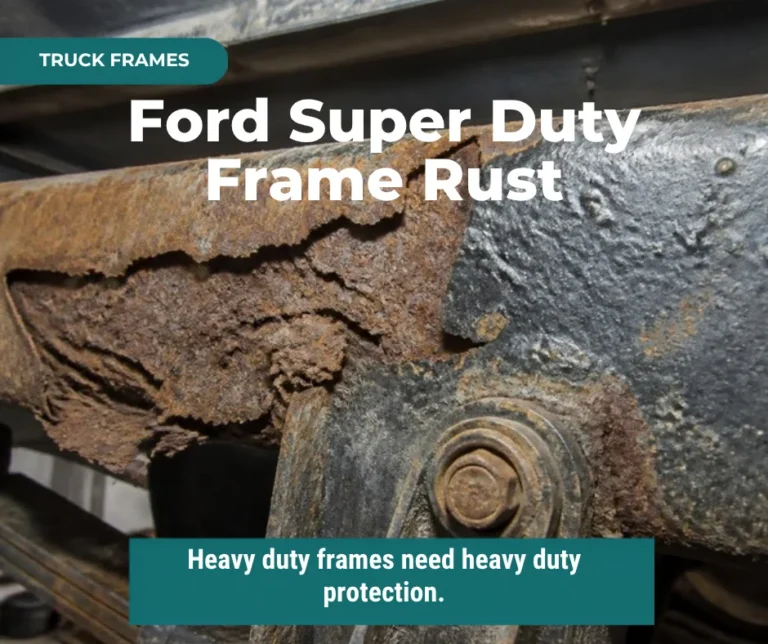
Thin, orange, mostly cosmetic. A fingernail leaves a mark in it, yet the steel below still rings solid when you tap it with a wrench handle. Paintable? Absolutely, once it’s cleaned and treated. This is the stage where forty dollars and one afternoon saves a two thousand dollar panel.
Stage two: scale rust
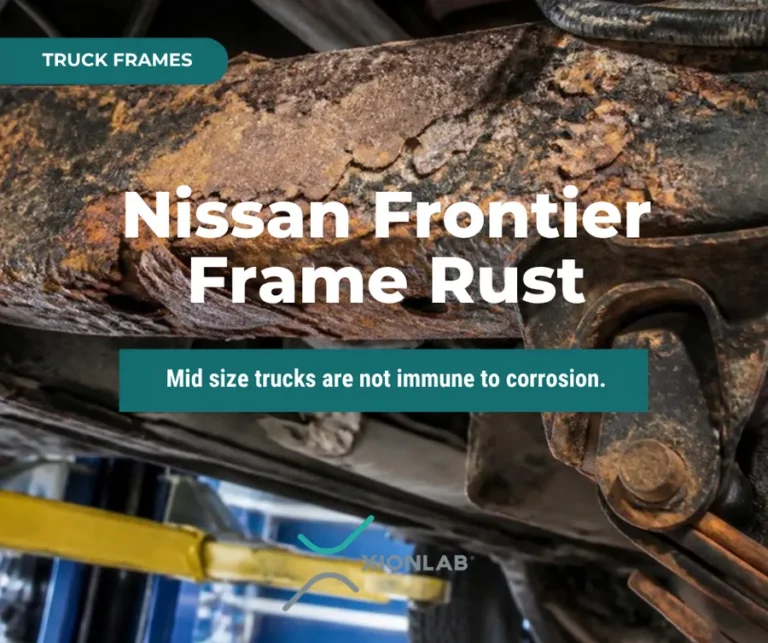
The oxide has layered up and begun lifting in sheets. Tap it and pieces drop into your hand. Sand it and dark brown dust keeps coming long after you expected bare metal. Still paintable, but only after the scale comes off mechanically down to something solid. Coating scale means coating a surface already committed to leaving.
Stage three: penetrating rust
Soft spots. Pinholes. A screwdriver sinking through with modest pressure. No coating on earth restores steel that has already left the building, so the honest options are cutting the section out and welding in fresh metal, or retiring the part. On a truck frame, a trailer tongue or a stair stringer holding people up, that distinction stops being cosmetic and starts being a safety call.
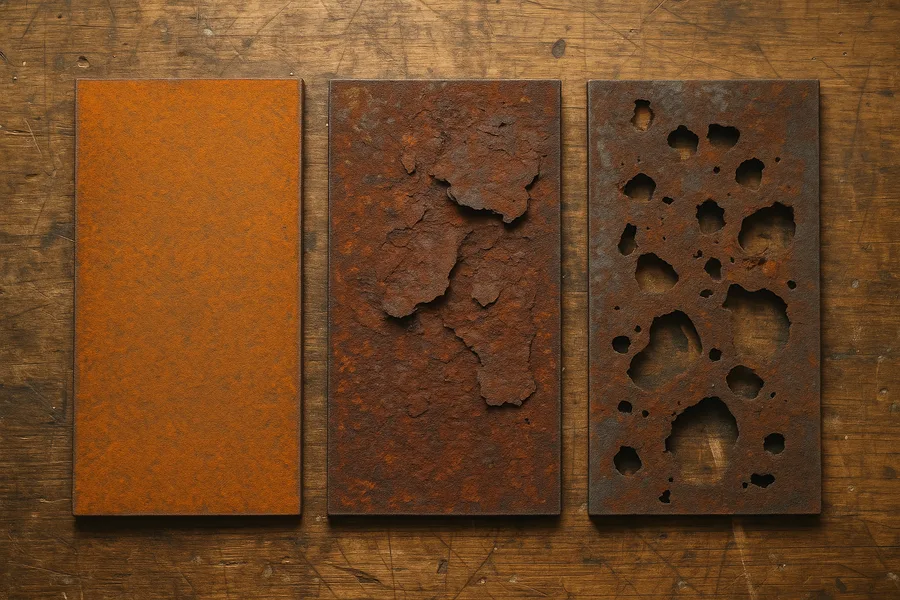
Quick field test. Drag a stiff putty knife across the corroded area with moderate pressure. Barely anything comes off, call it stage one. A small pile of flakes hits the ground, stage two. The blade sinks in or finds daylight, stage three.
Plenty of readers discover a mix of all three on one piece. A gate might show light orange bloom across the rails and deep pitting at the bottom hinge where water sat for years. Treat each zone on its own terms. For heavier removal work, our walkthrough on how to remove rust from metal breaks down every method by speed and cost.
The Process
How to Paint Rusted Metal So It Holds
Here’s the sequence body shops and industrial painters follow. It hasn’t changed much in forty years, mostly because it works.
- Strip everything loose. Wire brush, sanding disc, flap wheel, needle scaler, take your pick. Anything coming off under reasonable effort comes off now. Keep working until the surface stops shedding material.
- Degrease, then dry completely. Wax, road film, silicone from an old detailing spray and plain finger oils all wreck adhesion. A solvent wipe handles it. Let the solvent flash off before moving on.
- Neutralize the rust left behind. Tight residual oxide hiding in pits and weld seams almost never comes out mechanically. A converter reacts with it chemically and leaves a stable dark film in its place, which is the whole point of what a rust converter does.
- Prime the treated surface. Converters and primers overlap but aren’t identical, and picking the wrong one costs you a topcoat. Our breakdown of rusty metal primer sorts out which job calls for which product.
- Topcoat inside the recoat window. Most primers list a window, often somewhere between one hour and seven days. Miss it and you’re scuffing the whole surface again for adhesion.
- Cure it, don’t just dry it. Dry to touch and fully cured are wildly different states. Full chemical cure commonly runs five to seven days. Park the trailer, leave the gate alone, resist the urge to load anything on it.
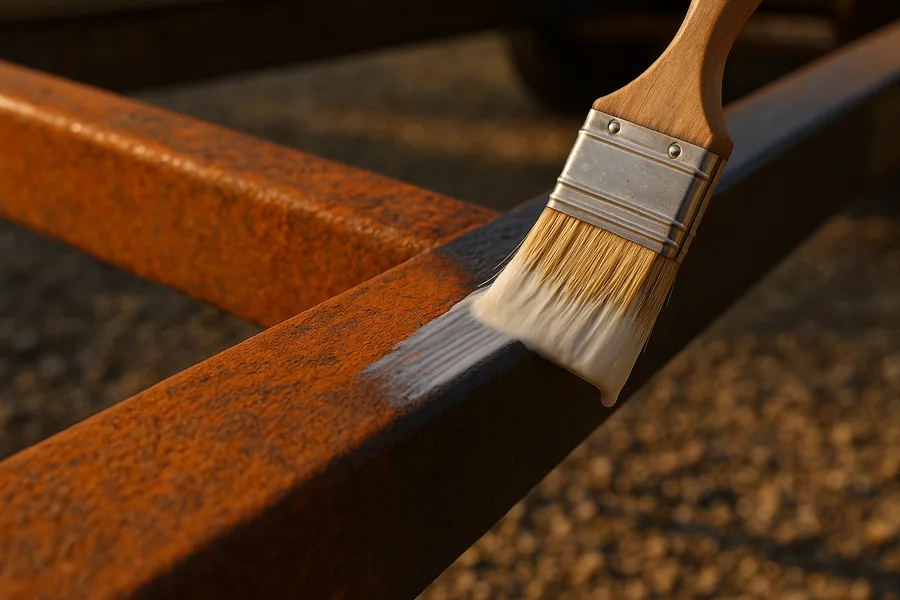
Weather matters far more than most weekend projects account for. Below roughly 50 degrees Fahrenheit many coatings never cross link properly, and above 90 in direct sun the solvent flashes so fast the film skins before it levels out. Humidity north of about 85 percent pulls moisture straight into the wet film. Gulf Coast readers already know the routine, which is paint early and quit by mid morning. Getting the substrate right beforehand is half the battle, and our notes on surface preparation for rust treatment go deeper on that step than we can here.
One honest limitation before anyone gets too optimistic. Converters and rust primers buy years, not permanence. On a daily driven pickup in Ohio or Michigan, plan on an annual inspection and touching up stone chips before they open into fresh corrosion cells. Coatings manage rust. Nothing short of a climate controlled garage actually eliminates it.
Side By Side
Prep Methods Compared
Five approaches cover almost every rusted metal painting job a homeowner or shop runs into. Cost and pace below are rough field averages — not quotes.
| Method | Best For | Rough Pace | Typical Cost | Trade Off |
|---|---|---|---|---|
| Wire brush and sandpaper | Railings, furniture, small brackets | 15 to 25 min per sq ft | $10 to $25 | Slow, tiring, misses pitting |
| Angle grinder with flap disc | Frames, gates, heavy plate | 3 to 6 min per sq ft | $60 to $120 | Gouges thin sheet fast, throws sparks |
| Rust converter | Pits, seams, awkward corners | 5 min per sq ft plus cure | $20 to $45 per quart | Still needs a topcoat, useless on loose scale |
| Media blasting | Whole panels, full restorations | Very fast once staged | $75 to $200 per hour hired | Warps sheet metal, enormous cleanup |
| Acid or vinegar soak | Small removable hardware | Overnight | Under $15 | Only works on parts you can submerge |
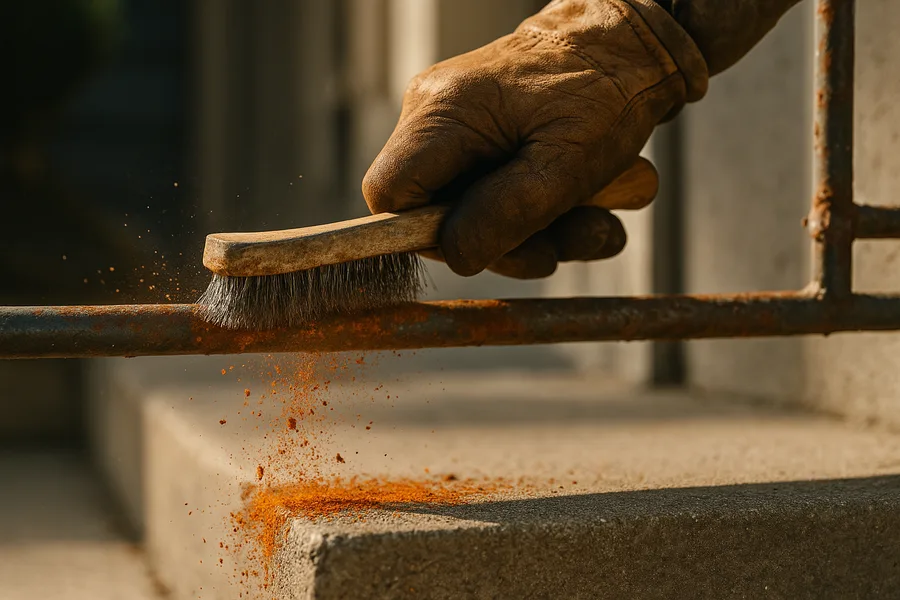
Most real jobs blend two or three of these. Grind the flat faces, brush the edges, then flow a converter into the pitted seams a disc can’t reach. Blasting media and acid rinse water both carry disposal rules in many states, so a quick look at your local EPA hazardous waste guidance beats a fine. And if the terminology starts blurring together, Corrosionpedia keeps a plain language reference on oxidation and coating terms.
Avoid These
Five Mistakes Kill Most Rust Paint Jobs
- Painting a damp surface. Steel pulled out of morning dew feels dry to the hand and isn’t. Give it real sun time or hit it with compressed air first.
- Treating scale like surface rust. Converters chemically bind to thin, tight oxide. Pour one over flaking scale and you’ll get a stable film sitting on top of an unstable one.
- Skipping the degrease step. This one bites people constantly. Sanding pushes oil deeper into the profile rather than removing it, so clean before and after abrasive work.
- Piling on thick coats. Heavy films trap solvent, sag, and cure soft. Two thin passes beat one thick one every single time.
- Ignoring the back side. Rust on a gate rail or a truck bed usually started from the hidden face. Coating only what shows just resets the clock on the same failure.
Do the prep and a painted repair on stage one or stage two corrosion routinely runs five to ten years outdoors before it needs attention. Skip the prep and you’re back with a wire brush next spring. Same paint, same brush, wildly different outcome.
Common Questions
Frequently Asked Questions
Can you paint over rusted metal without sanding it first?
Only on light surface rust, and only after a wire brush knocks off anything loose plus a proper degrease. Sanding isn’t strictly required at stage one if a converter goes down afterward. Scale rust and pitting are a different story, and those always need mechanical removal.
What happens if I just paint over rust anyway?
Corrosion continues underneath, unbothered. Expanding oxide pushes the film upward until it blisters, then chips break loose and expose fresh steel. Typical visible failure lands somewhere between three and eighteen months depending on climate and how much rust got buried.
Is a rust converter the same thing as a primer?
No, though many products blend both functions. A converter reacts chemically with iron oxide and turns it into a stable compound. A primer creates a bondable base for the topcoat. Two in one formulas handle both jobs, which is why the two terms get mixed up so often.
How long should primer cure before the topcoat goes on?
Follow the label, since formulas vary widely. As a rough guide, most rust primers accept a topcoat somewhere between one and twenty four hours, with a maximum recoat window running out around seven days. Past that window the surface generally needs scuffing again.
Can I spray paint directly over rust on outdoor furniture?
Same rules apply, regardless of aerosol or brush. Brush off the loose material, wipe the frame down, treat what remains, then shoot two light coats. Patio furniture lives outdoors year round, so the prep matters more here than on something stored inside.
Does painting over rust ever make sense as a short term fix?
Occasionally, yes. Staging a property for sale, covering a rental unit’s exterior railing before an inspection, or buying a season on equipment already scheduled for replacement. Just budget for the redo, because a cosmetic coat on untreated corrosion is a delay, never a repair.
How much rust is too much to paint over?
Once a screwdriver penetrates the metal or the section flexes under hand pressure, coatings stop being the answer. Structural loss calls for cutting and welding. Anything short of penetration is usually treatable with the right prep sequence.
Keep Reading Before You Open the Can
Our library covers rust removal, converters, primers and long term protection for cars, trailers, fences and industrial steel.
Safer For You, Safer For The Environment